
The U.S. Department of Agriculture announced last weekend that Supplemental Nutrition Assistance Program benefits will not be distributed in November, according to a banner published on its website.
For the 7,697 Monroe County residents who rely on SNAP, the lack of benefits could mean an increased reliance on food banks.
The government shut down Oct. 1 after Congress couldn’t agree on a new federal budget bill. As a result, funding to the USDA, which handles SNAP benefits, has been halted. An Oct. 10 letter from the USDA directed state agencies that distribute SNAP benefits to not transfer November benefits to users’ electronic benefit transfer cards, which they use to spend SNAP funds.
The USDA won’t receive new funds to provide SNAP benefits until the shutdown ends. The department used carryover funds from the previous fiscal year to fund SNAP through October.
According to the monthly management report from Indiana Family Social Services, which manages SNAP funding, 571,594 Hoosiers received SNAP benefits in September, for a total of $111,460,740 in benefits issued across 273,867 Indiana households.
Feeding Indiana’s Hungry, a non-profit that connects a large network of food banks, is bracing for the change in November. Executive director Emily Weikert-Bryant said the government shutdown has deregulated some federal employees' paychecks, as well as people who receive SNAP benefits.
“Our folks are able to adapt quickly to meet the moment, but during a prolonged shutdown, food banks and meal programs will face increased demand as families navigate paycheck disruptions and high food prices and now likely not having SNAP benefits to help with their grocery budget,” Weikert-Bryant said.
Weikert-Bryant said food banks were already in need of more resources before the shutdown.
“We are pushing through resources that we have,” Weikert-Bryant said. “We are looking for more resources, and we're doing all that we can to ensure that our neighbors have what they need.”
The Bloomington Township Trustee, which manages a food pantry for eligible residents, is also expecting a larger workload due to the loss of SNAP benefits. Trustee Efrat Rosser said the township was already under strain with Bloomington residents losing SNAP benefits under the One Big Beautiful Bill Act, signed by President Donald Trump on July 4.
“We were already seeing more people coming to us in recent months, anyone like refugees and certain immigrants have lost their SNAP benefits,” Rosser said.
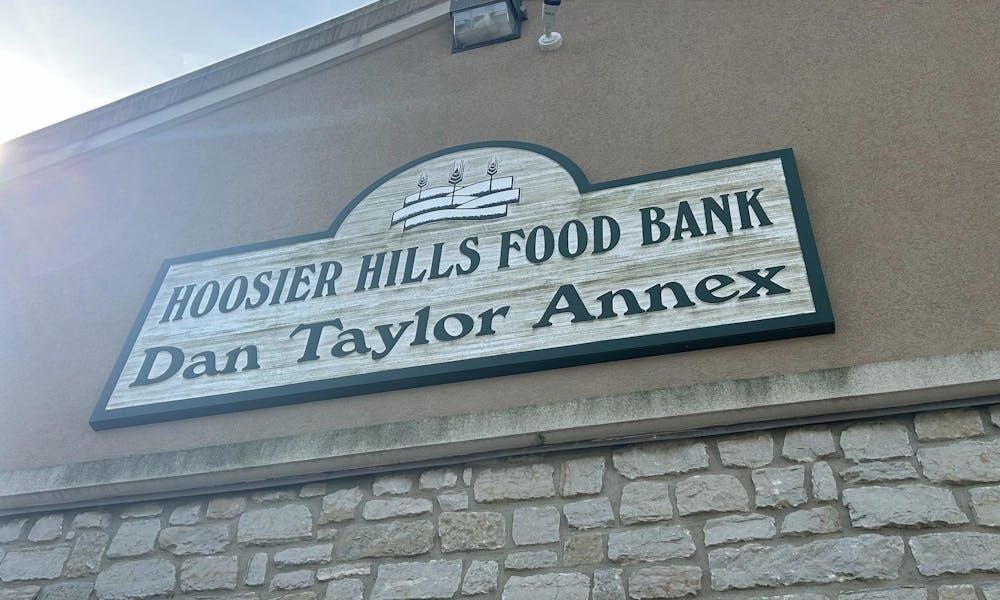
Hoosier Hills Food Bank, an organization that gathers and distributes food to non-profits in Brown, Lawrence, Orange, Owen, Martin and Monroe counties, is bracing itself for a larger workload, as over 16,000 people in their jurisdiction will be without SNAP benefits.
“The government shutdown is placing an extreme burden on food-insecure Hoosiers and on the charitable food assistance system,” HHFB CEO Julio Alonso said in a statement Tuesday. “We are facing a potential crisis that will change the dynamics of our discussion from food insecurity to actual, literal hunger.”
According to the statement, HHFB plans to spend nearly a quarter-million dollars on food purchases in November to counter the effects of the government shutdown, which amounts to about 275,000 meals. Alonso says their aid is not a sustainable fix to food insecurity, as SNAP benefits provide nine meals for every one HHFB provides.
“Only as a community can we get through this, and we still need help to do so, but make no mistake – we will get through this,” Alonso said in HHFB’s statement.
A coalition of 25 states including California, Washington, and Massachusetts filed a lawsuit Tuesday against the USDA and the Trump administration over the interruption of benefits and the refusal to use SNAP’s contingency fund to cover the loss.
“USDA’s claim that the SNAP contingency funds cannot be used to fund SNAP benefits during an appropriation lapse is contrary to the plain text of the congressional appropriations law, which states that the reserves are for use ‘in such amounts and at such times as may become necessary to carry out program operations’ under the Food and Nutrition Act of 2008,” the lawsuit reads.
The lawsuit requests a temporary restraining order that allows the budget from the contingency plan to pay out SNAP benefits and block the USDA’s withholding of benefits.


