Editor's note: All opinions, columns and letters reflect the views of the individual writer and not necessarily those of the IDS or its staffers.
On Sept. 22, President Donald Trump announced his administration’s official recommendation that people refrain from taking acetaminophen during pregnancy, claiming a link between acetaminophen use during pregnancy and autism based on a meta-analysis published in August. This recommendation was swiftly refuted by the American Academy of Pediatrics, the American College of Obstetricians and Gynecologists, the Society for Maternal-Fetal Medicine, the American Psychiatric Association and the Coalition of Autism Scientists, among many other experts and the broader autistic community.
The link presented between Tylenol and autism is shaky at best. Autism is a very complex neurodevelopmental condition encompassing a broad spectrum of experiences, and scientific consensus is that the causes of autism are just as complex, but it mostly boils down to genetics. Health and Human Services Secretary Robert F. Kennedy Jr. has refused for decades to accept scientific realities that are, at this point, uncontroversial within the medical field and sometimes extremely obvious — and he certainly was never going to be able to do in a matter of months what has taken researchers decades in the study of autism.
Kennedy has repeatedly sounded the alarm over rising rates of autism. Yes, autism diagnoses have indeed risen over the past couple decades, but this is mostly because of broadened criteria for autism diagnosis and more general awareness. More people are seeking a diagnosis, and more people fit within the expanded understanding of the autism spectrum. Importantly, cases of “profound autism”— people with the most visible symptoms and highest support needs — have not risen significantly. Autism diagnoses are increasing among people with what would be considered “milder” forms of autism. I am myself an example of this phenomenon: I wasn’t diagnosed until I was 18 because no one in my life knew what to look for until then. Again, this is the most straightforward and obvious answer, and yet one that Kennedy refuses to accept.
This isn’t the first time Kennedy and the Trump administration have peddled health misinformation the public. Kennedy has said, for example, that the measles, mumps and rubella vaccine is ineffective and dangerous; but, according to the Infectious Diseases Society of America, this vaccine is about 97% effective and prevented about 20 million measles deaths between 2000 and 2016.
This isn’t even the first time Kennedy has spread misinformation about autism. Kennedy has famously spent decades claiming that vaccines may cause autism, a theory that was based on a retracted 1998 study led by Andrew Wakefield and has been thoroughly debunked. Kennedy’s pick to head up autism research, David Geier, has already produced multiple discredited studies claiming a link between vaccines and autism and was disciplined in 2011 in Maryland for practicing medicine without a license.
Kennedy’s disregard for actual science reveals the cynicism behind his statements. He does not care about autistic people or our well-being. His rhetoric completely misses the point. He doesn’t simply have the wrong answers; he is asking the wrong questions altogether.
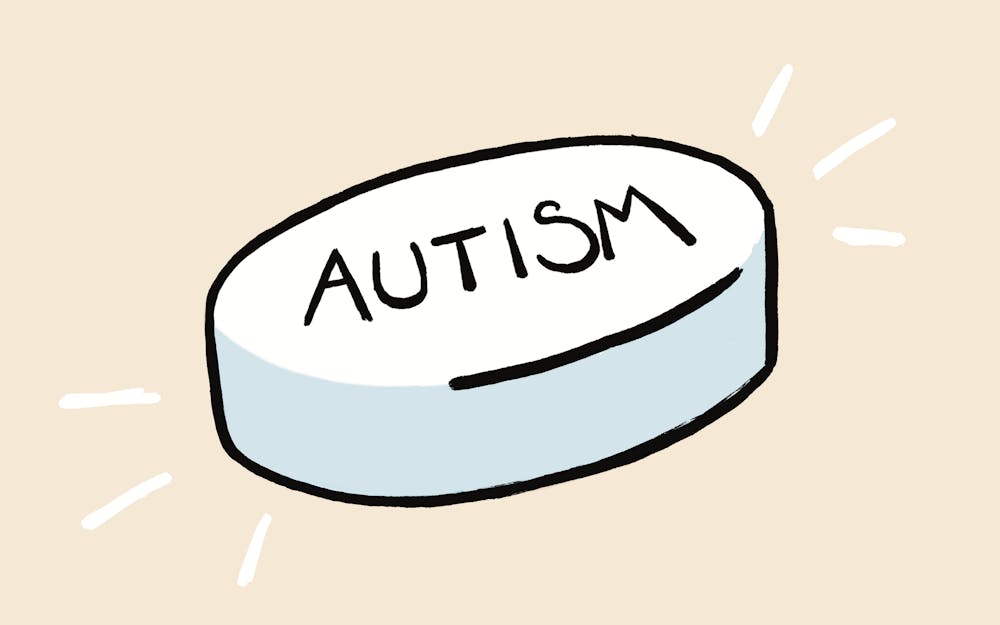
Autism is not something that necessarily has or needs a “cure.” It’s a natural variation in the way human brains work, and it’s older than acetaminophen or vaccines or even autism research itself. I will admit that there are days when I wish that I were not autistic, when I feel particularly lonely or the texture of my clothes makes me want to crawl out of my skin, and I know that there are autistic people with more pronounced symptoms for whom things are much harder. But at the end of the day, it’s not a disease that can or should be eradicated like chicken pox. Being autistic is just a part of who we are.
I am not a disease. We are not an epidemic.
And regardless of what Kennedy seems to think, whether we can pay taxes, write poetry or throw a baseball should not be a measure of our value as people. Autistic people are still human beings deserving of care. What the HHS should be doing, instead of wasting time and resources chasing bunk-science leads on a “cure,” putting out stigmatizing statements and casting aspersions on safe and effective modern medicine, is finding ways to make life better for autistic people and the families of autistic people. What we need is support. What we need is access to quality healthcare and secure housing. We need programs that will support kids whose educational needs are not being met.
We should shift our focus toward building a society that accommodates the natural variations in the human experience rather than perpetuating systems that punish those who cannot conform to certain expectations of productivity and socialization.
That’s not to say that we shouldn’t also research autism. But autism research, like any health research, should be evidence-based and thorough. Rather than investing in research on environmental causes for which we already know there is no evidence, we should invest in studies that go where the science is leading us. That’s mostly going to be genetics.
Instead, the Trump administration is doing what it has always done: pulling stunts for political points and media attention while absolving itself of responsibility for any of the real, hard work, and doing so with complete and reckless disregard for the consequences for everyone else.
The good news is there are plenty of people out there who do have the best interests of the public at heart. While you should regard health statements from Kennedy and the Trump administration with extreme caution, you can for the most part trust actual scientists. When you see a health claim, think about what the message really is, and double-check the facts before sharing that information. Listen to the experts. Listen to autistic people and treat us like human beings. Combating misinformation in your own circles and maintaining empathy for the people around you seem like small things, but all of us doing these small, good things will be critically important for public health and well-being.
Theo Hawkins (they/them) is a senior studying Interactive and Digital Media with a minor in American Studies. Their mom cannot remember if she took acetaminophen during pregnancy.