
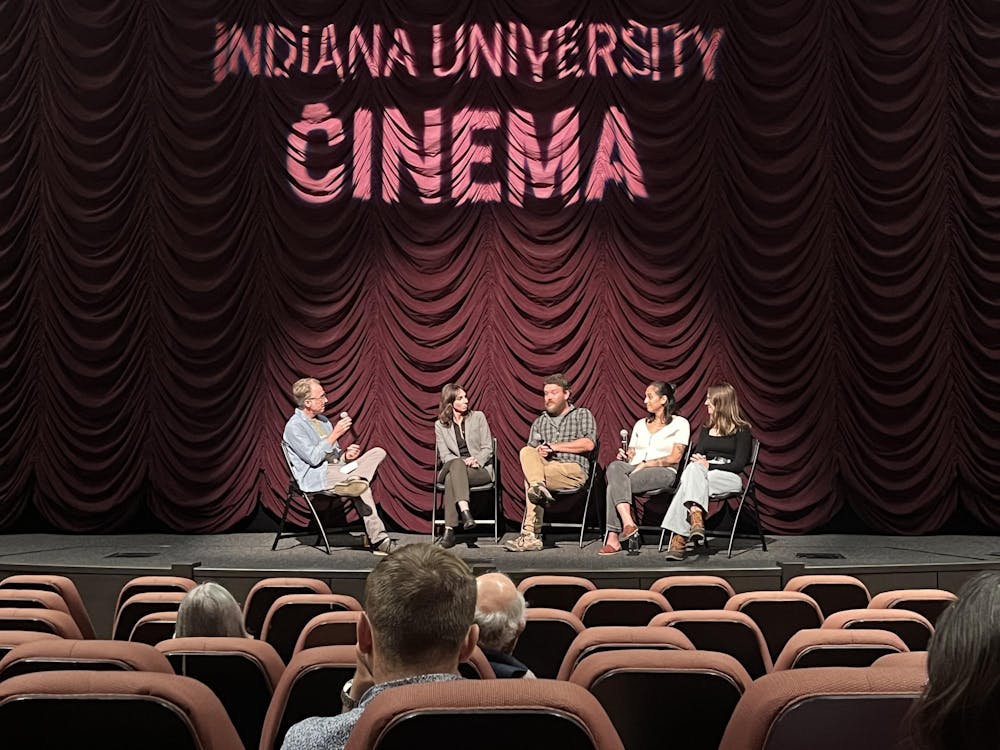
Urban forestry experts from Indianapolis and Bloomington talked about how neighborhood support can make or break a planting project during a documentary screening and panel Tuesday at IU Cinema.
The discussion followed a screening of the 2015 documentary “City of Trees,” which follows a Washington D.C. nonprofit’s attempts to plant trees in an underutilized park in D.C.’s Ward 8 community.
The nonprofit, Washington Parks & People, started planting before consulting residents or community leaders and encountered suspicion and distrust from residents. Neighborhood groups eventually blocked its project.
CanopyBloomington, a local nonprofit that works with neighborhoods to plant trees on private land, arranged the screening and discussion as the final installment of its two-part Knowing and Growing Your Urban Forest film series, which started with a screening of the 1988 film “My Neighbor Totoro.”
Urban tree canopies capture carbon, reduce stormwater runoff and provide shade in the summer. In areas without tree cover, hot pavement and a lack of shade can create urban heat islands, which increase carbon emissions and pose a health threat to residents.
CanopyBloomington co-founder and board member Sarah Mincey said urban foresters don't always prioritize community involvement. Many programs, like the nonprofit in “City of Trees,” face pressure from grant donors to focus on tree plantings at the expense of outreach.
“It's much more sexy to report numbers of trees going in the ground, and so a lot of funders in the past have just focused on funding the payment for the trees,” Mincey said.
But, Mincey said, without neighborhood buy-in, tree plantings are sometimes vandalized.
In a park on the far east side of Indianapolis several years ago, Madeline Gullion, Indianapolis Department of Public Works community engagement manager, said she found newly-planted $200-300 trees ripped out of the ground and chopped in half.
Gullion said she didn’t know if it was random vandalism or a protest to the new planting. Planting trees can be “controversial,” Gullion said, as residents worry about dealing with leaf litter, bird poop, the cost of pruning or raking fall leaves.
“Even when you’re planting in a park where it seems like there’s not that direct impact on a community member, you have to ask permission, you have to talk to people,” Gullion said.
Until August, Gullion worked with the Indiana Department of Natural Resources to help urban forestry programs grow tree canopies in underserved areas. Organizers for the programs let people know when they were planning to put a tree on land or sidewalks adjacent to residents’ homes. Residents could call during office hours to refuse the planting but would sometimes write notes or put up signs. Once, someone left a note written in sharpie on a chunk of broken wood.
“I took the whole chunk of wood home with me,” Gullion said.
Gullion said she attends community meetings, talks to nonprofits and churches and goes door to door to give residents the opportunity to say ‘no’ before planting the trees.
When urban tree planting projects actively involve the neighborhoods, Mincey said they can grow trust and support from residents.
When CanopyBloomington begins the process of planting trees in a neighborhood, members get in contact with residents and neighborhood groups to offer residents the chance to get a tree planted and answer any concerns.
CanopyBloomington has planted 462 trees since its founding in 2021, including plantings this year at the Arden Place, Grandview Hills, Broadview and Crestmont neighborhoods. Its next event will be hosted at the Waterman neighborhood on Oct. 18th. Residents can find more information on CanopyBloomington’s website.


