
Jill’s House Intergenerational Preschool in Bloomington has a capacity of about 48 children, but only about 30 children were enrolled as of Sept. 19.
Alyssa King, director of Jill’s House, said that’s partially because Indiana re-implemented the waitlist for Child Care and Development Fund vouchers in December 2024 for the first time since 2018. On Sunday, the state also lowered CCDF voucher reimbursement rates for childcare providers.
When a child has a CCDF voucher, the state covers all or part of their childcare tuition by paying their childcare provider directly. As of July 2025, about 55,000 children in Indiana depend on CCDF vouchers to receive childcare, which is 20,000 more than before the COVID-19 pandemic.
Families must be at or under 135% of the federal poverty level to be eligible for CCDF vouchers, which was reduced from 150% last year.
Children who do not already have a CCDF voucher must join the state’s waitlist. The Indiana Capital Chronicle reported in August that no children on the waitlist have been enrolled in the voucher program since the waitlist began in December. The Indiana Office of Early Childhood and Out-of-School Learning predicts this trend will continue until the end of 2025, if not longer. As of Oct. 3, 29,052 children were on the waitlist.
King said the decrease in enrollment began in August. Some of the preschool’s students transferred to Monroe County Community School Corporation preschools, which have lower tuition than Jill’s House. The infant room at Jill’s House, the most expensive classroom, has been harder to fill than in previous years.
When families inquire about the pricing at Jill’s House, King said she tells families the center accepts CCDF vouchers but goes on to explain the current state of the program.
“Unfortunately, we're in a situation right now where if you don't currently have them, the likelihood of you getting them is non-existent,” King said. “It seems like we're kind of dangling something in front of them that isn't obtainable.”
King said parents have concerns about going through the process of getting their name on the waitlist and never getting off it.
Indiana restored the waitlist as a response to growth in both CCDF and On My Way Pre-K, a program that provides free pre-kindergarten education to 4-year-old children whose families meet certain income standards, according to an OECOSL press release from December 2024. On My Way Pre-K was partially funded by CCDF funds before 2025.
Hanan Osman, executive director of the Indiana Association for the Education of Young Children, said the waitlist also addresses the state government’s lack of CCDF funds after draining federal emergency relief grants distributed during the pandemic.
When the state government had access to those funds, it raised childcare providers’ reimbursement rates too high to be sustainable and expanded voucher programs, Hanan said. After the funds ran out at the end of 2024, the state could no longer pay for as many children’s childcare.
Indiana Gov. Mike Braun requested a large part of the 2025 state budget be allocated to funding childcare, but the Indiana General Assembly approved only half of what he requested, Hanan said.
The state’s cuts to childcare provider reimbursement also aim to address CCDF’s $225 million funding gap through 2026, according to a press release. The rate changes were based on operating costs data from a survey of 25% of Indiana’s licensed childcare providers.
As of Oct. 5, childcare providers for children 0-3 years old will see a 10% decrease in reimbursement. Those serving preschoolers, 3-5 years old, will see a 15% decrease in reimbursement and for those serving school-age children, a 35% decrease. However, cuts vary by location and can be higher.
Jill’s House has four classrooms and serves infants, toddlers and preschoolers. Its tuition ranges from $265 to $370 per week, and its capacity is about 48 children. Of the around 30 children enrolled as of Sept. 19, 10 rely on childcare vouchers. Since the voucher rates dropped, families now must pay the difference between the voucher funds and the center’s tuition cost.
“Which for some families means that they're putting that additional charge on a credit card, which is sad, it's unfortunate,” King said. “I definitely see it impacting families.”
A survey from Early Learning Indiana revealed 11% of early childcare providers in Indiana predict they might close within the next year because of the lack of public subsidies available.
“I call it the CCDF crisis because it created a crisis to families, to children and now to providers and now is going to create a crisis for the state of Indiana,” Hanan said.
She added that children’s safety is at risk because of the possibility that families will put their children’s care into unqualified hands to avoid high costs.
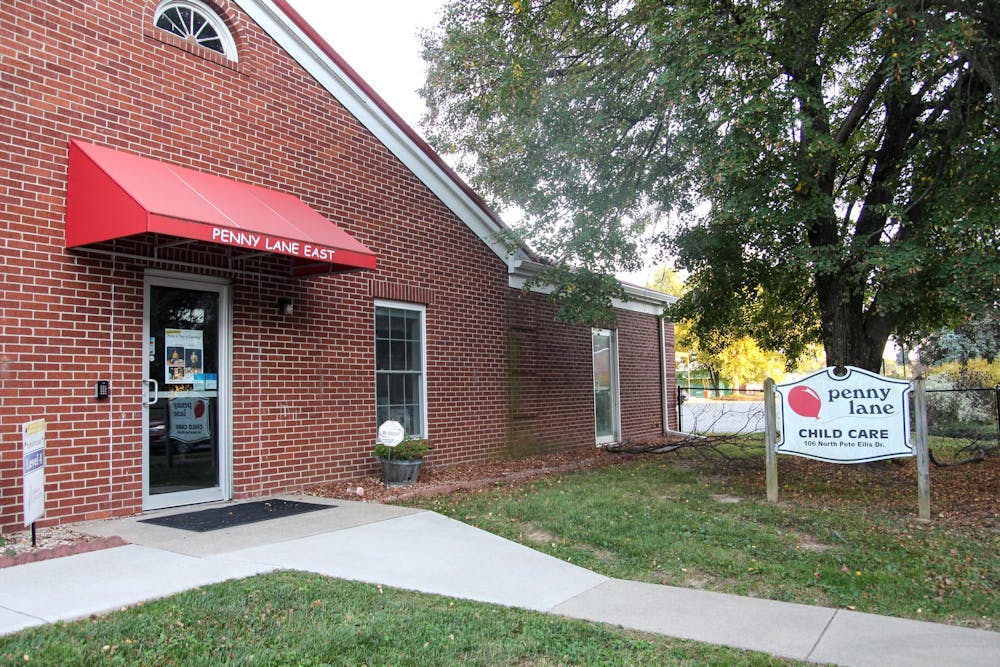
Kelly Sipes is the executive director of Penny Lane Childcare Centers, which has two branches in Bloomington and serves children from 6 weeks to 10 years old. She estimated that one-fourth of enrolled children used vouchers before August. At the end of the 2024-25 academic year, about 25 children on vouchers across both centers graduated from Penny Lane. These spots are not all filled since none of this year’s incoming children were able to obtain vouchers.
Sipes said she’s seen the funding change coming for six months.
“I knew it wouldn’t last,” Sipes said. “I’ve been doing this for 34 years and until COVID, we never got that much money for a child.”
Sipes said she doesn’t expect the lowered reimbursement rates to affect Penny Lane this year as much as the waitlist has because there are only about eight or nine children at the centers with vouchers and no incoming families are paying with vouchers.
CCDF vouchers previously paid childcare providers market price for each child on vouchers. Penny Lane charges below market rate, so after covering their tuition cost, the market price voucher reimbursement left them with some extra money.
For example, before the voucher rate reduction, the state paid licensed centers with a level 4 Indiana Paths to QUALITY rating, including Penny Lane, $478 for an infant per week, while Penny Lane charged $245.
Sipes said centers that charge market price will have it tougher, as they will no longer have their full price covered. Sipes predicts the reduced reimbursement rates will still cover most, if not all, of Penny Lane’s price.
Without as much funding from the state, Penny Lane has to rethink their budget and consider fundraising.
Sipes said she may have to completely rule out overtime unless necessary, not give teachers raises this year and increase the center’s rates. In the past, the center had a substitute hired in case teachers missed a day, which may no longer be sustainable. Penny Lane might also have to cut down on supplying materials like diapers and wipes to enrolled children.
As an MCCSC partner provider, Penny Lane benefits from MCCSC’s 2023 referendum, which offers discounted or free childcare access to families in 3-year-old preschool programs and 4-year-old pre-kindergarten programs. Sipes said the referendum greatly helps the center.
Both Sipes and King anticipate hardship to result from these recent changes.
“I can’t say that we’re not going to struggle, because we will,” Sipes said. “It’s just all about changing things up.”


