Editor's note: All opinions, columns and letters reflect the views of the individual writer and not necessarily those of the IDS or its staffers.
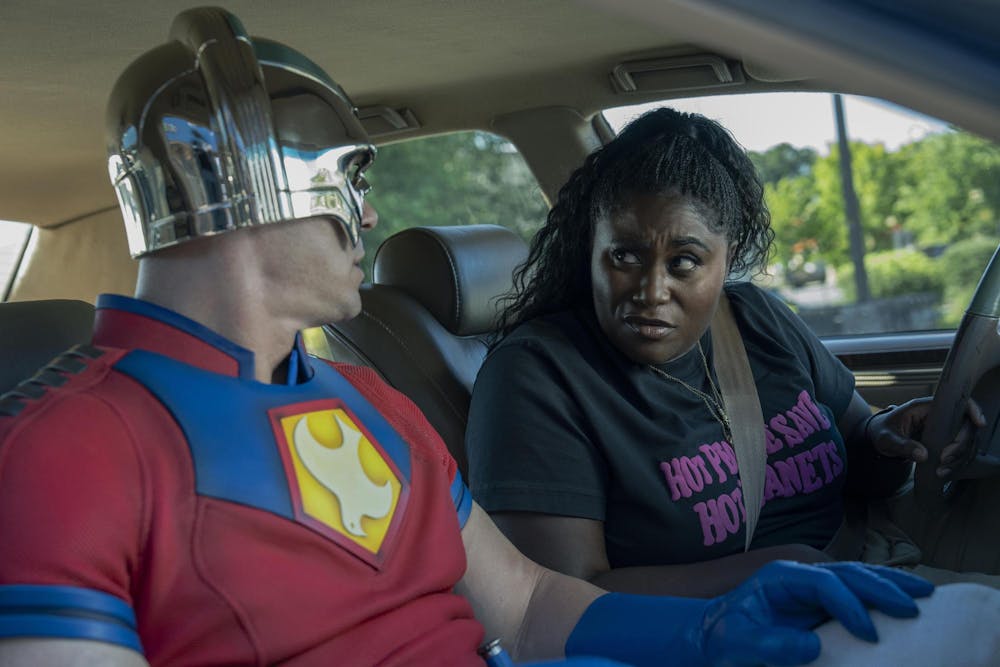
Jame’s Gunn’s “Peacemaker” features a 90-second dance sequence as its intro in every episode. What other superhero projects can you think of that do anything like this?
Gunn’s creative vision and unique approach in building the DCU show how risk-taking can refresh a familiar genre and reinvigorate the public’s interest in it. By putting lesser-known characters at the forefront of stories and casting unconventional actors, he proves audiences can embrace unfamiliarity.
For example, he kick-started the cinematic universe with “Creature Commandos,” a show featuring mostly unknown characters like Nina Mazursky and G.I. Robot.
Now we have the DC show “Peacemaker” on its second season. It’s about a previously unpopular character who has become more mainstream after Gunn created the show. This proves you can succeed by betting on material people aren’t used to.
Writing and producing a show with a lesser-known anti-hero at the forefront is already a big risk, but Gunn didn’t stop there. The show also blends crude humor with deep emotional honesty and juxtaposes political satire with cartoonish gore.
Sure, Gunn’s decisions might alienate some fans, but they’re helping revive a franchise and genre that are notably affected by convention and repetitive tropes. Taking risks can breathe new life into creative work and inspire others to break new ground.
In art, boundaries are constantly pushed. For many artists, taking risks is closely tied to making their work stand out. It’s hard to leave a lasting impression if we don’t have some willingness to explore the unfamiliar.
This is not to say you can’t occasionally resort to conventions, because those can be useful to draw people in. The key is not relying on them to create your art.
When Jordan Peele made “Get Out” (2017), he tackled systemic racism through the lens of body horror. In doing so, he appropriated a common horror trope, built upon it, and confirmed the power of a unique, socially conscious perspective, inspiring movies like “Candyman” (2021) and shows like “Lovecraft Country.” (projects Peele helped produce).
When Bob Dylan went electric at the 1965 Newport Folk Festival, folk purists booed him, but his risk re-defined pop music. In blending folk’s storytelling with rock’s energy, Dylan helped transform rock, a popular genre, into a vehicle for deep artistic expression. This inspired bands like The Beatles to write more experimental, introspective music that differed from their early, conventional love songs.
We can’t yet claim any other superhero adaptations are Gunn-inspired, but he’s certainly operating in that same realm as Dylan and Peele, who strive to keep art genres alive and meaningful through reinvention. By delving into the unconventional, he is proving that superhero movies don’t have to be mass-produced crowd pleasers; instead, they can be artistically daring and character -driven.
When making our own art, we may not have the reach to redefine genres or kickstart radical movements, but we can still push ourselves to think outside the box.
A key ideal we strive for in art is authenticity, and that’s hard to achieve without risk. Opening ourselves to failure can be more fruitful than adhering to norms. So, feel free to bend the “rules” of writing a poem or use the “wrong” colors when painting a landscape. If these choices are made confidently, with intent, and they come from the heart, you can do no harm.
Art that avoids risk may be appealing, but it rarely leaves a lasting impression. Artists like Gunn remind us that embracing the unconventional is what keeps genres alive. If we want our own work to stand out, we must be willing to create art outside of our comfort zones.
Joaquin Baerga (he/him) is a junior studying journalism.