Editor’s note: This column contains mention of depression and suicide.
On June 18, the Supreme Court officially issued its ruling on U.S. v. Skrmetti, upholding Tennessee’s ban on gender-affirming medical treatment for minors.
My heart absolutely sank with grief when I heard this news. Because here’s the truth: kids will die.
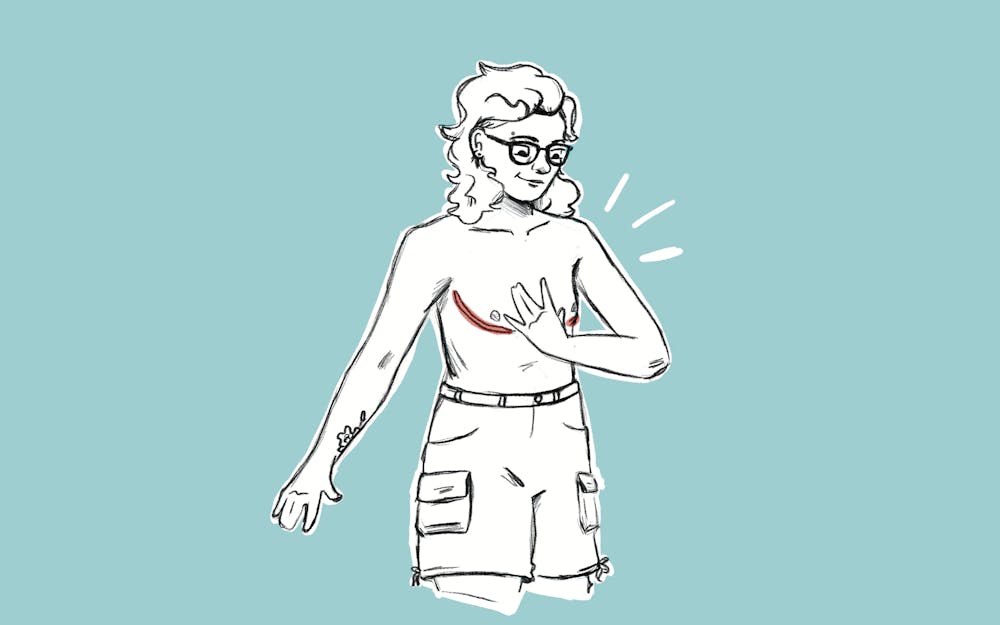
I am transgender and nonbinary. In December, after years of wearing a binder to flatten my chest, I underwent a gender-affirming chest reconstructive surgery colloquially known as top surgery, which gave me a chest shape more typically associated with cisgender men.
The surgery has made me so happy. I have begun to feel at home in my body in a way that I hadn’t even imagined was possible — the constant buzz of dysphoria in the back of my mind has at last abated. It has, without a doubt, changed my life for the better. Not for one moment have I regretted it, even when I was laid up for three weeks, in pain, with my chest wrapped in ace bandages. When the bandages came off and the swelling went down, I felt normal, like I’d always had a flat chest.
I’m 21 years old now, but when I initiated the process of seeking surgery, I was just shy of 17. I’ve heard my fair share of concerns about transgender healthcare for kids. It’s everywhere, and a lot of it comes from very well-meaning people, including people who consider themselves allies.
And the thing is, I get the fear. It’s normal for us to care about kids. Most people just don’t know enough about trans healthcare to know that there really isn’t anything to fear — most people have never had any reason to do that kind of research. And the idea that trans healthcare is somehow understudied, or that its benefits are debatable, or that it’s risky, or that kids are being rushed into it is extremely pervasive and pushed even to those who aren’t paying much attention to trans issues.
The New York Times, for instance, a respected legacy newspaper, has devoted a lot of coverage of this idea and received criticism for presenting trans youth healthcare as an issue with two equally believable sides or just straightforwardly peddling misinformation. On June 6, the New York Times launched a six-part podcast series on the issue by Azreen Ghorayshi, a reporter who has made a name for herself elevating anti-trans misinformation and voices like discredited “whistleblower” Jamie Reed for years. The New York Times was cited seven times in the Skrmetti decision.
In 2021, when I began seeking surgery, it was still legal for minors in the state of Indiana to receive this kind of gender-affirming care, but my parents were initially resistant. Even my educated, socially liberal ally parents had fallen for the misinformation that had already begun to swirl.
But this panic, like the panic about trans women in sports, is just a way to get anti-trans talking points into polite conversation, and it’s fueled by misinformation. The truth is that the science is overwhelmingly in favor of transgender healthcare.
Trans people, including trans youth, are at very high risk of depression and suicidal ideation. The 2022 US Trans Survey of over 92,000 people found that 78% of participants had considered suicide, and 40% had attempted suicide in their lifetime. Another 2022 study found that access to healthcare reduced the odds of depression by 60% and the odds of suicidality by 73% among trans teenagers. Furthermore, puberty blockers — which are sometimes prescribed to teenagers to give them space to figure things out without the distress of undergoing puberty — are safe, with reversible effects, and have been used since the 1980s to treat gender dysphoria in kids.
Most of the time, getting gender-affirming surgery is a long process. No one is getting rushed into it unprepared — especially minors, who do not often receive surgery at all. I had many appointments with several different mental health professionals and doctors over the course of the four years it took me to get the surgery. I was 18 when I had my first consultation with the surgeon, and 21 when I actually had the surgery. The healthcare system didn’t just take me, at 16, at my word. Neither did my parents — it took a lot of negotiation and explanation to get them on board.
Those first few years were especially difficult for me. There were times when it felt like it was just never going to happen, and I had this overwhelming sense of despair. Just the consultation with the surgeon in 2023, the confirmation that it would happen sometime in the next couple of years, was a relief. It helped just for the end of that feeling to be in sight.
Those on the right who push narratives against transgender healthcare simply are not acting in the interests of children. If they wanted to protect children, they would trust the doctors and researchers who have shown time and time again, for years, that trans healthcare saves lives. They would listen to trans people. Instead, they further harmful ideas about trans healthcare and trans people to further a patriarchal, white supremacist, fascist agenda. Queerness challenges the social order on which their power and control are based.
A study published June 21 found that state-level anti-trans legislation, such as restrictions on access to healthcare like this one, bathroom bills and restrictions on trans people in sports, lead to an increase in suicide attempts among young trans and non-binary people by up to 72%. To make matters worse, the Skrmetti decision has arrived at the same time as the Trump administration’s plans to shut down the national LGBTQ+ suicide and crisis hotline by July 17.
Children seeking healthcare are the first step, because existing social concern about kids and limits on their autonomy make them an easy target. But we know that trans adults are next, now that the Overton window has shifted from years of Trump-dominated politics. We’ve already been targeted. My gender is no longer legally recognized, nor can I legally change my name. Transgender people are being dishonorably discharged from the military. Trump is blaming ICE crackdowns on trans people, or… something. Who does this protect? Certainly not me. Certainly not children.
My parents still don’t get it, not all the way. A lot of people in my life don’t either. But my parents trusted me, and they trusted doctors who had been doing this for years. That’s what matters. Listen to the experts. Listen to us and trust us when we tell you what we need. Stand with us—stand with children — as human beings deserving of respect and care.
Theo Hawkins (they/them) is a rising senior studying Media with a minor in American Studies.