
Federal funding cuts are impacting the National Court Appointed Special Advocates organization, which will affect the organization’s ability to distribute funds to local chapters.
CASA is a nonprofit which works to train community volunteers to support children in foster care or the social services system through the courts. The children are generally abused or neglected.
Despite the national organization’s cuts, the Monroe County CASA executive director said its funds won’t be impacted. Still, there's uncertainty over other funding Monroe County CASA receives.
On April 22, the U.S. Department of Justice terminated over $800 million of grants to more than 350 organizations nationwide. The national Court Appointed Special Advocates organization will lose over $40 million.
Tia Arthur, the executive director of Monroe County CASA, said she was surprised by the grant cuts, despite other cuts to hundreds of organizations. She said National CASA’s statement on why the grants were terminated didn’t make sense to her.
“The notice said that the Department of Justice is focusing on priorities with respect to focus on protecting American children, which is really what the role of CASA does,” Arthur said.
However, Arthur emphasized that Monroe County CASA will not be impacted by this grant funding cut. She said they have not received funds from National CASA for several years. Their funding is comprised of funds from Monroe County Courts, federal grants they apply for individually and donations from individuals and organizations.
However, she is concerned about the future of the federal funding they receive individually. Monroe County CASA receives federal funding through the Victims of Crime Act grants. The statewide grant manager for those funds is the Indiana Criminal Justice Institute and Arthur said she hasn’t received any communication from them.
“I am worried about that, to be honest,” Arthur said. “Every day that we don't hear anything, I consider to be a good day.”
If Monroe County CASA’s VOCA grant was terminated , Arthur said it would impact the organization annual budget significantly. She explained the VOCA grant is a two-year grant, and it would also affect next year's budget.
“It would be a loss of about $88,000 for the rest of this year's budget,” she said, “and then next year's budget would be $140,000 loss.”
The prevention programs the organization runs are funded through different grants and would be the last programs that would be cut due to potential loss of funding.
“Those programs would remain because they're already funded for staff,” Arthur said. “They are the heart and soul of this organization because they are the ones who are working directly with our CASA advocates.”
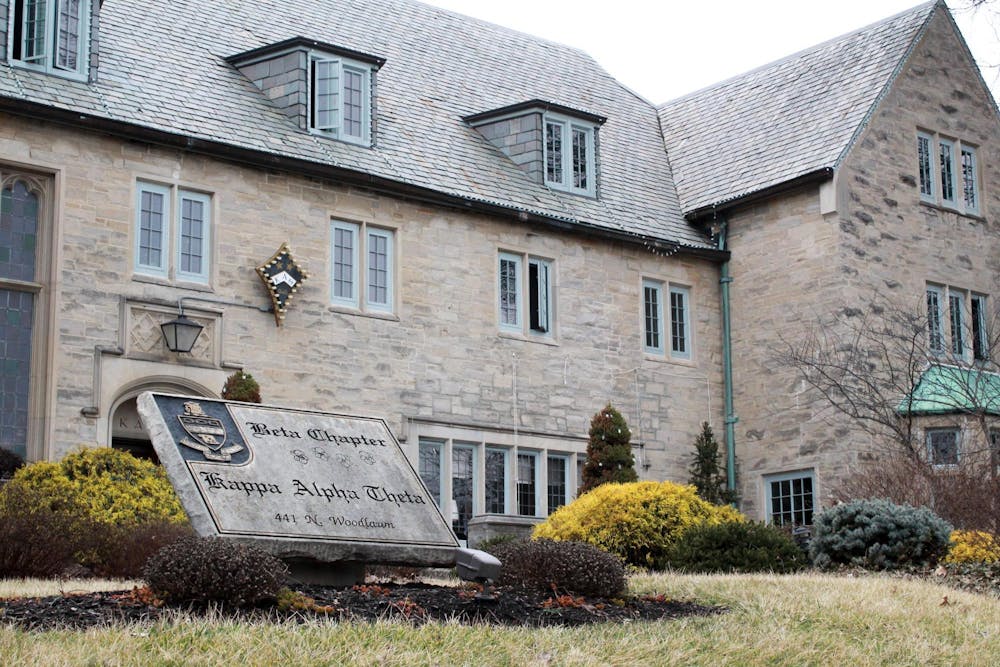
Monroe County CASA is supported by community volunteers and other organizations such as the Kappa Alpha Theta sorority chapter on campus. CASA is the national philanthropy partner for Kappa Alpha Theta.
Maytal Lefkowitz, board member of Monroe County CASA and Kappa Alpha Theta member, said CASA is an important part of Theta’s goals and values.
“It's really special to see how we've taken our national philanthropy and really, you know, brought it close to home and have gotten involved here in Bloomington,” she said.
Lefkowitz said she was at the Monroe County CASA office when she learned about the national funding cuts and was still surprised and confused as she went back to the Theta house.
“That evening, I was immediately surrounded by the Theta members asking, ‘What is happening?’ ‘What does this mean?’ ‘What does this look like?’ ‘What do we do?’” she said. “And to feel just the immediate support from the chapter was so, like, amazing.”
Lefkowitz said the response from students on campus was also wonderful to see, an opportunity for them to use their platform for the greater good.
Lucy Coughlon, vice president of external affairs for Kappa Alpha Theta, said they raised a record $20,000 for Monroe County CASA at their grilled cheese night in April.
She said despite the risk of Monroe County CASA losing federal funding, Theta will maintain its current fundraising efforts.
“Because I know we're able to really fundraise as much as we possibly can, Coughlon said, “I know that the future is bright for our chapter and for Monroe County CASA, I really don't see us changing anything about what we've been doing.”
Kirsten Grønbjerg, IU professor emerita in nonprofit management, said it is not normal for the federal government to actively terminate grants. However, she said administrations in the past, such as the Reagan Administration have attempted to cut government funding for nonprofits.
Grønbjerg said nonprofits began to rely on federal funding more beginning in the 1960s, through President Lyndon B. Johnson’s “Great Society” programs.
“The federal government under Lyndon Johnson, developed a whole set of major programs that primarily funded nonprofit organization,” she said. “Sometimes directly from the federal government and sometimes by federal funding flowing to state and local government, and then they into an allocating that.”
Grønbjerg directs the Indiana Nonprofits Project, which conducted a major survey in 2017 of over 1,000 charities. She said the survey found 38% of Indiana nonprofits received some form of government funding at the local, state or federal level. Additionally, 8% of the nonprofits who received government funding reported receiving over 50% of their funding from the government.
“It's a pretty significant part of the funding for those that get government funding,” Grønbjerg said. “But it's not, you know, something that they would simply kind of cease to exist because of it.”

