
The U.S. Fish and Wildlife service reports that invasive species cost America more than $120 billion in damages each year, and Indiana is no exception.
“Invasive species really are changing our Bloomington landscape significantly,” Amy Thompson, a member of the Monroe County Identify and Reduce Invasive Species (MC IRIS) coalition, said. “You can already see the impacts of emerald ash borer. Just driving around town, you can notice the decaying and dying trees.”
Emerald ash borer is an insect whose larvae have kill ash trees.
In order to educate community members about the harmful effects of invasive species and how they can make their gardens healthier using native plants, MC IRIS organized Sustaining Nature and Your Land Day.
Attendees gathered at the Harmony School Saturday to listen to presentations, purchase plants and learn new things about the Bloomington environment.
“I think a lot of people are surprised to find out how many invasive species they have in their own backyard,” Thompsan said. “They’re pleasantly surprised about the variety of native plants there are.”
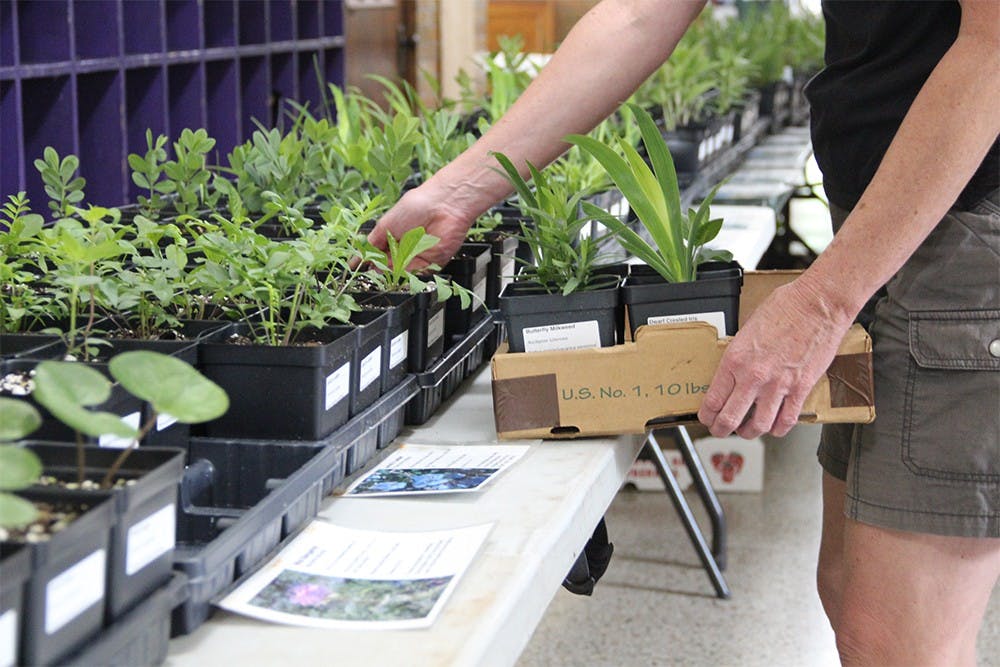
Rows of plants from Strangers Hill Organic, the oldest continual organic farm in Indiana, were on sale in the school’s hallway.
Gardeners filled boxes with pots of Purple Prairie Clover, Sky Blue Aster, Blue Wild Indigo and Butterfly Milkweed.
“When people think of native plants, a lot of them think of a meadow full of weeds,” Dave Rollo, the farm’s owner, said. “They’re surprised by the beauty of them.”
The event speakers emphasized that without native plants, native animals will not be able to survive and the Southern Indiana environment will not stay the same for future generations.
“I grew up in Bloomington,” Thompson said. “When I moved away, the fall colors are one of the things I missed most. It’s so sad to think about how the ash trees won’t be making their color contribution anymore.”



