Korean adoptee Xavier Cocca and his mother stood on a church stage singing the traditional Korean folk song “Arirang.”
But unlike the other singers — many of them, especially the children, native Korean speakers — Xavier and his mother still needed to look at the lyrics.
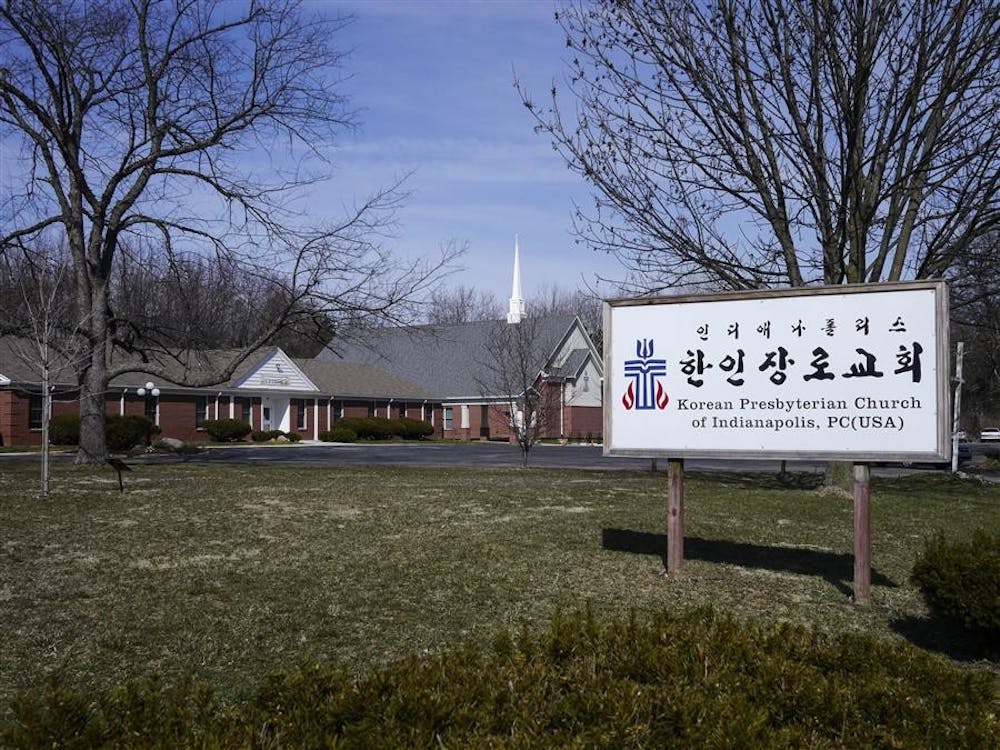
The two have been going to a Korean language class provided by Korean Presbyterian Church in Carmel, Ind. every Sunday starting in February. The church also offers classes for higher-level Korean speakers, including natives, and holds cultural events such as the Korean Children’s Day, the event Xavier and his mother were rehearsing for that day.
Myra Cocca, Xavier’s mother, who is white, saw the class and cultural events as a chance for 12-year-old Xavier — whom she adopted when he was 4 and a half months old — to be with people who “look like him,” an opportunity he doesn’t have in their white family.
“I’d be lying if I made it all sound like ‘Oh, you know, he fits in just fine. Everything’s perfect,’ because it’s not the same,” she said. “It’s clear that we are a multi-racial family, and he clearly understands that it’s part of our story.”
Xavier said he enjoys his mother’s company.
“I do like having my mom with me, because other people have parents who actually speak Korean so they can study, but it’s nice to know that we are lost together,” Xavier said with a laugh.
Myra Cocca’s efforts to put her son closer in touch with his ethnic and cultural heritage illustrated a shift among Americans who adopt children from abroad in recent years.
While in years past adoptive parents were told to encourage their children to assimilate into American culture, counselors these days are increasingly more likely to encourage their adoptees to study their native languages and even travel on “homecoming tours” of their birth countries.
Some adoptive families say they feel they need to be upfront with their children about their adoptions early on, particularly when ethnic differences between parent and child will raise questions eventually anyway.
Emily Charlton, whose adopted daughter Claire has been attending Korean language classes at the church for three years, said her 5-year-old daughter has already noticed she is a different race from her mother. Charlton says she thinks it’s not fair to raise Korean adoptees without addressing their Korean heritage.
“I personally think it is very lazy and selfish when adoptive families expect their kids to just ‘be American,’” Charlton said.
Educating Korean adoptees about their racial identity has become more common than it was 30 years ago.
Tara Jin Vanderwoude, an adult Korean adoptee who now advises adoptive parents, said she wishes her family could have done more to prepare her for the confusion she had about her identity.
"Parents were told, 'Americanize them. They are not Korean anymore. They are American. You don't need to worry about their past,'" Vanderwoude said.
Vanderwoude said she remembered when she was adopted in the 1980s, adoptive parents were not well-prepared with potential issues they would encounter as multi-racial families. She said this often raised feelings of confusion.
Even in her 30s, Vanderwoude said she finds herself trapped between two worlds. When she’s with Korean friends, for instance, she isn’t doesn’t quite feel like one of them because she doesn’t speak Korean like a native and she’s unfamiliar with their foods and customs.
“So I’m not 100 percent Korean,” she said. “But then when I’m in the American world, and I’m shopping in a grocery store, someone would come and tell me how well I speak English, or ask me where I’m from. So of course, I’m not really American enough either.”
The Vanderwoude’s “Who am I” question is described in the book “The Dance of Identities: Korean Adoptees and Their Journey toward Empowerment,” by John D. Palmer, associate professor of Educational Studies at Colgate University. Palmer writes about the difficulties Korean adoptees like Vanderwoude encounter in trying to unravel their multiracial identities.
Nowadays, many international adoption agencies require adoptive families to take special training to prepare them for the work that being a multi-racial family requires. Many non-profit organizations are also sponsoring activities that create connections among international adoptive families and help to maintain adoptees’ Korean identity.
Korean Focus-Indiana is the first non-profit organization in Indiana that provides activities such as spring picnics, summer culture camps, fall celebrations and Korean Lunar New Year parties for adoptive families.
However, most adoptive families don’t attend activities with any long-term commitment. Korean Focus-Indiana also promotes the language classes that Xavier and Claire are attending, but Xavier and Claire are currently the only two adoptees there.
Vanderwoude works as a private consultant doing speaking engagements on adoption. She said that many adoptive families still don’t realize the importance of maintaining and developing their children’s racial identity.
“Because they are Caucasians, they don’t understand what it means to be minority, or what it means for other people to see you as a person of color,” she said. “So they don’t see the necessity of arming their children in developing their racial identity.”
Vanderwoude said she thinks adoption agencies should make it clear to adoptive families that adoption is not just about “getting a baby and living happily ever after.” It also requires extra parenting tasks. However, she said some parents ignore the child's perspective.
“A lot of parents adopt because they are unable to have biological children and so they see adoption as just about them as parents,” she said. “They don't realize adoption is ultimately about the child.”
Vanderwoude, also a mother of two Korean adoptees, 7-year-old son Crew Seonju Vanderwoude and 5-year-old daughter Sohee Jean Vanderwoude, started talking to her children about racial identity and adoption in their daily life when they were still babies. She said starting early builds the cognitive framework for understanding the issues.
Xavier said he felt overwhelmed when his family started showing him Korean books and emphasizing his Korean identity when he was young. He said “it didn’t click” until he was 5, when he realized he’s not related to his family by blood. Now, he said he understands the importance of learning about his birth country.
Learning about Korean culture and the language also helped Xavier overcome the bad feelings he had when classmates or kids in school teased him about his origins, he said.
The new South Korean adoption laws require international adoptive families to go to South Korea to receive their child.
Melitta Payne, coordinator of International Services at Bethany Christian Services, Indianapolis, said this requirement affords adoptive families the opportunity to experience the culture firsthand and meet people who have been important in their child’s early life, which in turn helps the family have information to share with the child about his or her life in Korea.
Some organizations that stress an importance of adoptive families traveling to Korea are organizing “homeland tours.” Bethany Christian Services arranged several such tours for small groups of 10-to-15 young adult adoptees.
Xavier and his family went on a two-week tour last July. He said he felt good to be surrounded by other adoptees with similar experiences, and meet his foster families who took care of him before he was adopted.
The homeland tour showed Xavier a modern Korea, which he said amazed him when compared it with the books he read about ancient Korea. Myra said the reason for the whole family going to Korea with Xavier was to tighten Xavier’s emotional connection with his homeland. Xavier also thought the trip made him treasure the current family he has even more.
Xavier said he learned from the trip that if he was raised in the orphanage, he might never have been adopted and could have grown up without any parents until he turns 18. It could even have caused him difficulty when searching for a job in Korea because in Korean culture families are treasured in all aspects of life.
“I feel good that I do have a good family,” Xavier said.
Adoptees embrace identity
Get stories like this in your inbox
Subscribe