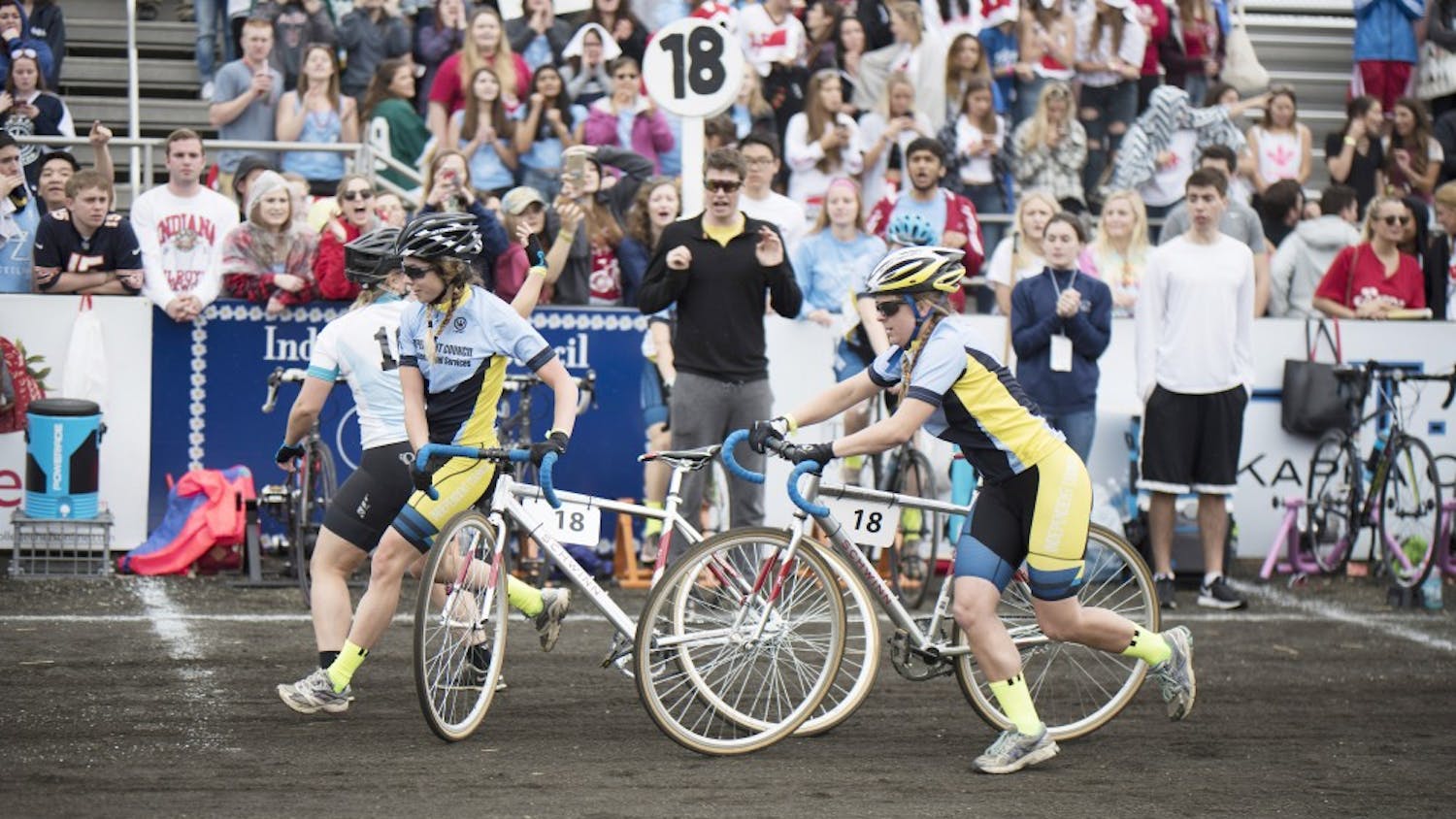
Competing in the Little 500 requires more than just the pedals on a bicycle. Ask any rider who has taken a spill on the cinder at Bill Armstrong Stadium.
Riders must purchase a range of head-to-toe gear to ensure safety in case that tire gets loose on the outside of the cinders. Gray Goat senior rider Ethan Page broke down what a rider wears on every part of his or her body for the race.
Head: Helmet and goggles
Every rider is required to wear a helmet in the race, but it is up to the rider to choose what kind. Some prefer more aerodynamic helmets. To sell a bike helmet, it must be certified for safety, meaning most helmets provide the same amount of protection.
“Your helmet is probably by far your most important thing,” Page said. “I bet you pretty much every single Little Five rider has wrecked and hit their head.”
On the cinder track, dust and rocks fly everywhere. Page said he once had a rock the size of his knuckle fly right at his eye during a road ride. For this reason, he said sunglasses are the second most important piece of safety equipment. If a rider’s eye gets dried out or if dust flies in, that could cause the rider to fall, causing a domino effect for everyone behind.
“I think sunglasses aren’t used as much for blocking the sun as much as they’re used to keep the track out of your eyes, keep the dirt out of your eyes, Page said. “I bet you every single person, again, who’s been on the track has had crap thrown up at their eyes.”
Torso: Kit
Page said kit preference varies by rider. A kit, which is the jersey riders wear, is normally tight-fitting compression material that cuts down on resistance. Some riders prefer as little resistance as possible, while others don’t have to have it perfect. It is up to individuals or teams to purchase kits. Prices can range from $25 to more than $200.
Some companies sponsor teams and have their logos displayed on kits.
“The most important thing, I would say, is to get a halfway tight jersey, just because you’ll notice your shirt flapping around in the wind a lot, Page said. “And I know it probably doesn’t sound like a big deal, but in cycling, the less drag the better.”
Hands: Gloves
While sweating around the track for a couple of hours, you don’t want your hands to fall off the handles, nor do you want your hands to be full of cinder if you do wipe out.
Because of this, all Little 500 riders are required to wear gloves, with or without fingers. Page said that choice depends on the weather.
“If you go down, you’re not tearing your hands up with gloves,” Page said.
Feet: Socks and shoes
Page said socks aren’t really important, and it is more a matter of personal preference. Some prefer thinner socks because of the sweating.
As for shoes, riders wear something with good grip to stay on the pedals. Cycling shoes are not required, as bikers do not clip in to the bike. Page said he wears old trail running shoes. As long as it is a low-cut shoe with solid grip, it doesn’t matter what you wear.
“You want something that is going to grip the pedal really good, keep your feet from sliding off,” Page said.
Lower body: Bike shorts and bibs
Bike shorts have extra padding inside to cut down on any discomfort that might arise due to the position of the bike’s saddle.
“You also want bike shorts for sure on those,” Page said. “You’ll get a nice little bruise in your manhood areas if you don’t have a nice pad.”
Page also said extremely tight bike shorts are important for exchanges because having just the smallest amount of flap could cause the rider to get stuck and wreck the exchange.
Page wears a wrestling-type uniform called a bib that has suspender-like straps over the shoulders, then comes down to the lower body to provide for a tight fit underneath bike shorts.
“It keeps your shorts from moving down,” Page said.
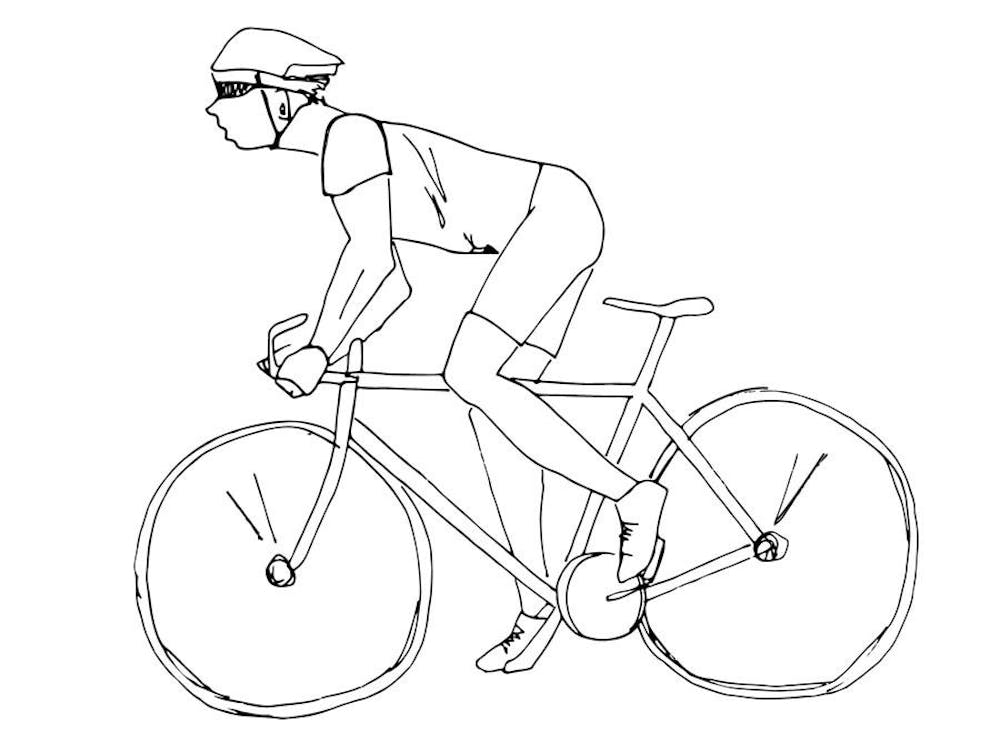
Gear guide
Anatomy of a rider
Get stories like this in your inbox
Subscribe