Women’s bodies are constantly on display. If you are a woman, whether you present yourself willingly or not, your character is going to be evaluated based on your body type and the way you dress.
This is especially true for any woman that represents a non-normative body type.
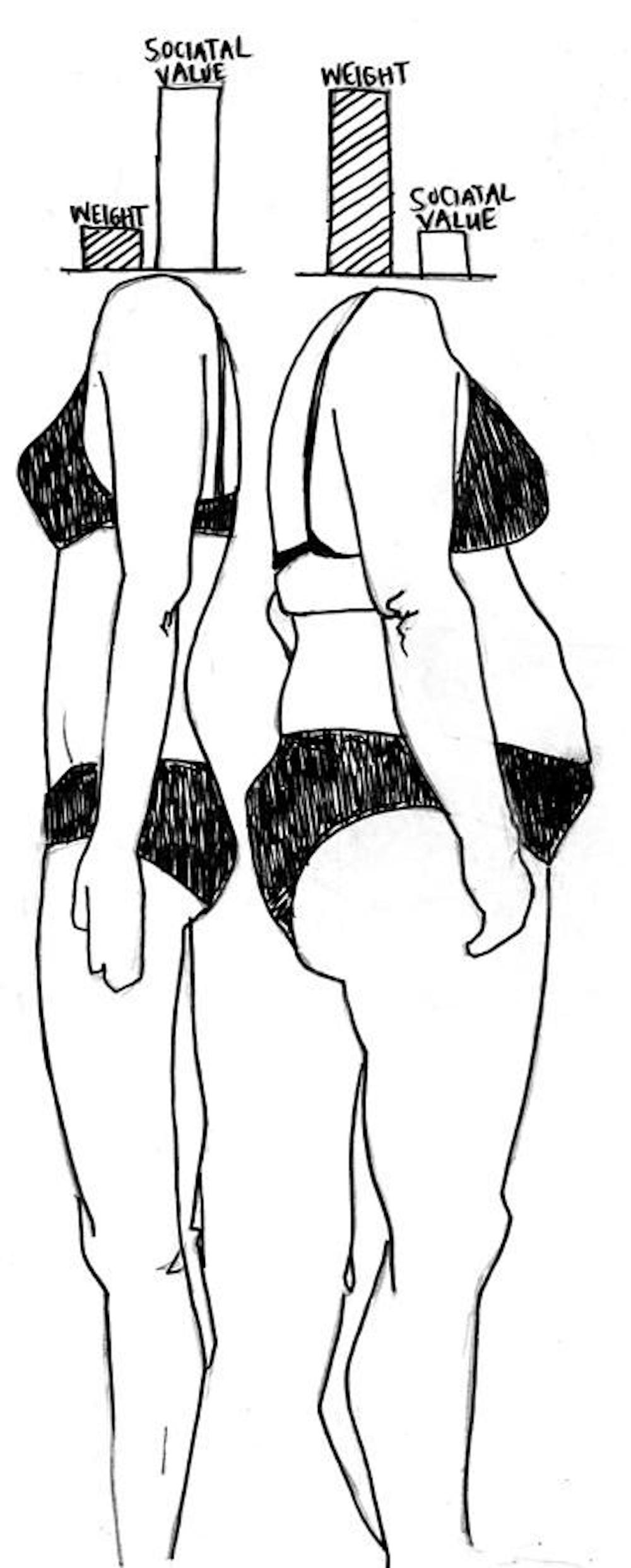
According to a recent study at Yale University, male jurors were more likely to give a guilty verdict to a fat woman than to a thin woman. While there was no weight bias among female jurors toward either sex, thin male jurors in particular showed a strong bias against overweight women.
Overweight women were perceived as significantly more likely to be guilty, as well as being assumed “repeat offenders”, with “awareness” of their crimes.
This is just one of many examples of discrimination to which individuals who are considered overweight or obese are subjected, and adult women are not the only victims.
The Centers for Disease Control actually list and compile reported issues of weight bias when considering childhood obesity.
The study goes on to show obese children and adults are subject to discrimination in education, where overweight students are perceived as untidy and less likely to succeed than their thinner peers.
In employment, overweight applicants are less likely to be hired based solely on their appearance. Even doctors have been reported to spend less time treating and engaging with overweight patients, whom they associate with noncompliance, hostility, dishonesty and inadequate hygiene.
The study also brings up a very important point. It states that for children struggling with weight problems, the negative treatment they receive based on their appearance is just as important toward the welfare of the child as the physical consequences of their weight.
It is too simple to accept the correlation that more body fat means poorer personal choices and more health problems. Trying to examine the “obesity epidemic” in our country forces us to make a lot of assumptions. It implies that just by looking at someone, we can assess that they are sick, they are unhealthy and they continue to make unhealthy choices that are only making them sicker.
Accepting non-normative body types doesn’t mean we are accepting unhealthy ways of life as alternative lifestyles. It means that we don’t make assumptions about someone’s character, or even their personal health, based on how we perceive their appearance.
It means that we accept all different-looking bodies and all differently-abled bodies as deserving of respect and basic human decency.
Mind your body
Get stories like this in your inbox
Subscribe