Reflecting on his life, award-winning author and journalist Andrew Lam said he feels blessed and likened his experience to jumping into icy pool waters on a hot summer’s day.
“Because even though I was scared as hell, I jumped in,” he said, describing how he warmed up minutes after suffering the freezing cold he dreaded.
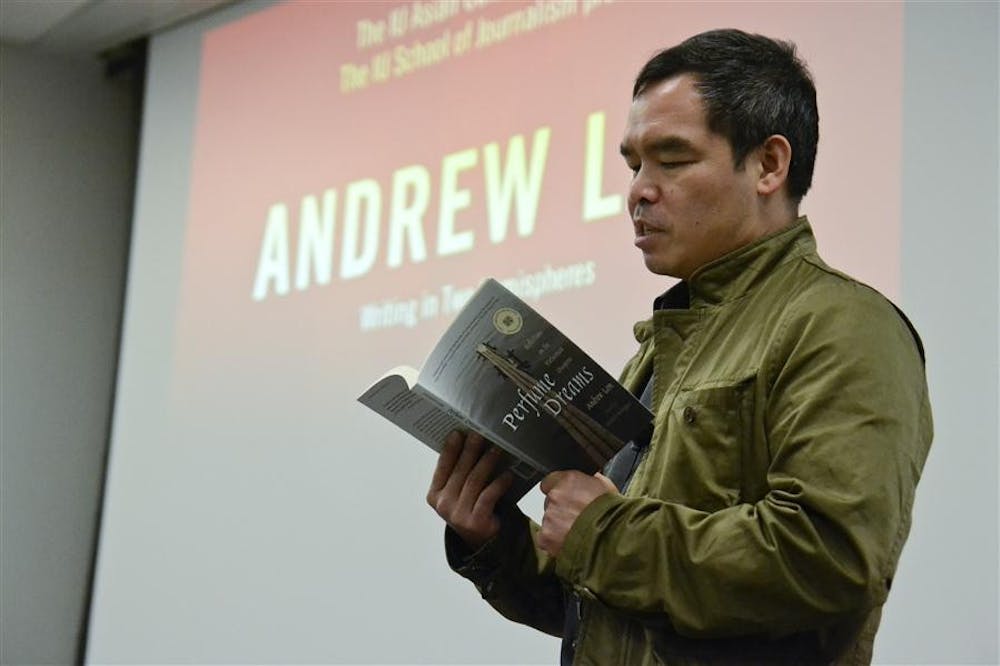
Lam spoke to a packed auditorium on the topic of “Writing in Two Hemispheres” on Thursday at the School of Journalism.
Born in Vietnam and raised in the United States, Lam spoke about how he was a Vietnamese refugee who could only speak French and Vietnamese when he first set foot on American soil at age 11.
However, he later carved a career out of writing English-language articles and books.
The event was part of IU’s celebration of the Asian Pacific American Heritage Month, which recognizes the accomplishments and contributions of Asian Pacific Americans to the nation.
Lam was a child of a high-ranking southern Vietnamese military official, but his family was forced to flee the country Apr. 28, 1975, as Saigon fell into the hands of the communist North Vietnamese army at the end of the war.
After living as a refugee for many years, Lam experienced a moment of romantic heartbreak that changed his life.
“When you love someone, live with someone, share a language with someone,” he said, “it feels like losing an entire country, like you’re in exile.”
It was this concept of exile that made Lam realize he had an important story to tell, and he embarked on a journey to share his experiences and explore the Vietnamese diaspora worldwide.
This exploration includes his 2005 autobiography, “Perfume Dreams,” and “East Eats West: Writing in Two Hemispheres,” a collection of stories that focuses not only on how the East and West have changed but also how they are changing each other today.
His other achievements include the co-founding of New American Media, an association comprising more than 2,000 ethnic media outlets in the United States.
But the question always remains: Where is home?
Lam said that although becoming a writer has changed his place in the world, he does not define “home” by geographic location.
A growing population, Lam said, amidst rapid social change, is the reason why today’s Vietnamese teenagers are quickly forgetting their nation’s terrible past.
“It’s not so much about forgetting the past, but can we remember a damn thing,” Lam said as he compared the situation to how an American teenager would ask what Watergate is.
To Lam, a bulk of Vietnamese culture is defined by a sense of loss. Therefore, he emphasized the vital need to educate modern-day youth about the past, which might give rise to future growth of the nation.
— Amelia Chong
Author discusses time as Vietnamese refugee
Get stories like this in your inbox
Subscribe