The curtain was down for the New York City Ballet dancers. Ballerina Zippora Karz was 21 and had been working professionally for the prestigious company since age 18. Clive Barnes of The New York Post hailed her performance as the Sugar Plum Fairy in “The Nutcracker” as one of a “potential star.”
But backstage at a February 1987 performance of a George Balanchine corps de ballet show, all the Sugar Plum Fairy could do was cry, pinching her false eyelashes to make them stick, thankful that her makeup was waterproof. Earlier that day, a doctor told her she had type 1 diabetes.
The curtain rose as Tchaikovsky’s “Piano Concerto No. 2” played. The music was too intense, too real for her heart to bare. She graced the stage, silent tears flowing down her cheeks the whole time as she thought of losing limbs, kidney failure, heart disease, stroke and going blind.
More than 21 years later, Karz moved back to her hometown of Los Angeles and wrote a book called “The Sugarless Plum.” It was released in November.
The book, Karzsays, is about finding oneself and helping others through health and consciousness, no matter what their body type is. It’s a glimps into the metaphysical transition she made from being on her toes for 16 years with the NYC Ballet, to being off them to live a life of holistic healing and awareness. She spends her time traveling and teaching dancers and non-dancers what she’s learned.
It’s helped her to be the healthiest and happiest she’s ever been.
Act One
Karz flew in from LA Monday night to teach the 34 women of the IU Ballet Department George Balanchine’s “Serenade” for the department’s spring show. As an NYC Ballet dancer, she worked closely with the Russian choreographer before he died.
She was called in by Ballet Department Chair Michael Vernon and someone she mentored, fellow Californian and senior Alison Trumbull.
Tuesday - 10:50 a.m.– Dancers file into room 305 of the Musical Arts Center wearing smiles. Burberry totes, neon hair ties and pink pointe shoes litter the concrete colored floor. The miniature warehouse-sized room is lit by factory fluorescents and cherry print leotards.
“I’m gonna die todayyyy,” a dancer sings.
Rihanna’s “Rude Boy” is playing from an anonymous cell phone, strawberry cream cheese is being smeared on a multigrain bagel, stressed limbs from practice the day before are hurled onto ballet barres. Hairspray hisses from hollow aerosol cans as the women perfect chignons and buns with bobby pins.
“Dance is so visual, it’s important that we look put together,” a dancer explains.
“Turn that music off!” Trumbull shouts at no one in particular.
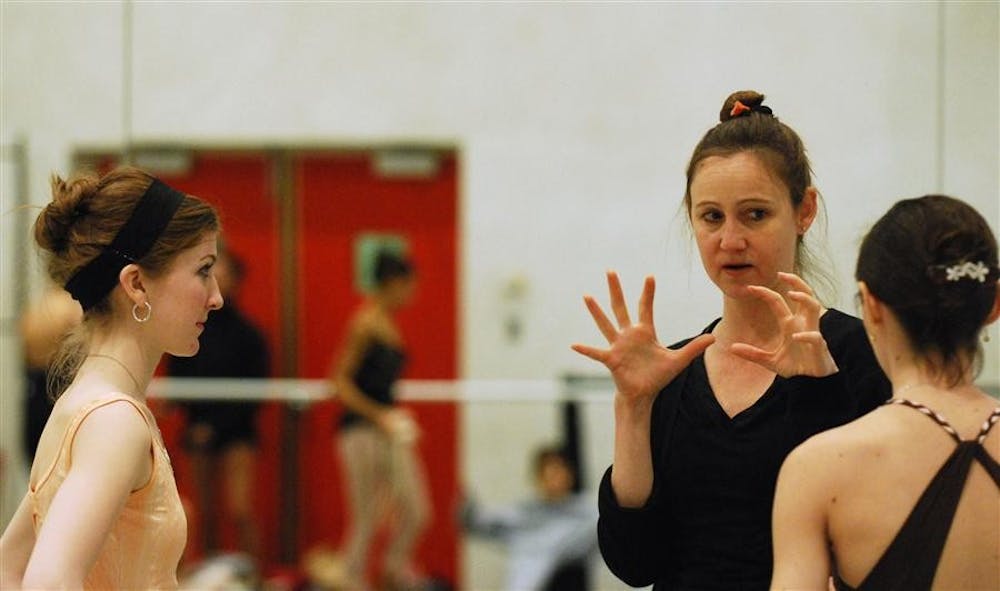
11:30 a.m. — Karz enters the room, her petite 5-5 stature drowning in black sweat apparel. She sets her backpack on the ground, which is engraved with the words,
“Lifting a weight from your mind.” Her brown hair is pulled back to reveal sparkling eyes that have seen her world fall apart and put together again.
Vernon follows her and claps his hands twice. The chatter ceases. He introduces Karz to a room of smiling dancers.
Karz walks to a ballet barre in the room’s center that is occupied by two other dancers. Karz’s hands are folded in prayer position, her voice soft.
“I want to get to know all your names by the end of this,” she says.
She uses elegant allonges to direct the music and the dancers, who plie and releve in a waving cascade for a warm up, their sore bones cracking in harmony with the chords of Mozart’s “Piano Concerto.”
The sheet music is a chaotic wash of crescendos and complex rhythms. Karz resolves the fury as she snakes in between the dancers while they transition to quick-quick-slow soutenus.
She corrects the dancers’ lines by gently placing her hands on their waists.
Trumbull can’t stop smiling, even while managing an arabesque. Watching her mentor teach after what she’s been through is an honor.
“Ballet’s so hard, you’re always striving for perfection,” Trumbull says. “But the way she would tell me things, the gentle way she taught me, encouraged me to do my personal best.”
Act Two
The dancers take five, and staccato tête-à-têtes from earlier in the day resume. One dancer can’t wait to sleep; she has a biology exam tomorrow.
It’s 1:41 p.m., and the dancers, now including the men of the ballet department, are preparing to show Karz their work on Balanchine’s “Serenade.”
At first, the dancers seem afraid. The movement is sharp and militaristic, the piano playing is choppy. A dancer falls in the middle of repeated soutenus.
Karz stops everything. She turns to Vernon, who is seated in a chair next to her. “That’s so not Balanchine,” she says. “I don’t want to step on anyone’s toes, though.”
She waves her arms in a legato motion through the air. “Don’t be afraid to make your body sing,” she says.
Around 2:12 p.m, a compromise is struck in the routine so the dancers are more comfortable. They try again. Scoops and partnered dips and V-line formations cover the room, as dancers attempt to make the most of their space.
The music is also more intense. The pianist counts the rhythms out loud as she pounds the notes of an elegy.
The way the dancers fearlessly tried again reminds her of her days as a ballerina in the NYC Ballet. It was there, and working with people like Balanchine, that she learned how to try again – that imperfection was okay sometimes.
Karz takes it all in and clasps her hands to her heart.
A single word escapes from her tiny frame: “Beautiful.”
But backstage at a February 1987 performance of a George Balanchine corps de ballet show, all the Sugar Plum Fairy could do was cry, pinching her false eyelashes to make them stick, thankful that her makeup was waterproof. Earlier that day, a doctor told her she had type 1 diabetes.
The curtain rose as Tchaikovsky’s “Piano Concerto No. 2” played. The music was too intense, too real for her heart to bare. She graced the stage, silent tears flowing down her cheeks the whole time as she thought of losing limbs, kidney failure, heart disease, stroke and going blind.
More than 21 years later, Karz moved back to her hometown of Los Angeles and wrote a book called “The Sugarless Plum.” It was released in November.
The book, Karzsays, is about finding oneself and helping others through health and consciousness, no matter what their body type is. It’s a glimps into the metaphysical transition she made from being on her toes for 16 years with the NYC Ballet, to being off them to live a life of holistic healing and awareness. She spends her time traveling and teaching dancers and non-dancers what she’s learned.
It’s helped her to be the healthiest and happiest she’s ever been.
Act One
Karz flew in from LA Monday night to teach the 34 women of the IU Ballet Department George Balanchine’s “Serenade” for the department’s spring show. As an NYC Ballet dancer, she worked closely with the Russian choreographer before he died.
She was called in by Ballet Department Chair Michael Vernon and someone she mentored, fellow Californian and senior Alison Trumbull.
Tuesday - 10:50 a.m.– Dancers file into room 305 of the Musical Arts Center wearing smiles. Burberry totes, neon hair ties and pink pointe shoes litter the concrete colored floor. The miniature warehouse-sized room is lit by factory fluorescents and cherry print leotards.
“I’m gonna die todayyyy,” a dancer sings.
Rihanna’s “Rude Boy” is playing from an anonymous cell phone, strawberry cream cheese is being smeared on a multigrain bagel, stressed limbs from practice the day before are hurled onto ballet barres. Hairspray hisses from hollow aerosol cans as the women perfect chignons and buns with bobby pins.
“Dance is so visual, it’s important that we look put together,” a dancer explains.
“Turn that music off!” Trumbull shouts at no one in particular.
11:30 a.m. — Karz enters the room, her petite 5-5 stature drowning in black sweat apparel. She sets her backpack on the ground, which is engraved with the words,
“Lifting a weight from your mind.” Her brown hair is pulled back to reveal sparkling eyes that have seen her world fall apart and put together again.
Vernon follows her and claps his hands twice. The chatter ceases. He introduces Karz to a room of smiling dancers.
Karz walks to a ballet barre in the room’s center that is occupied by two other dancers. Karz’s hands are folded in prayer position, her voice soft.
“I want to get to know all your names by the end of this,” she says.
She uses elegant allonges to direct the music and the dancers, who plie and releve in a waving cascade for a warm up, their sore bones cracking in harmony with the chords of Mozart’s “Piano Concerto.”
The sheet music is a chaotic wash of crescendos and complex rhythms. Karz resolves the fury as she snakes in between the dancers while they transition to quick-quick-slow soutenus.
She corrects the dancers’ lines by gently placing her hands on their waists.
Trumbull can’t stop smiling, even while managing an arabesque. Watching her mentor teach after what she’s been through is an honor.
“Ballet’s so hard, you’re always striving for perfection,” Trumbull says. “But the way she would tell me things, the gentle way she taught me, encouraged me to do my personal best.”
Act Two
The dancers take five, and staccato tête-à-têtes from earlier in the day resume. One dancer can’t wait to sleep; she has a biology exam tomorrow.
It’s 1:41 p.m., and the dancers, now including the men of the ballet department, are preparing to show Karz their work on Balanchine’s “Serenade.”
At first, the dancers seem afraid. The movement is sharp and militaristic, the piano playing is choppy. A dancer falls in the middle of repeated soutenus.
Karz stops everything. She turns to Vernon, who is seated in a chair next to her. “That’s so not Balanchine,” she says. “I don’t want to step on anyone’s toes, though.”
She waves her arms in a legato motion through the air. “Don’t be afraid to make your body sing,” she says.
Around 2:12 p.m, a compromise is struck in the routine so the dancers are more comfortable. They try again. Scoops and partnered dips and V-line formations cover the room, as dancers attempt to make the most of their space.
The music is also more intense. The pianist counts the rhythms out loud as she pounds the notes of an elegy.
The way the dancers fearlessly tried again reminds her of her days as a ballerina in the NYC Ballet. It was there, and working with people like Balanchine, that she learned how to try again – that imperfection was okay sometimes.
Karz takes it all in and clasps her hands to her heart.
A single word escapes from her tiny frame: “Beautiful.”