Speaking about undergraduate education
At first we thought this was a no-brainer – one of those task force state-the-obvious kinds of things. After all, undergraduates make up the majority of students on this campus, so why wouldn’t we be talking about their education?
But we say that since the task force feels the need to remind someone of this, maybe it isn’t as self-evident as we thought.
Undergraduate education should be something that this campus values. So publicizing undergraduate accomplishments, making undergraduate education part of a campus’ core mission and focusing on teaching methods all make a lot of sense.
We give this part of the report an A+ for common sense. But – from your mostly undergraduate editorial board – isn’t it all about us anyway?
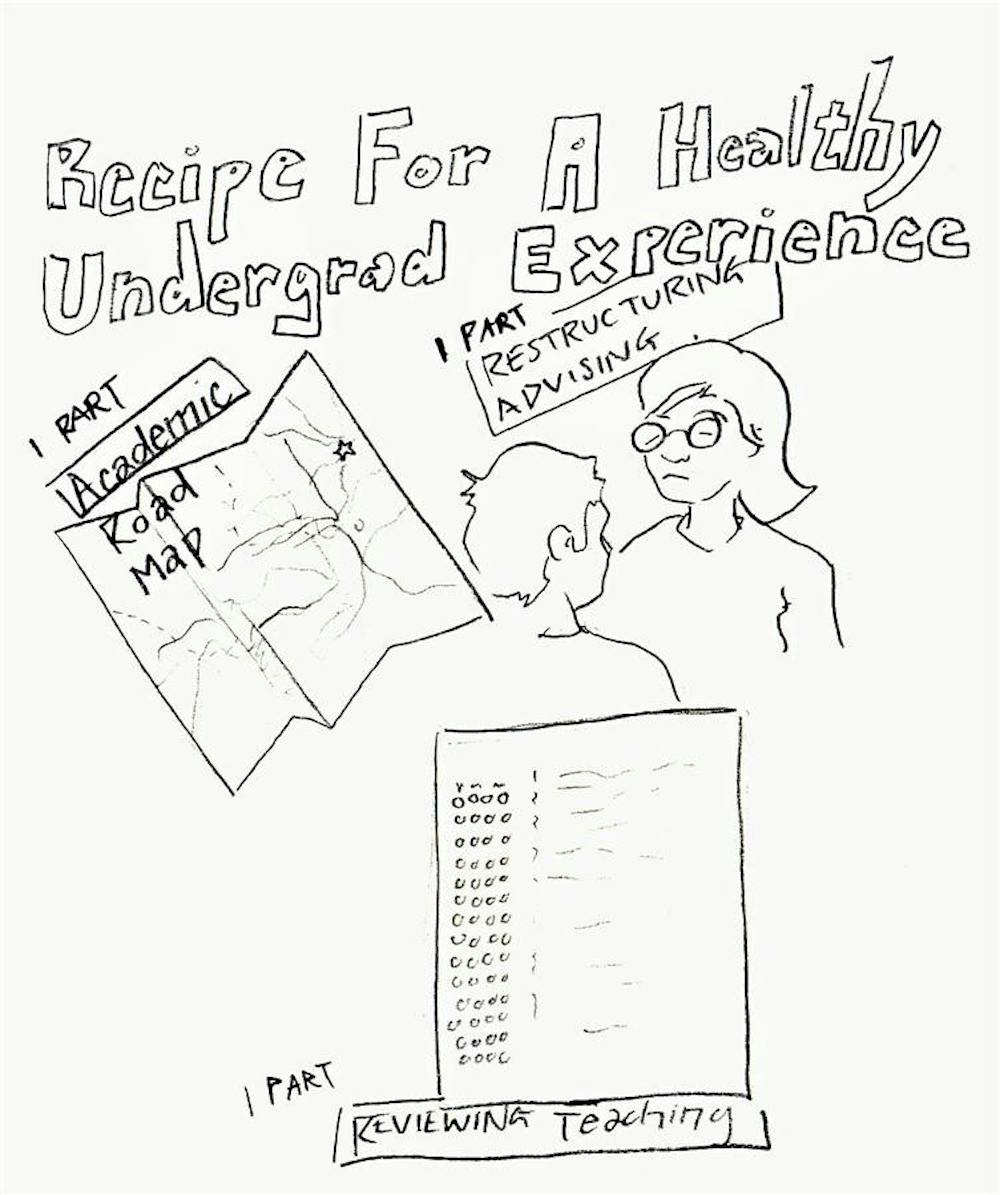
Drive-through advising
We’ve heard a lot of horror stories about academic advisers. Maybe they accidentally enrolled you in the ROTC program, perhaps they informed you that a double major was impossible after several classes or, by chance, your college experience was a recreation of Colin Hanks in “Orange County.”
Unfortunately, the tales here at IU can be more than myth.
There are many things that can lead to poor advising; too many students for one adviser to remember is one. How can we expect the guides of academia to lead us in the right path when most of an appointment is spent remembering what a student has already taken?
Either the university needs to hire more advisers for each school, or it needs to find a better alternative for advisers to become more acquainted with their students.
The academic plans for graduation itself are clumsy and confusing enough. If advisers have to consult numerous texts just to OK a class, what chance do regular students have of doing so when their adviser is too busy to meet during drop week?
Advisers do advertise office hours, but we can’t help but feel the current system is more of an assembly line of quick care and not the intensive time that we sometimes require.
Roadmap, please
It’s that time of year again. The weather is brisk, students are trying to brainstorm a creative yet cheap Halloween costume, and it’s time to sit down and plan out schedules for next semester.
This involves at least 10 sheets of notebook paper, various multicolored advising forms and opening about 15 browser windows: OneStart, the Student Center, Academic Planner, the course descriptions page, the grade distribution page from the Office of the Registrar, the Academic Bulletin for all of our majors, minors, and respective schools, etc.
Moral of the story: It’s insanely complicated.
The Academic Roadmap recommended by the Task Force is just what we need to streamline the overly complicated matter of schedule-making.
We need a simple up-to-date list of what we need to graduate and what courses could potentially fulfill that. We don’t want to spend 30 minutes searching for an A&H credit that also covers culture studies. We want something that tells us we need three credits in each and then suggests what courses could fulfill that need.
An Academic Roadmap would make a large and complicated system like IU’s much easier for undergraduates to understand as well as give them the ability to make the most of all the academic opportunities IU offers.
A new academic roadmap
Get stories like this in your inbox
Subscribe