WE SAY Don’t railroad trials to avoid presenting tangible evidence.
When the Obama administration first took office, it wanted to show the American people that it was going to waste no time before implementing change. One of the first orders of business, which took place just days after inauguration, was to force prisoners held at Guantanamo Bay, Cuba, to be sent to trial.
But it quickly became obvious that after the administration began reviewing the prisoner profiles and the intelligence reports, that the closure of Guantanamo was not going to be as easy as boarding it up. There are, in fact, men whose evidence for their associations with terrorist groups or activities would be difficult to present in a trial but who have confessed.
Bringing these men to trial would require prosecutors to air the brutal interrogation techniques that led to their confessions. “Much of the evidence against the men accused in the Sept. 11 case, as well as against other detainees, is believed to have come from confessions they gave during intense interrogations at secret C.I.A. prisons,” according to The New York Times.
A trial would force the administration to decide whether it wants to withhold politically damaging evidence, thereby weakening their case against the detainees and possibly letting prisoners go because of it, or reveal to the world gory secrets and hope that evidence holds up in court.
After realizing the potential for freeing some detainees who have confessed if it did not eventually open up about the interrogations, the administration asked for time to figure out how to deal with such detainees, hoping to find a solution to both. But you can’t have your cake and eat it, too.
That is, you can’t have political expediency and thoroughness both. But you can have an illusion of one.
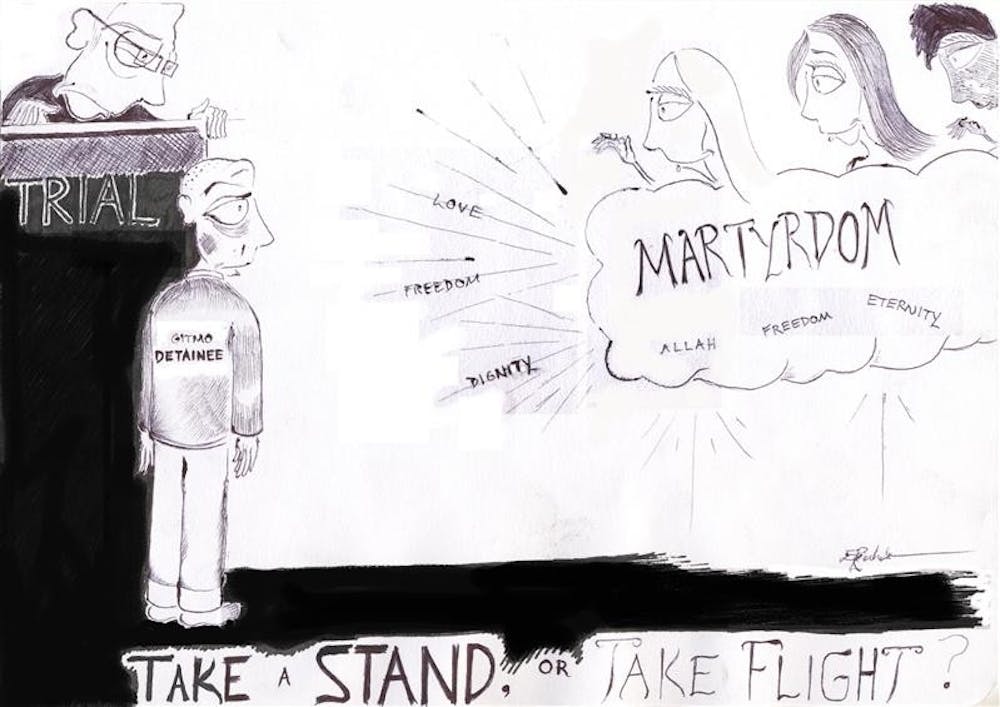
Some detainees who have confessed believe their deaths will bring them martyrdom, and so they have asked to plead guilty to a death sentence. The administration is now considering a change in the law for military commissions – by which captured enemies are prosecuted for war crimes – that would allow detainees facing the death penalty to plead guilty without a full trial. Of course, this first has to be approved by Congress.
By giving those detainees what they want, and bypassing a trial where evidence would have to be presented, the administration can have its political expediency and an illusion of thoroughness.
As the law for military commissions currently stands, it is ambiguous whether guilty pleas are allowed in capital cases. But the American military justice law, which served as a model for the military commissions rules, states that no member of the armed services who is facing the death penalty can plead guilty.
There are problems with accepting the rule changes. It brushes under the rug the international crime of torture and presumes that confessions during harsh interrogation techniques are legitimate. It also establishes that confessions, which occasionally have been shoddy, are enough to execute someone.
In all likelihood, these men who confessed are guilty. But what thoroughness we can offer for their trials shouldn’t be sidelined for political expediency. If it has to be made public how we got their confession, which can help determine the quality of that confession, so be it.
Gitmo guilty pleas
Get stories like this in your inbox
Subscribe