They hide from the sunlight and come out at night to suck people’s blood. And the scariest part of all: They’re real.
No, they’re not vampires; they’re bedbugs, and they are back with a vengeance. Once nearly eradicated by the use of the insecticide DDT, these household pests are emerging again – and in alarming numbers.
According to the National Pest Management Association, bedbug incidents increased about 70 percent between 2000 and 2005, and New York City recorded a 1,900 percent increase in bedbug complaints since 2004.
“There’s definitely been a big increase in bedbug calls,” said John Holcomb, manager of Big Red Pest Control, which services Bloomington and surrounding areas. “In 20 years, I never had one call, and then in the last 10 ... I’d say 1,000 percent (increase).”
Bedbugs are tiny insects that have adapted to the cushy environments of the human world. They hide in mattresses and other furniture until nighttime, when they feed off human blood.
A study published in the most recent issue of the Journal of Medical Entomology suggests a cause for the sudden rise in bedbug infestations is pest resistance.
Toxicologists from the University of Massachusetts Amherst and Korea’s Seoul National University provide evidence that some of these blood-sucking pests are no longer susceptible to the insecticides commonly used to control them.
The most widely used defenses against bedbugs, pyrethroid insecticides, target the nervous system, locking open sodium channels – or pores through which sodium passes – on the surface of neurons.
“As the sodium channel is held open, you have too much excitation coming into the nervous system,” said John Clark, the study’s lead author, of the University of Massachusetts–Amherst. This leads to
convulsions, the exhaustion of muscle systems and eventual death.
Some populations of bedbugs, however, have developed resistance to these pesticides. The population of bedbugs collected from New York City for the study, for example, were so resilient it took them 264 times longer to die when exposed to the toxin.
“The big problem we have right now is there’s not a lot of alternatives,” Clark said.
The most important step in preventing full-blown infestations is vigilance, experts say. The earlier one spots the bugs, the easier they are to remove.
“Once the infestation really builds up hard-core, then they’re fairly difficult to deal with,” said Marc Lame, School of Public and Environmental Affairs professor and pest control expert.
“I’ve asked the IU residential program folks to educate students about how to monitor for bedbugs, so when they do get bedbugs, they will be able to get rid of them pretty quick,” Lame said.
The Indiana Memorial Union Biddle Hotel and Conference Center takes a similar approach. Although unwilling to comment on any specific incidents, Rooms Division Manager Brandi Host assured they are taking the proper steps to avoid a bedbug outbreak.
“The IMU practices preventative measures, such as regular inspections and treatments to all the rooms on a regular basis,” Host said. “We also train our staff to be on the lookout for any types of insects or any other problems that could potentially affect our guests’ stay.”
The bottom line is to be on the lookout for bedbugs, and report them immediately.
“If you start getting bites on your body at night,” Clark said, “they might not be spiders.”
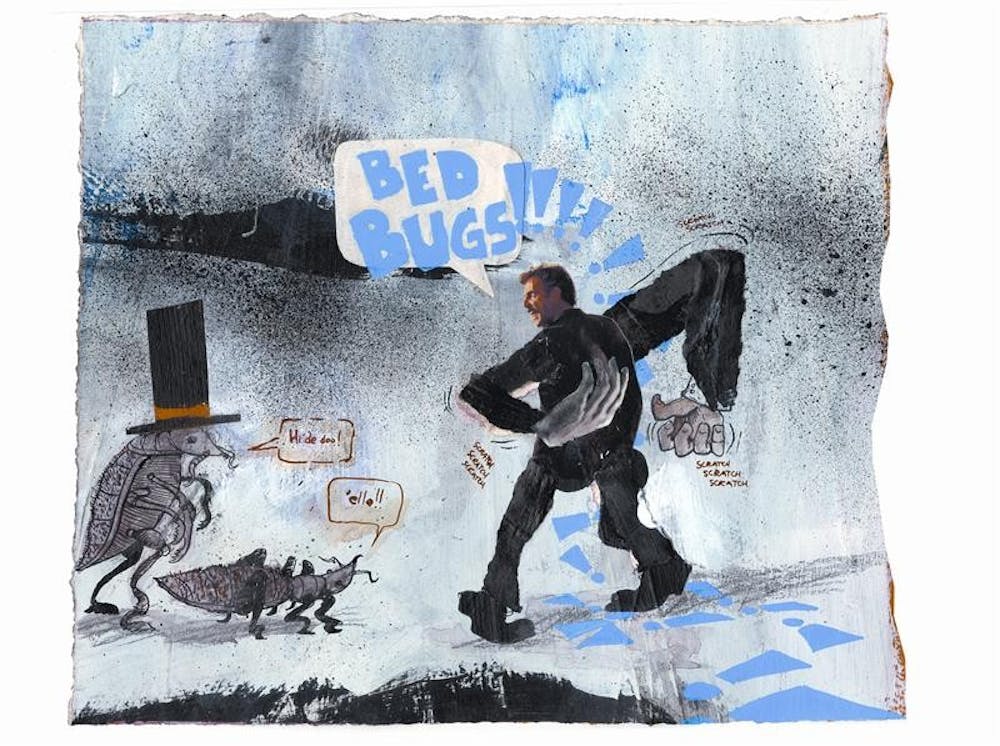
Bedbugs emerge in large numbers
Get stories like this in your inbox
Subscribe