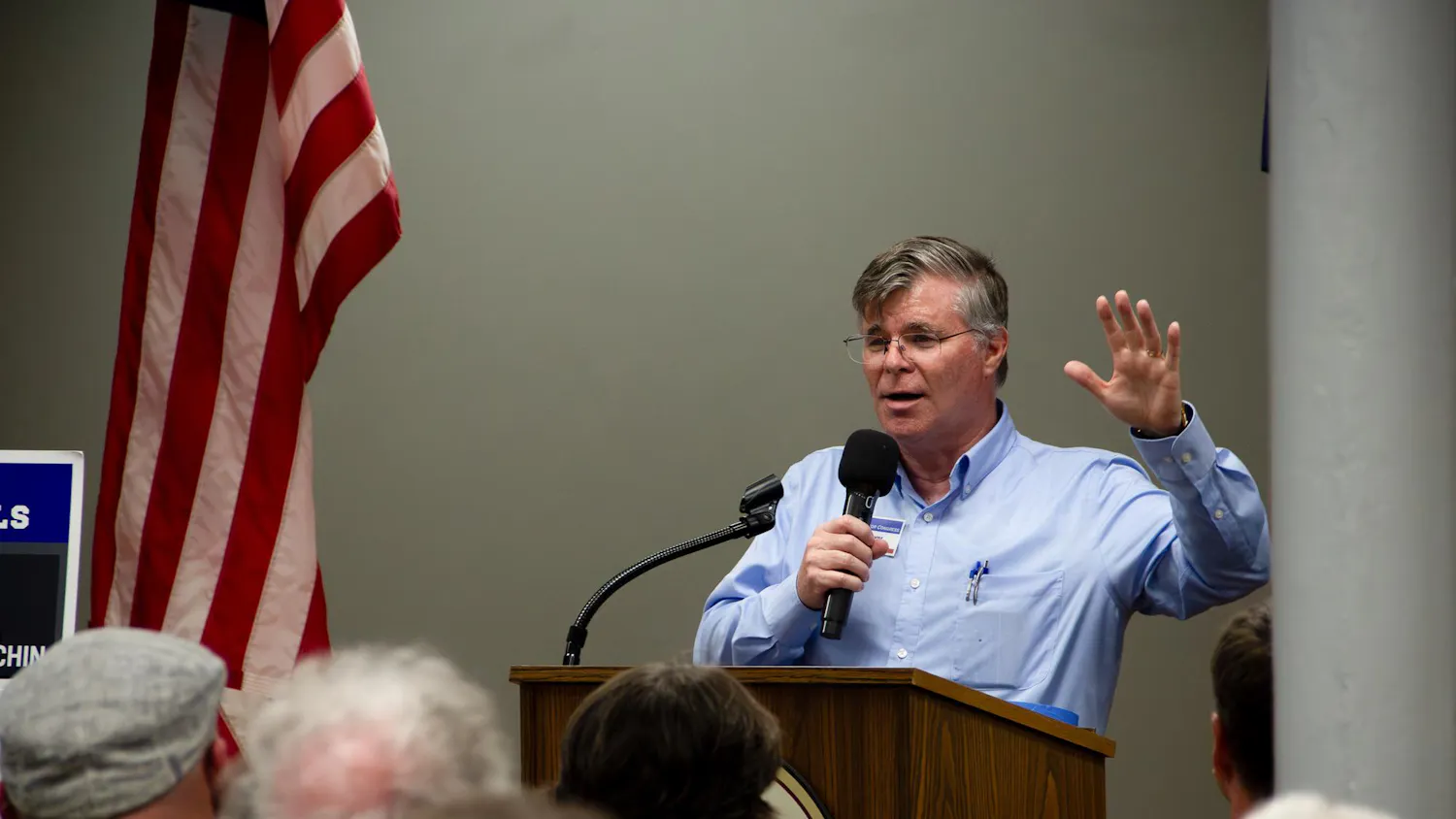
The Democratic National Committee was in a crisis and called on Edward Carmines, an IU political science professor, for help.\nThe committee contacted Carmines and other academics around the nation, asking for advice on what it should do concerning the close race between Democratic candidates Hillary Clinton and Barack Obama. \nHowever, the potential meeting in Washington, D.C., that Carmines was invited to attend was canceled because ideas started to circulate that one candidacy would be favored over the other. \nDespite the fact that the conference was canceled, Carmines and others agree that whether Clinton or Obama will take the nomination before the convention is still an important issue as the May 6 Indiana \nprimary approaches. \nCarmines said there was a sense that any plan that was developed to determine a nominee before the convention would short circuit the campaign of the candidate currently behind in the polls.\n“(The DNC) had an idea to get proposals together, but Howard Dean and the DNC just don’t have the authority to get this resolved,” Carmines said.\nThis is the first time since 1968 that Indiana has been in the forefront of the nomination, Carmines said. Thanks to the drawn-out nomination process, states such as Indiana that hold later primaries are actually receiving attention from Democratic candidates who need to acquire as many delegates as possible, Carmines said.\nWhile these states are excited about playing a role in the nomination process, the party elders are worried that this prolonged nomination process could be harmful, Carmines said. It is especially worrisome this year because the Republicans have already settled on a nominee.\n“It could be a negative effect and it could ruin what is still seen as the ‘Democrats’ turn’ after the tumultuous Bush years,” said sophomore Alex Luboff, offering his political opinion on the issue. \nTwo main scenarios could play out in this situation, Carmines said. If only 150 delegates or fewer are still separating Obama and Clinton at the end of the primary season in June, then there is no way to possibly resolve this before the convention. However, if the gap widens by more than 200 delegates, the majority of \nsuperdelegates will get behind the front-runner, Carmines said.\nWhile these are just two of the possible outcomes being discussed, the DNC is still unsure of how things will \nturn out.\n“Anybody who says they know how this will play out is lying to you,” said Charles Lichtman, IU alumnus and lead council for the DNC of Southern Florida.\nThe best chance for solving the problem was when the mail-in vote was proffered in Florida, Lichtman said. That, however, fell through. Currently, neither Michigan nor Florida will be allowed to seat delegates at the Democratic Convention because both states broke party rules by having their primaries before Feb. 5 without receiving party permission.\n“This is a huge mess,” Lichtman said. “Everyone wants to fix this, and maybe they’ll find a way. But I can’t see it happening.”
Democratic National Committee asks IU professor for help regarding Obama, Clinton
Close race raises many questions
Get stories like this in your inbox
Subscribe