
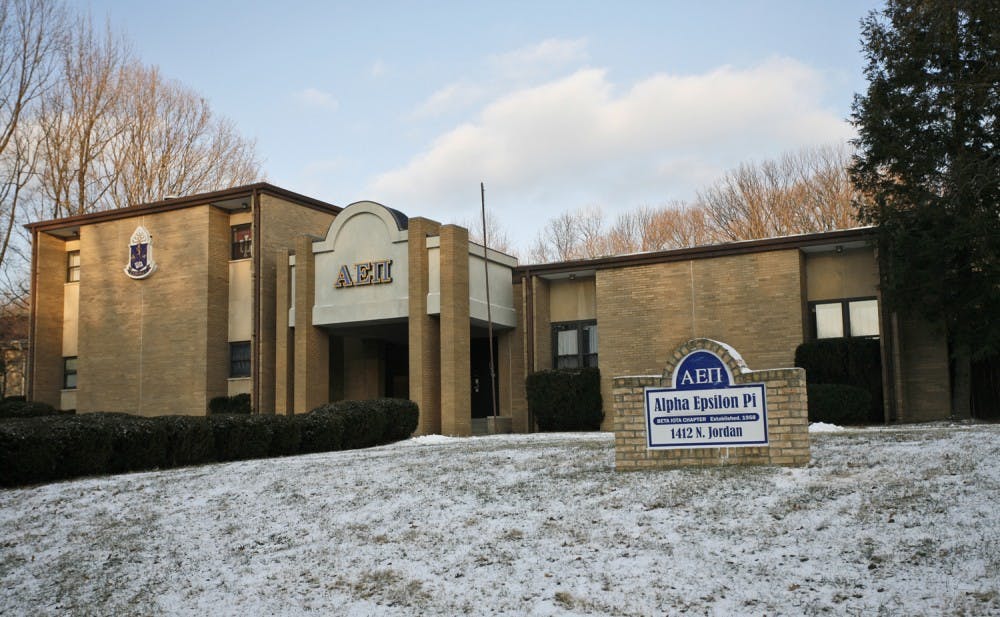
Since the expulsion of IU’s Alpha Epsilon Pi fraternity last Wednesday, students in the greek system have both questioned and praised the University’s handling of hazing allegations at the fraternity. \nThe Campus Student Organization Ethics Board found AEPi in violation of the Student Organization Code which prohibits hazing. The code defines hazing as “any conduct that subjects another person, whether physically, mentally, emotionally or psychologically, to anything that may endanger, abuse, degrade or intimidate the person as a condition of \nassociation with a group or organization, regardless of the person’s consent or lack of consent.”\nDean of Students Dick McKaig said some of AEPi’s hazing consisted of sleep deprivation, late-night activities, and “fighting fear” by intentionally scaring pledges and leading them to remote areas and making them walk back to campus.\nSophomore Elissa White is a member of Alpha Xi Delta sorority and said it is a shame the fraternity was kicked off campus because many of the fraternity’s members had invested a lot of time into the organization. But despite their contributions, she said hazing is a big issue on campus.\n“It shows that the University is taking hazing very seriously,” White said.\nOther students, such as senior Kammeron Hughes, a member of Delta Delta Delta sorority, said she has friends within the fraternity and that it is a sad situation. She also said the situation is unfortunate for those who had nothing to do with the hazing.\n“We used to go over to the house and have fun times and hang out,” Hughes said. “But what is real sad is a lot of greeks just don’t care about hazing anymore.”\nA member of a fraternity on campus, who wishes to stay anonymous due to concerns about activities in his own fraternity, said the University’s policy is not clear on what hazing is.\n“The policy is basically saying everything is considered hazing,” he said. “So pretty much the greek community has to step on pins and needles in everything that they do.”\nMax Newman, Judaic chair of AEPi, told the Indiana Daily Student Wednesday that because the term hazing is so broad, it’s hard to know what it encompasses. Newman said because of the broad definition, making pledges wear suits can be considered hazing.\nMcKaig said he does not believe the University’s hazing policy is misleading, but said it has to be broad because it’s impossible to come up with a complete list of banned hazing activities.\n“It has to be broad,” McKaig said. “No one can underestimate the students who can come up with new creative ideas.”\nMost students interviewed said it was a wake-up call, and some were surprised that AEPi received only a two-year expulsion.\n“The two-year expulsion is reasonable,” Davenport said. “With some universities, some greek organizations have been permanently removed from campus.”\nWhite said she hopes that after the two-year close of AEPi, the fraternity members can redeem themselves and maybe the whole greek community can learn from this, White said.\n“I think the punishment is justified,” she said.
Students react to AEPi closing
Get stories like this in your inbox
Subscribe



