
With many players gaining court injunctions across the country, Friday proved to be the chaos-inducing day for the NCAA and the governing body’s new “5-for-5" rule. Denver U.S. District Judge Charlotte Sweeney granted a preliminary injunction that gives college athletes who graduated high school in 2022 another year of eligibility for the upcoming school year.
The new policy surrounding collegiate eligibility was announced in June. The new rules allow players five years to complete five seasons. Their eligibility begins with their full-time enrollment or the academic year following their 19th birthday, whichever event occurs first. However, athletes from the class of 2022 who completed four years would not be eligible for a fifth year.
With many of those athletes now graduated, lawsuits started flowing into courts.
The first took place in Hamilton County, Ohio. 15 men’s and women’s basketball players were granted a preliminary injunction on July 9.
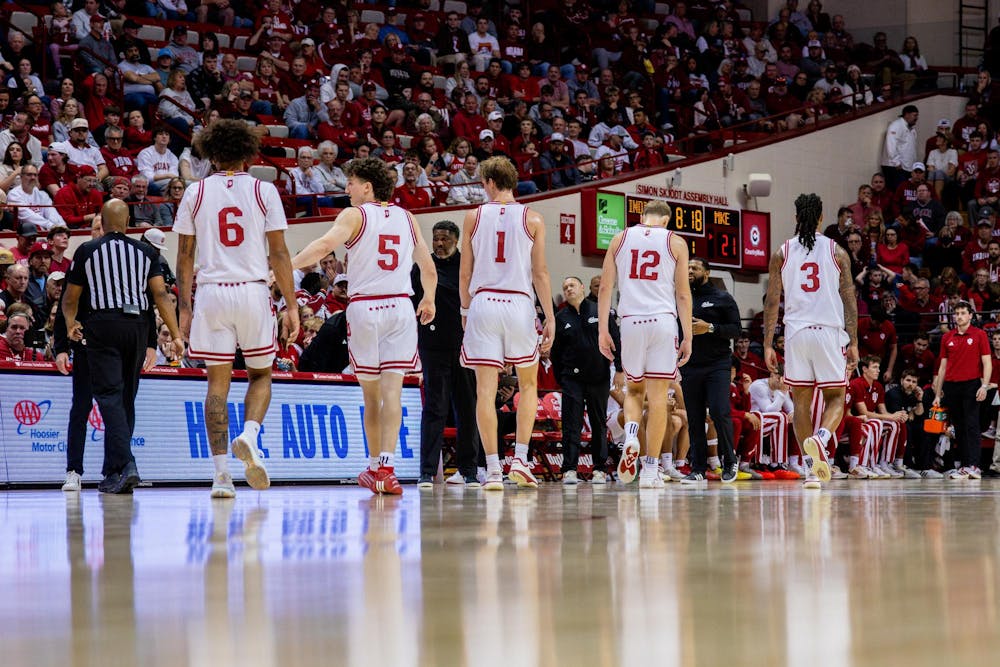
Friday also saw 19 players granted a fifth season of eligibility after a hearing in Nashville, Tennessee. The Davidson County Chancery Court issued a temporary injunction, which former Indiana men’s basketball player Sam Alexis was named in. Former Indiana player Reed Bailey was part of a similar group looking to play a fifth season after joining a lawsuit in North Carolina.
Here are some Indiana players that are now eligible to return for another college season:
Football
Aiden Fisher
Elijah Sarratt
Holden Staes
Jonathan Brady
Kellan Wyatt
Mitch McCarthy
Stephen Daley
Men’s Basketball
Sam Alexis
Reed Bailey
Women’s Basketball
Jerni Kiaku
Shay Ciezki
This list isn’t exhaustive and doesn’t account for many players in every sport at Indiana, but they have opportunities to stay in Bloomington or enter a newly developed transfer portal period, which will run from Aug. 3-10 for impacted players. But with fall athletic seasons about to start, many rosters were built without these players in mind, making roster spots scarce.
The ruling also did not outline whether players who signed professional contracts are eligible to return to college athletics. Fisher and Sarratt were taken in the NFL Draft, Alexis and Bailey played games in the NBA Summer League and Ciezki now plays for the WNBA’s Phoenix Mercury.
In such cases, it is highly unlikely that these players will return, but the door is open for them.
The NCAA and its president, Charlie Baker, swiftly released a statement on X denouncing the move and calling on Congress to pass the Protect College Sports Act.
“Without targeted intervention from Congress, college sports cannot set nationwide rules everyone can play by and without Congress, failed professionals will continue to use college sports as a fallback option — robbing the next class of young athletes of college scholarships,” Baker’s statement read. “…Today’s rulings and the chaos they bring to college sports are exactly why it’s time to pass this bill.”
The act’s major provisions increase athletic programs’ ability to spend on their teams. As written, there will be a $21.3 million cap, plus $22.5 million for retention of players already playing for the school. Additionally, a $5 million budget will go toward non-revenue sports’ NIL, allowing schools to pay as much as $48.8 million annually to players.
Along with the payment process, the bill also adds protections for women’s and Olympic sports. The NCAA will be prohibited from reducing the number of varsity teams and the minimum roster size.
In addition to the NCAA, the Big Ten and Southeastern Conference also issued a joint statement Friday.
“The Big Ten Conference and Southeastern Conference support the Protect College Sports Act as currently drafted, following detailed and productive negotiations with Senators Cruz, Cantwell and Schmitt, and their respective staffs. We appreciate the substantial work that has gone into this effort,” the conferences wrote.
The act advanced out of the Senate Commerce Committee — which oversees national policies surrounding interstate commerce and transportation — June 18, giving Congress the authority to vote on the act. It advanced on a 19-9 vote.
However, the Big Ten and SEC previously stated opposition to the act as drafted. Both conferences opposed a provision regarding name, image and likeness deals athletes could strike with companies. The pair stated that they wanted more clearly defined restrictions on deals between athletes and companies working with schools, which some programs were using to circumvent the revenue-sharing limit of $20.5 million.
The Senate is in recess from Aug. 10 to Sept. 11, meaning that the act cannot be voted on during that period. The act was a bipartisan effort led by Sens. Ted Cruz, R-Texas, and Maria Cantwell, D-Wash, but will still need to secure 60 votes to pass in such a short time.
The House of Representatives tried to pass the SCORE Act earlier this year, but the bill was pulled from the House agenda multiple times. The act, which also sought to revamp college athletics, did not receive enough support to be voted on.
With many Indiana teams starting practices for their upcoming seasons, questions will remain about potential returners.



