
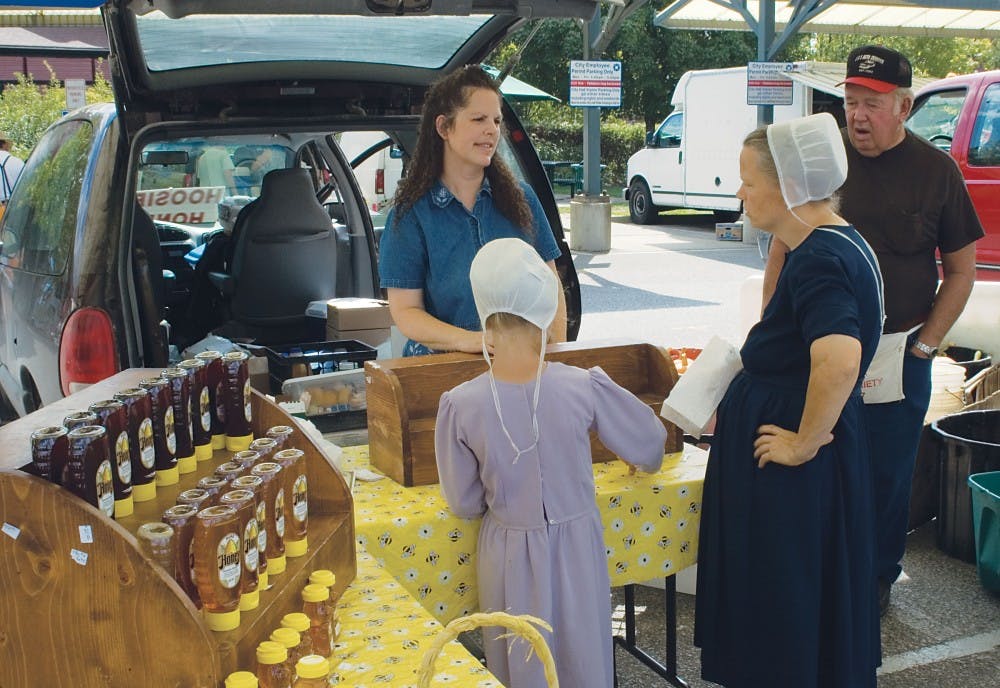
The organic food market has blossomed around the country in the last few years. According to the the Organic Trade Association, U.S. organic food sales grew by 22.1 percent in 2006 alone, reaching $16.9 billion. Through Bloomingfoods, local organic growers and the community farmers’ market, Bloomington is contributing to this trend.\n“Bloomington is a very community-oriented town,” said Nicki Christie, a bulk buyer for Bloomingfoods Cooperative Market and Deli. “It’s great seeing people work together to try and make Bloomington better for everyone.”\nThe emergence of the local organic food market has created more food options this fall for its residents. Bloomingfoods held the grand opening for its third store on West Sixth Street Sept. 15, making it one of a handful of cooperatives with more than one outlet, Christie said. The cooperative provides customers with a greater selection of organic produce than is carried at conventional grocery stores. Bloomington also hosts a farmers’ market through November, where local farmers sell their crops on Saturdays. \nBloomington residents involved in the growth of the organic industry cite the importance of local and chemical-free organic foods, though organic foods typically have higher prices than conventional foods. \n“Organic food is important, but local and organic food is more important,” said Danny Atlas, cofounder and former president of Students Producing Organics Under the Sun, or SPROUTS. \nAtlas created the group as a way to produce food locally and begin a student-run, hands-on organization for food production and education. All of the seeds’ uses are organic. Much of the group’s food goes to Mother Hubbard’s Cupboard, a community food pantry, and the Hoosier Hills Food Bank. The remainder is sold at the farmers’ market.\n“We try not to focus on the money aspect,” Atlas said. “The farmers’ market is a way to get our name out there.”\nBy purchasing local food, money stays within the local economy and proceeds go directly to the local farmers. The food is also fresher because it doesn’t get shipped long distances.\n“Local organic food takes less time to get from the farm to the consumers,” said senior and group member Sarah Taylor. \nTaylor is a major advocate for the production of organic food. She said buying this food is about starting a movement.\nOne of the drawbacks of organic food is higher prices, Taylor said. A high percentage of organic food is shipped from outside of Indiana, causing the higher prices. Taylor said it is sometimes backwards to buy organic food instead of local food.\n“By buying locally, you’re saving the environment by not supporting the use of pesticides and herbicides as well as not wasting as much petroleum in the shipping process,” Taylor said. \nMany serious health problems are linked to eating food containing pesticides and herbicides. Some of these effects include birth defects, nerve damage and cancer. Foods with pesticides and herbicides also pose major threats to children, according to the Environmental Protection Agency Web site.\n“With organic food there are no chemicals or pesticides,” Christie said, “and when it comes to meat and eggs, the animals are not treated with antibiotics. It’s all natural.”\nBloomingfoods also provides customers with the option of ordering goods not usually stocked in stores.\n“People claim to be very sensitive to eating food with pesticides,” Christie said. “Some of our customers say that they get headaches when they digest the toxins.”\nOrganic, locally grown food has continued to expand in the Bloomington food market, exposing more Bloomington citizens to a variety of food choices.\n“I go to the farmers’ market or Bloomingfoods so I can buy a peach picked this morning,” Atlas said. “It just tastes better.”
Growth spurt
Bloomington plays role in expanding organic foods market
Get stories like this in your inbox
Subscribe



