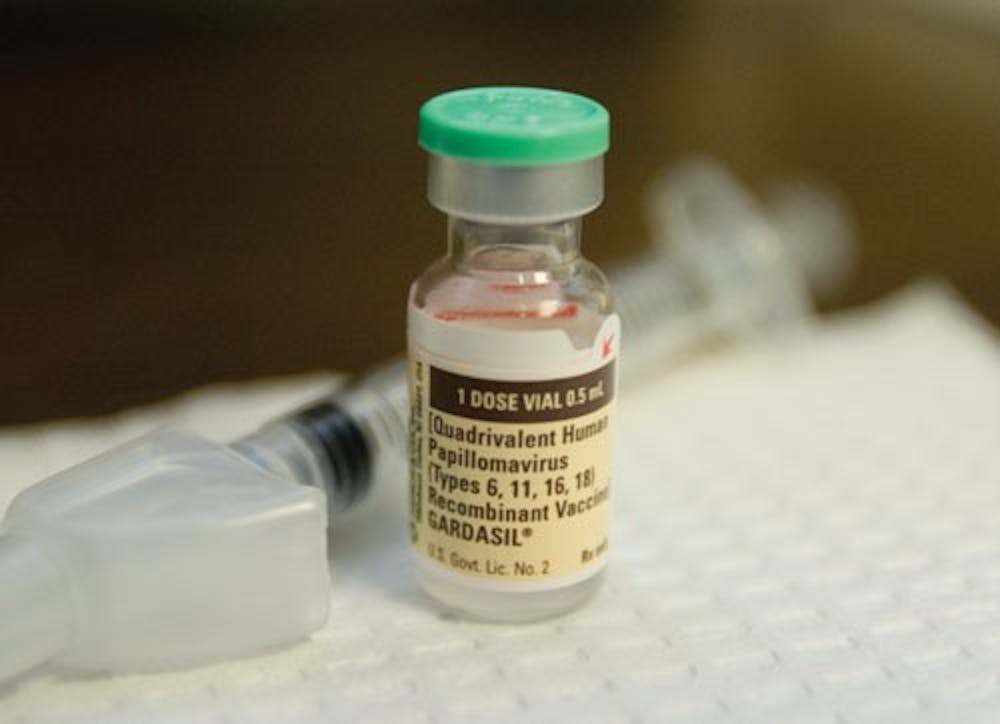
The state legislature has passed a bill which makes it optional for girls entering the sixth grade to be vaccinated against the human papillomavirus.\nThe law also requires a warning be issued to parents by the state providing sufficient information about the link between HPV and cervical cancer.\nThere are many different strains of HPV; not all of them cause health problems. It is a sexually-transmitted disease that affects both men and women. According to the Food and Drug Administration Web site, at least 50 percent of people who have had sex will have HPV at some time in their lives. With most cases, HPV will go away on its own but four specific strains have lasting effects. HPV types 6 and 11 are responsible for 90 percent of genital warts while types 16 and 18 cause 70 percent of cervical cancers.\nThe vaccine, Gardasil, is a series of three $120 shots effective in women aged from 9 to 26 but has become aimed towards girls between the ages of 9-12 in an attempt to reach them before they become sexually active. The Gardasil vaccination prevents HPV strains 6 , 11, 16 and 18.\nThe previous version of this bill would have made the vaccinations mandatory but was revised due to strong opposition from conservatives, anti-abortion advocates and parental rights groups. The main battle has been whether or not the vaccination encourages early sexual promiscuity.\n“It wouldn’t cause promiscuity at all,” Sandy Larson, librarian of Clear Creek Elementary School, said. Larson has worked at the school in Bloomington for 16 years.\n“Since there is no way to treat or cure HPV, preventing it as early as possible is the best solution because it’s what can be done,” she said. \nLarson said parents should not worry about a vaccine.\n“Whenever anything new comes about parents are always skeptical.” \nLarson is the mother of two sons but believes the vaccine can only do good.\nNot only is the vaccination expensive, but some fear it also takes a toll on moral values as well.\n“Thinking about how (my sister) will enter the sixth grade and have to get the shot is almost unexplainable because I think she’ll still be too young,” junior Courtney Fischer said, “I don’t see how she could take in all that information as to sexually transmitted diseases (and) the seriousness of cervical cancer. Most parents at that time are preparing to explain their girls first menstrual cycle, not urges she might soon feel towards the opposite sex.”\nFischer also worries the vaccine will encourage promiscuity.\n“When schools hand out condoms, kids are more likely to have sex ,” Fischer said. “So when schools begin to administer this shot it may also fall into that pattern and promote sexual activity,”\nThe price of the three shots come to about $360. While most insurance companies will cover recommended vaccines, others may not. Federal health programs such as Vaccines for Children will cover the cost of the HPV vaccine. The programs provides vaccines for children and teens under the age of 19 who are either uninsured, Medicaid-eligible, American Indian or Alaskan Native.\nAccording to the National Cancer Institute, 9,710 cases of invasive cervical cancer will be diagnosed this year and 3,700 will die of the disease. Gardisil prevents four of the main strains of HPV that cause cervical cancer.\nAfter receiving the information about HPV, cervical cancer and Gardasil, which is the only 99 percent effective vaccine, parents have 20 days to notify their child’s school that their child is or is not receiving the vaccine.\nThe HPV immunization law will take effect July 1.
New Indiana HPV law raises concerns for some
Law will require a warning to be issued to parents
Get stories like this in your inbox
Subscribe