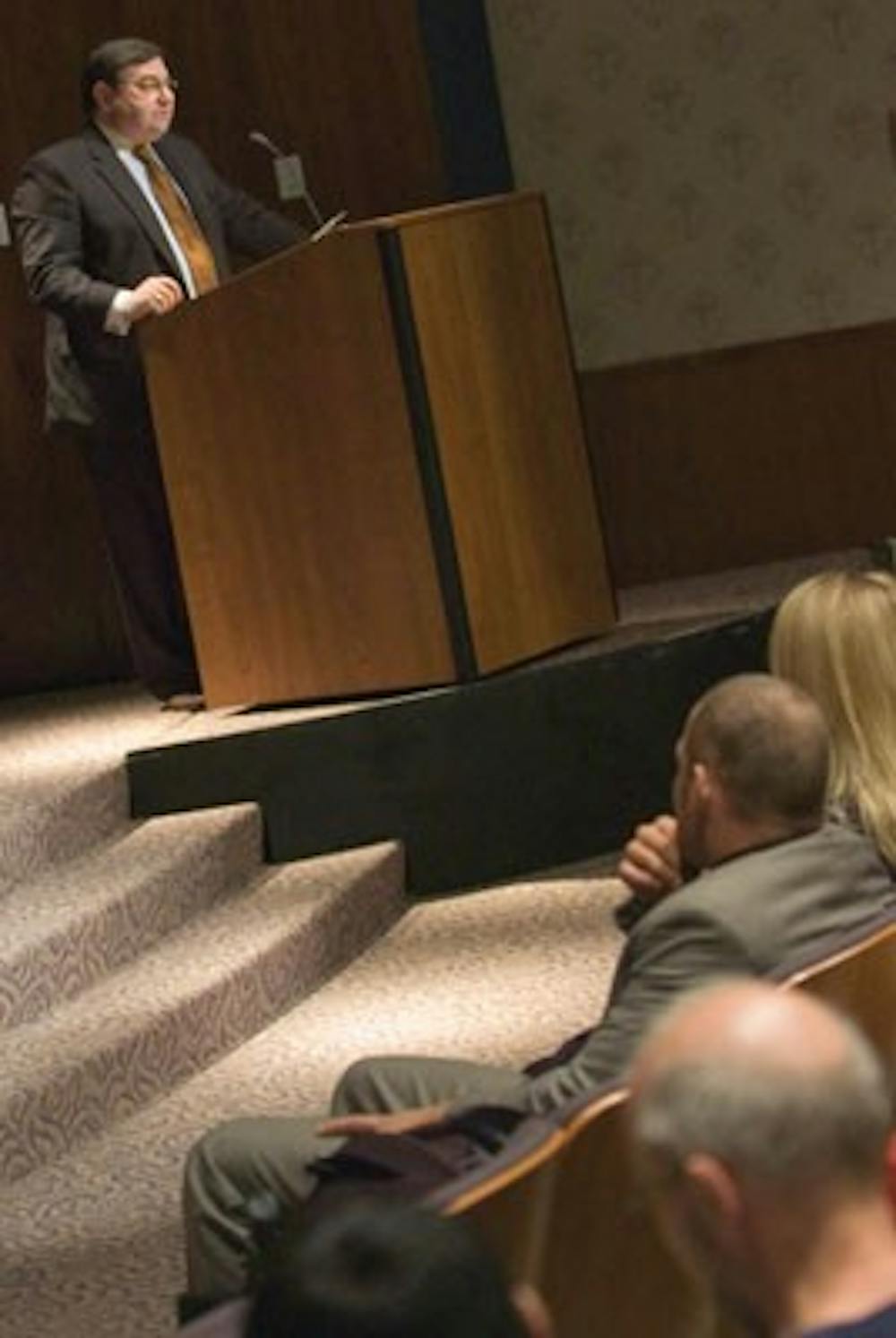
Feisal Istrabadi, Iraqi Ambassador to the U.N and IU graduate, spoke to a packed audience Tuesday night in the Whittenberger Auditorium of the Indiana Memorial Union about the state of Iraq and its implications on U.S. security. \nHis speech, “Implications of Failure in Iraq for U.S. Security,” was attended by students who said they were interested in international relations.\nFreshman Matt Roethemeier said he is in a political discussion group from the Foster Global Village.\n“National security is important because if our nation is secure, we can do other things knowing that we are safe,” he said.\nFreshman Anne Benton said it is good for other countries to know there is a lot more going on in Iraq than what the media covers.\nIstrabadi cleared up a few misunderstandings people have about the current state of Iraq at the beginning of his speech.\nHe said one of the most common misconceptions is that Iraq consists of only three cultural and religious groups, but actually there are many.\n“You cannot draw a line through a map and point out where the three groups live,” he said. “They have become very integrated.”\nAmerican influence in Iraq is creating positive and negative outcomes, he said.\nIstrabadi said that, in the last several weeks, American troop levels have surged in Baghdad. The increase had initial success, but violence has increased outside of Baghdad as a consequence.\nThere are no purely military or political solutions to the problems concerning Iraqi nationalists who are “fighting against what they fear is the cause of the break-up of Iraq,” he said.\nIf there is to be any solution, “it will take time, patience and commitment.” \n“The alternative breeds a chaos none of us want our children growing up in,” Istrabadi said.\nHe said he is well aware some Americans are running out of patience and have suggested premature withdrawal from Iraq. However, two-thirds of Iraqis want the U.S. to stay until security can be reached around Baghdad.\nStudents said Istrabadi changed their current perspectives on Iraq.\nSenior Taryn Filipow said she thought all Iraqis wanted to break up into three regions and that it is interesting none of them want Iraq to break up either.\nSophomore Evan Lipton said the speech brought up points he hasn’t thought of before, such as the influence the country of Jordan would have on the region if it were to be partitioned.\nThere are people who fled tyranny in Iraq, and the only way for the problems to be erased is to provide security for the Iraqi people, he said.\n“The Iraqi people know they were governed by someone who led them into war, squandered their wealth and killed them,” Istrabadi said. “They are aware that if the U.S. had not acted, nothing would have changed.” \nHe said the Iraqi people are thankful the U.S. moved in to build security.\n“The Iraqi Constitution recognizes that Iraqis have the right to live anywhere they want,” he said. “If the U.S. had not stepped in, I believe Iraq would be ruled by Saddam (Hussein)’s descendents for generations.”\nFortunately, that is not the case, and Iraq is concentrating on building good relations with neighboring countries, Istrabadi said.\n“We believe in the American expression, ‘Strong fences make good neighbors,’” he said.
Ambassador to U.N. discusses security
IU alumnus says Iraqis want the U.S. to stay involved
Get stories like this in your inbox
Subscribe