Editor's note: All opinions, columns and letters reflect the views of the individual writer and not necessarily those of the IDS or its staffers.
In Indiana, three numbers explain the paradox of a weakened president who keeps winning.
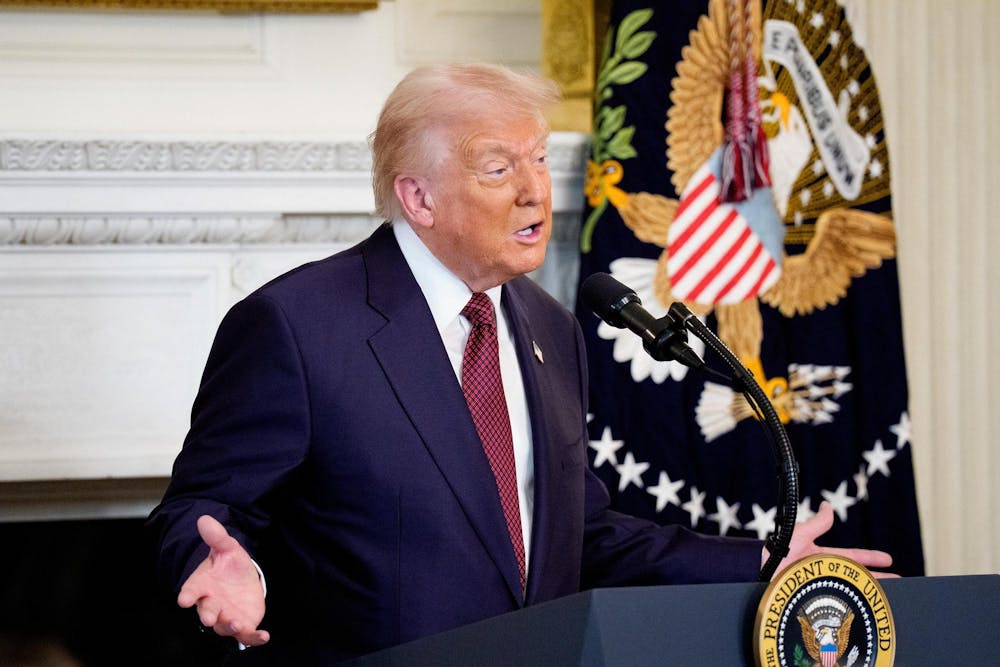
The first is 56%. Of the seven challengers President Donald Trump endorsed against incumbent Republicans in Indiana’s primary earlier this month, five — and maybe six — won. All but the possible sixth, Paula Copenhaver, who ran to represent West Lafayette, did so with more than 56% of the total vote. That is the floor — not the ceiling — of victory margins in a state where, during early voting, Trump’s own approval rating sat at 49%.
The second is -21. That’s Trump’s current net approval rating, the distance he has fallen from the modest +2 he enjoyed just after his second inauguration. The decline cuts into even his most essential constituency: white evangelicals, who have slipped from 73% approval early last year to 64% late last month. Former allies who campaigned for him have broken publicly, among them conservative commentator Tucker Carlson.
By the standard theory of political gravity, a president this unpopular should be losing his grip on his party, as Nixon did in 1974 and Biden in 2024. Strangely, the opposite is happening. In Kentucky, Trump ousted Rep. Thomas Massie with a challenger who won by a 10% margin Tuesday — despite the fact Massie won his last four primaries with more than 75% of the vote. Sen. Bill Cassidy of Louisiana, who won his last primary with nearly 60% of the vote, also lost this year’s, pulling less than 25% against two Trump-backed challengers.
The measure of Trump’s popularity and the measure of his political power are moving in opposite directions and have been for some time.
The third number makes sense of the gap, specifically in Indiana: 60%. That’s the percentage of Hoosiers over 64 who still approve of Trump’s job performance. The number, which is similar in other states, has guaranteed a high floor to Trump’s candidates. Since 1992, age has been the single most reliable predictor of whether an American votes at all, meaning those who turn out for Republican primaries are still predominantly Trump’s. But even that support is beginning to erode.
The Republican Party under Trump purges dissenters, rewards admirers and makes “loyal opposition” a career-ending choice. That accelerates the speed at which Trump can deploy his more polarizing policies, yet those are the same policies, in turn, that are costing him his support. In effect, he is burning a supply he cannot easily reaccumulate.
***
The non-numerical dimension of this story is best described as the Rubio problem, which I would argue is the defining political fact of Trump’s second term.
This problem is not that ambitious political actors change their minds or offer their service to a competitor. Marco Rubio and the other members of Trump’s cabinet once denounced him as a “con man” or worse. Mere cabinet membership could be chalked up, charitably, to a dutiful act of patriotism, setting aside policy and character differences to answer the president’s call. The problem is rather that such Washingtonian or Cincinattian civic virtue would not likely manifest in such a complete reversal.
Which brings us to Democrats, in Indiana and elsewhere, and their far less interesting primaries. This is the part of this story that suggests Trump’s resilient wins involve not only primary voting demographics and career-climbing primary challengers, but also his opponents.
The Democratic coalition levied against Trump is impressive in its disapproval — 97% among Democrats nationwide — and middling in its internal consensus. While it agrees the president is dangerous to traditional political institutions, it disagrees, sometimes bitterly, about everything else: party direction, economic policy, Gaza, the state of wokeness and, importantly, what to do about Trump.
What some fresh Democratic candidates seem to understand is that consensus is the key word in a pluralistic republic. It signifies orderliness and stability. What the others still miss is that Trump did not win his second term because voters sought disruption or were swayed by his policies. He won because voters already felt that things were chaotic — the border, the economy, the perceived sleepiness of Joe Biden at the country’s helm — and he offered a sense that he would impose order, even an improvisational and rough-edged one.
The result has turned out more chaotic still: immigration crackdown through quasi-secret police, vulgarity-laden war plans announced over social media, court-defying conflict and a variety of highly visible vanity projects.
As this primary gives a taste of the impending presidential primary season, Democrats should weigh voters’ preference for orderliness and stability against presidential contenders in the mold of domesticated Trumps, returning heralds of a chaotic past and policy gurus who don’t exude a homey, orderly, sensible instinct.
That is a conservative instinct — a sensibility that a country with a pluralistic constitution and a Washingtonian ethic worth preserving and at risk of losing should have. It is embodied in politicians like Massie, who sometimes split with his party because he believes in an ethical sphere outside it, and James Talarico, a Texas Democrat whose vocal Christian faith suggests he also holds some values over political advancement. This makes them contrarians among their peers; they seem to think politics functions for something besides itself.
***
The current 60% floor won’t hold forever. But it will hold through the midterms and probably beyond, keeping Trump’s political capital artificially high. Then again, the Trump era won’t last forever. But it will last until 2028. That means those on either side of the partisan divide and party elites and voters alike should consider what shape an orderly and stable answer should take.
The great presidents, and Talarico and Massie, show that that answer must include a strong sense that this country is one with a civic culture worth preserving and that the electoral sphere is not simply a battlefield to be won. That’s the Trumpian conception of politics, which preceded him and prepared for his coming.
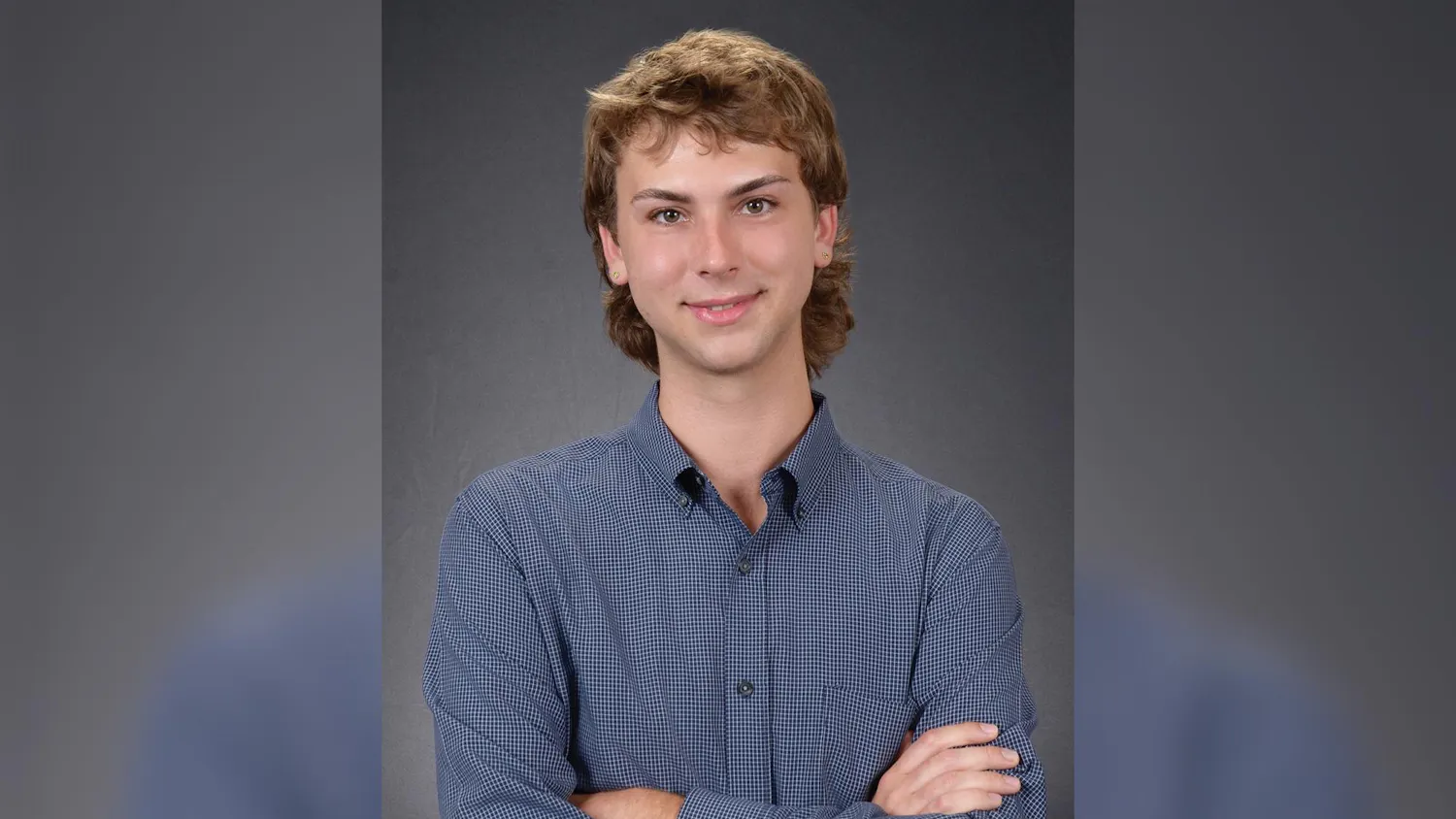
Eric Cannon (he/him) is a junior studying philosophy and political science and currently serves as a member of IU Student Government. He maintains this is a cultural, not a political, column.