92 items found for your search. If no results were found please broaden your search.
(01/10/03 6:40pm)
Charlie Nelms says he knew Jimmy Ross as long as anybody. From 1998 when Nelms became IU's Vice Chancellor for Academic Support and Diversity to seven months ago when Ross passed away, the two chatted daily. When Nelms visited IU for the first time in the 1970s as a student, Ross set up Nelms' first tour of campus. \nBut their friendship goes all the way back to the days when Nelms still milked Holstein cows at a historically black college in Arkansas. \n"It was a hot, humid June day," he said. "Jimmy Ross greeted me with a smile, and I instantly felt comfortable, felt like I belonged."\nRoss had that magical effect on people, friends said. \nBob Magee, director of IU admissions from 1979 to 1997, said the only word for Jimmy is saint. Friend Bill Buher said you always felt better after talking to him. \nOn Wednesday friends from IU and the community gathered to honor the IU trailblazer at a lunch at Colorado Steakhouse. The Northside Bloomington Exchange Club, of which Ross was a long-time member, presented IU with a check for $1,800. \nThe money will be used for the Jimmy L. Ross Endowment Fund for Diversity Initiatives, a seven-figure endowment used to support K-12 outreach, sustain a diverse climate at IU and provide scholarships for needy students. \nRoss led IU's Office of Scholarship and Financial Aid from 1973 to 1988 and helped create the modern national student loan program. He was the first African-American to lead a major administrative area at IU. \nA degenerative spinal condition forced Ross into early retirement in 1988, and he died in May 2002. \nDavid Hummons, a member of the Exchange Club, said the idea for the endowment materialized just hours after Ross's May 23rd death. He said it symbolizes Ross's philosophy of positively impacting others.\nThe club raised the money at their annual fish fry in August. Next year, the event will be renamed in Ross' honor.\nNelms said Ross was a devoted, caring friend to all students. \n"He was an optimist if you ever met one," Nelms said. "He had a passion for excellence and equity. He never met a stranger."\nHis life companion, Nancy, said IU was Ross's heart and soul. \n"He would have had his head held high today with a big smile on his face, thinking that wonderful people are carrying on something precious to him," she said.
(12/12/02 5:47am)
IU's Presidential Search Committee, meeting for the first time Wednesday, declared that it would not limit its search to the academic world.\nCommittee members said they would consider hiring business and government officials to lead IU.\n"It's going to arch an eyebrow, but we need to drop the net broadly," said member Sarah Barker, who spoke to the committee via telephone. "It's better we see what's really out there."\nIn the past, IU has hired presidents from both camps. Herman B Wells was originally a banker, and more recently, President Myles Brand holds a Ph.D. in philosophy. \nThe issue has already split the committee in two. \nDean Kumble Subbaswamy said he wants an academic to lead IU. He said it's unlikely IU will find a non-academician as good as Wells. \n"We would love to have the next Herman B Wells walk in," he said. "But for every Herman B Wells, there are 100 failures."\nExecutive consultant Jerry Baker, hired by the University to assist in the search, said it would indeed be a risk for IU to hire a non-academician. \nHe said more and more universities are hiring business and government officials to lead their institutions. Recently Harvard and three Florida schools selected former government officials to lead their institutions.\nCommittee chairman Steve Ferguson said faculty support will still be the critical issue when deciding who gets the job. No president can survive without backing from the academics, he said.\nThe 17 members on the presidential search committee represent students, faculty, staff and trustees. \nTrustee Sue Talbot said she will sell the IU presidency as the "crown jewel of a career." She said it will be the committee's job to persuade the candidates to accept the IU presidency. \nThe first meeting of the Search Committee is also the last to be open to the public. The remaining meetings will be kept private to preserve the confidentiality of the search, Ferguson said.\n"If the names get out, you probably lose that candidate," Ferguson said. \nHe said only the name of the finalist will be released to the public.\nBob Eno said the search committee should push IU's unique campus structure when trying to sell the presidency. \n"There is no system that resembles IU," he said. "It's complex and enormously challenging, and that could be the biggest selling point."\nMembers also want to see someone who will continue to carry out the current agenda, be a spokesperson for undergraduate education and can lobby the legislature for money. They agreed they want a leader IU can be proud of, someone with uncommon people skills and someone with a distinct vision for aligning IU's eight campus system.\n"We're a very diverse group, and in some cases, we don't know each other," Ferguson said. "We've got to do that and look for a common ground"
(12/10/02 5:26am)
IU President Myles Brand will speak in the state capital today at a conference trumpeting IU's leadership in the life sciences and biotechnology sectors. \nThe conference, called the IU Economic Development Workshop, will showcase IU's high-profile research achievements: the School of Informatics, the Emerging Technology Center, the Proteomics Consortium and Information Technology. \nSpeakers at the conference will include ambassadors from both state government and the private sector. Brand will participate in a discussion on economic roles with Lt. Gov. Joe Kernan and David Goodrich, President of the Central Indiana Corporate Partnership.\nOther speakers throughout the day include Craig Brater, Dean of the IU School of Medicine, Mark Long, President of the IU Advanced Research and Technology Institute and John Hurrell, President of the Proteomics Consortium.\nIU spokeswoman Angela Lindauer said the University projects highlighted at the conference are breathing new life into Indiana's sputtering economy.\n"We are changing the economy of Indiana," Lindauer said. "These items can assist in changing the traditional Indiana economy into more hi-tech and medical (areas)."\nThe conference comes less than a month before the 2003 Indiana General Assembly convenes. Director of State Relations Don Weaver said he hopes the conference will send a message to state legislators that IU is a key part of Indiana's economic future. \n"We need to make sure that the state is aware of the investment needed for long term building of the state's economy," Weaver said. "We feel like we are a basic driver, an engine, for the economy's development." \nThe shortcomings of Indiana's manufacturing-heavy economy have become apparent over the past two years. During the national recession, no state lost more jobs than Indiana. \nWeaver said IU's life-sciences projects are moving the economy away from its reliance on manufacturing. \n"There will always be manufacturing in Indiana, but we are hopeful we can change the economy to more information knowledge," Weaver said. \nLast week Gov. Frank O'Bannon enlisted IU's help in revitalizing the state's economy. On Dec. 4 he unveiled his Energize Indiana plan to create thousands of new high-tech job in Indiana. The stimulus package includes close to $200 million for universities.\nBill Stephan, spokesman for Brand, said IU's research projects are contributing to a "brain gain" in Indiana. Research conducted at places like the School of Informatics may one day result in new business opportunities for the state, which translates into jobs, he said. \n"(This activity) spurs a growth sector of the state's economy, which is very important as the state is going through some difficult economic times," Stephen said. \nGerald Bepko, who will take over IU on Jan. 1, 2003 as interim president, will give closing comments at 4:15 p.m.
(12/05/02 5:15am)
IU's student entrepreneurs have a new friend. \nAlong the banks of the White River Canal in Indianapolis stands IU's $4 million dollar Emerging Technology Center, a building that will house IU students and faculty working in the biotechnology industry.\nThe ETC tenants will be specially selected by IU and will pay low rent and benefit from networking opportunities and access to IU resources.\nThe building, which will open in February or March, is the University's latest contribution to the state's nascent life-sciences economy. \n"This facility has been needed for a while, and we're getting an excellent response," President of the Advanced Research and Technology Institute Mark Long said. "Business is booming."\nJulie Meeks, faculty member of the School of Nursing, will be the ETC's first tenant when the building opens next year. Her company, the Haelen Group, a health insurance consultant business, will operate out of the ETC office space. \nMeeks has spent the past seven years researching and developing a product called One Care Street which helps health insurance providers monitor high-risk patients. She is finally ready to launch the program, as she moves into the ETC. \nThe building will give her company great networking potential, she said.\n"We're growing like crazy," Meeks said. "I think the opportunity is terrific."\nBecause the building is owned by IU, if Meeks needs advice about Information Technology, she can call UITS. If she needs advice about marketing, the Kelley School of Business is there to help. \nMeeks envisions working closely with IU business students. \n"If we have a strategic business problem, I can ask for a team of business students," she said. "I get bright people, and they get experience working in a real environment."\nLong said that's one of the ETC's biggest advantages. It will provide students with internship opportunities, employment and valuable experience. \nD. Craig Brater, dean of the IU Medical School, said the ETC is a "business incubator," meaning it will be a stepping stone for transforming research ideas into marketable commercial products. \n"To find out if they have commercial (viability), these ideas have to go in this incubator stage, where they are taken out of the research context," Brater said. \nThe ETC will also house Medical Care and Outcomes, a pharmaceutical company, as well as the Indiana Proteomics Consortium, a three-way collaboration between IU, Purdue and Eli Lilly. Other companies are currently being considered for inclusion. \nAt Friday's board of trustees meeting in Indianapolis, Long will give a presentation about the role of research and technology at IU. He has lots of good news to share.\n"There is a tremendous research community here," he said. "When you look at the states around Indiana, we are catching right up with them."\nIn addition to the business incubator, Long plans to report that IU's Proton Radiotherapy Institute opens April 1. The facility, located north of Memorial Stadium, will provide treatment for patients with head and neck tumors. Along with Los Angeles and Boston, Bloomington is one of only three cities in the nation with such an institution.\nLong will also report that the ARTI, which handles the intellectual property for IU, recorded a record number of new inventions and patents last year. \nOne of the most unusual inventions was a cat food that cleans cat's teeth, developed by Dr. George Stookey of the Dental School. IU professors also patented new treatments for stroke and premalignant cancer cells.
(11/21/02 5:46am)
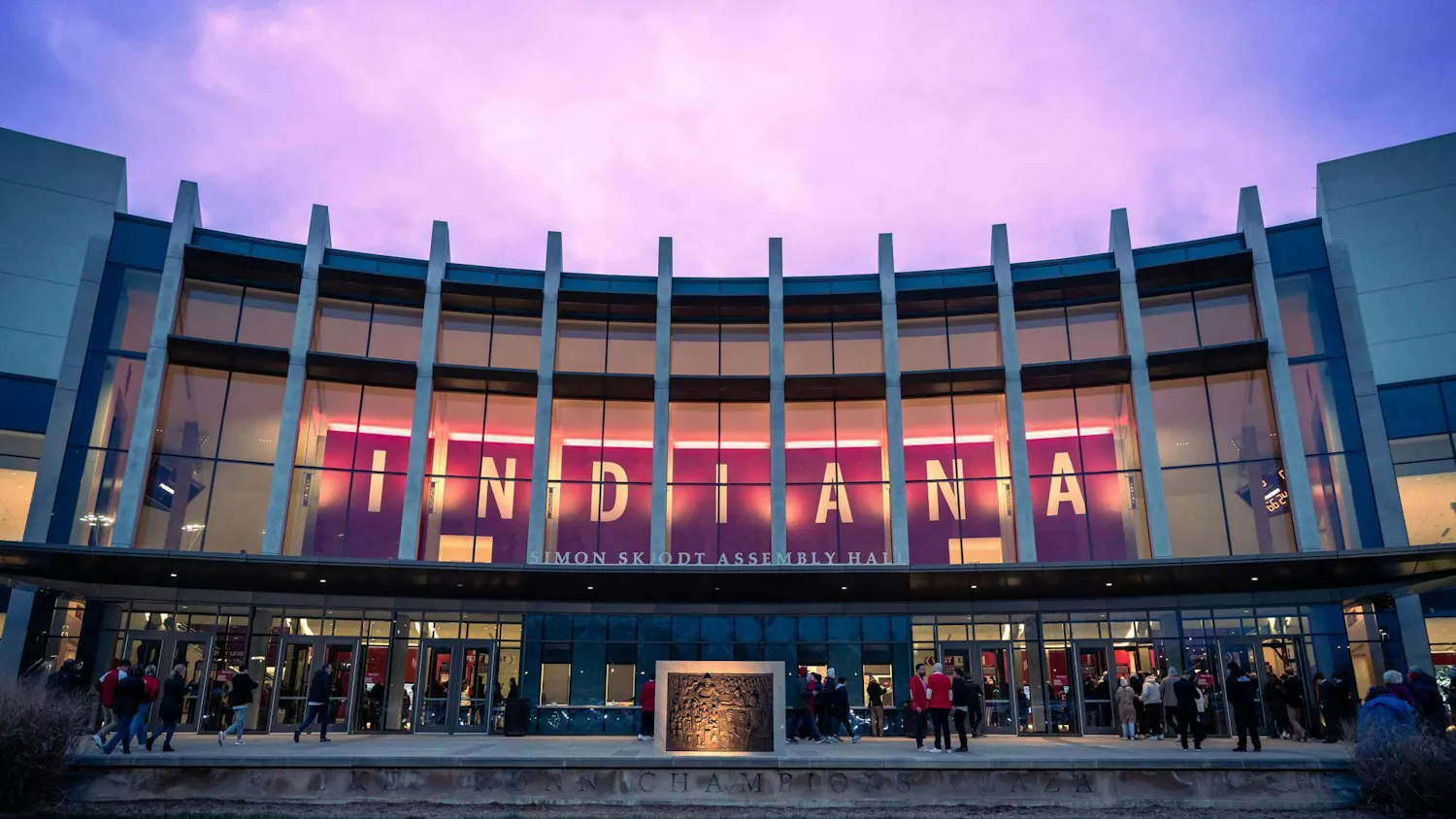
Arminta Gunkel was still dressed in her pajamas as she dragged herself down the back stairs of the Phi Mu house at 6:30 a.m. Woken by a fire alarm, she had no idea she was walking directly toward a 2,000-pound chemical spill of ammonia nitrate. \n"We started going down the back stairway," Gunkel said. "I thought it was a fire drill. Then everyone stopped and said go out the front door. We turned around and someone said to go to Assembly Hall. I didn't have time to grab anything."\nPhi Mu housing director Linda Howard and her dog Scout were already up when the spill happened. The two were walking behind the 45/46 Bypass when they heard the sirens. Howard saw a policeman pounding on Phi Mu's front door, and she chased him down.\n"He said 'You've got to evacuate,'" Howard said. "I went inside and told the girls, 'Get your shoes if you can. Let's get out of here.'"\nPhi Mu was the first house evacuated. Up and down the Jordan extension, fire and police officers roused students out of bed and ordered them to leave the area.\nAt the Sigma Pi house, firemen walked through the hallways pounding on doors. The noise woke senior Nick Lagina.\n"The fire department said there was an over-turned truck with potential explosives that flipped over on the bypass," Lagina said. \nOne of the firemen told him, "It's behind Phi Mu, so you need to get out fast." \nPhi Mu is two houses down from Sigma Pi. Lagina said one of the brothers went downstairs and pulled the fire alarm to wake anyone that hadn't heard the pounding on the doors. \nBy 7:30 a.m. students wrapped in blankets were spilling out of their houses. They pieced together that a semitruck carrying chemicals and explosives had crashed on the bypass. \n"We didn't know what was going on," said Phi Mu junior Miriam Sheinin. "We were curious why we had to drive away. We saw lots of firemen coming to all the fraternities and sororities." \nThe police department told fleeing students that Assembly Hall would be opened. Sheinin, Gunkel and four others from the house drove to the stadium.\nAt Assembly Hall, IU administrators announced that the clean-up and evacuation would last all day. To cheers, classes would be optional. Most students found other places to go. \nGunkel and her friends left Assembly Hall and headed over to Gunkel's family's home on North Kinser Pike. \nPhi Mu Lauren Hanrahan checked IU's Campus Emergency Web site for updates. At 11:30 a.m. she read, "Hazmat crews are working at the site to remediate the spilled chemicals...no time frame for completion has been announced."\nThen at 1 p.m., "Crews are working on righting the truck and removing it from the scene. Officials on the scene still are not making an estimate of the remaining time required to complete the cleanup and reopen the area."\nGunkel made her friends sandwiches and pasta while they waited. They played a lot of monopoly and watched "Saved by the Bell" reruns and The Learning Channel.\n"It's been a long boring day," Gunkel said. "We've been checking the Internet to find out when we can go home. It's frustrating that every time we check they keep pushing it back farther."\nThe Sigma Pi's made the most of their day off. To celebrate the end of the I-Core test week, one live-out house bought two pony kegs.Several evacuees showed up at the house. \nJunior Brian Healy said that guys ended up at the house because they needed somewhere to go, and it just turned into a little party.\nAt 2:30 p.m., Gunkel received a call saying the chemicals had been cleaned up and the evacuation was over. Nine hours later and still in their pajamas, they returned to the Phi Mu house.\n"I'm tired," Gunkel said. "It's been a long day."\nSheinin missed one test that she said she would reschedule.\n"It's fun because we aren't in school, but it's a burden because of the holiday coming up," Sheinin said. "It was more of an inconvenience than people would think, you know, a day-off school."\nHoward was relieved that the crews cleaned up the toxic spill. She said IU was lucky it didn't have a catastrophe on its hands.\n"This could have been another Oklahoma City," Howard said, referring to the ammonia nitrate.\n"I'm glad everyone's safe and sound. You can throw a rock back there. It's that close."\nStaff writer Ryan Lengerich contributed to this report.
(11/20/02 2:38pm)
Gerald Bepko, the man the IU board of trustees picked earlier this month to replace outgoing President Myles Brand, spoke to the Bloomington Faculty Council Tuesday not about the administration but the Freudian subconscious.\nBepko confessed that for the 20 years he has been an IU administrator, he has had a reoccurring dream that he is the pitcher for a four-man baseball team.\nThe dream first appeared when he was dean of the IU Law School. The batters he faced were law professors, and they ran around the bases even when he struck them out. Later when he was chancellor of IUPUI, the batters became the deans. \nAs Bepko prepares to move into the role of interim president of IU at the year's end, his dream has again returned. It's a metaphor for the challenges he'll soon face.\n"This time I'm pitching in an even larger stadium, and the crowd makes a deafening noise," Bepko said. "The batters are more intimidating. They are trustees, chancellors, faculty and deans.\n"Professor (Richard) Shiffrin hit a line drive that knocked off my cap, and Dean (Kumble Subbaswamy) Swami hit a 610-foot home run," Bepko says. "The reoccurring dream has come back even more vividly."\nOn Tuesday he told the BFC that he is up to the challenge. His arm still feels good. \n"I'm going to keep on pitching," he said. \nIn an hour long speech Bepko outlined his agenda for his six-month interim term, pledging to dedicate himself to student success, research excellence, teamwork and the arts.\nAs retiring IUPUI Chancellor, Bepko paid particular interest to the importance of IU's regional campuses. He said he wants IU to be the best multi-campus institution in the country. \nBepko made it clear that his main activity will be lobbying the state legislature in the coming biennium. He said IU faces competition for money from the popular community college system. \n"I want to focus on making our case to the 2003 General Assembly," Bepko said. "Research universities are key to the new economy."\nBepko also said he would stick to the agenda set by President Brand. \nBloomington Faculty Council member Mary Popp cheered Bepko's speech. \n"He sees himself as someone keeping the fires burning," she said. "He has a wonderful reputation for listening and for looking at all sides."\nCouncil member Barry Rubin praised the choice of Bepko as interim president.\n"I don't think there was a better candidate than Bepko," Rubin said. "He is very comfortable working with the legislature and faculty, and we're very lucky to have him."\nBepko was named interim president at the Nov. 1 board of trustees meeting held in Fort Wayne, less than a month after Brand's announcement that he was leaving IU to lead the NCAA. The trustees have set July 1, 2003 as the deadline for hiring a permanent replacement. Bepko has said that he is not a candidate for the position.
(11/19/02 5:38am)
The IU board of trustees will conduct three town hall meetings today to discuss the search for a new president, including one geared directly for students. The meetings are part of an ongoing series of conversations with all academic schools.\nThe trustees will also meet today with faculty at the Law and Music Schools.\nThe student meeting will be led by Blair Greenberg, the student representative on the presidential search committee, and student trustee Sacha Willsey. It will take place from 3 to 4 p.m. in the Sassafras Room of the Indiana Memorial Union.\n"Students are key to this process," Greenberg said. "It's important for them to come out and express their views."\nThe conversation will focus on three questions: Which qualities are necessary for the IU President? What should IU focus on in the next 10 years? And what are the qualities of a leader?\n"This is a general conversation," said trustee secretary Robin Gress. "The questions are very simple. The trustees simply sit back and listen to what people have to say."\nSeven meetings in the series have already taken place. The final six will take place this week. \nTrustees Fred Eichhorn, Steve Ferguson and Sue Talbot are attending as many meetings as possible. Eichhorn said they have been well-attended.\n"People seem to want an academic," Eichhorn said. "They want somebody who understands the Hoosier scene. They are not necessarily opposed to a businessperson."\nOn Wednesday, discussions will be held with all librarians, the Department of Continuing Studies and the alliance for Indiana's future. The final meeting will take place on Friday with faculty members of HPER.\nWillsey said today's meeting in the Union is an attempt to include students in the search process. \n"It's important students give reasons why they are looking for a certain characteristic in a president," she said.
(11/14/02 6:29am)
Another chapter in the case of Robert Knight v. Indiana University is set to begin. \nWith Knight's suit formally filed at the Monroe County Courthouse, IU will now submit its own side of the story to the court. Once received, the court will decide whether the litigation hearings will proceed. \nKnight is suing the University for $2 million he claims he was denied as a result of his Sept. 2000 firing. Knight said he would have received the $2 million from his "non-enumerated" shoe contracts, radio and TV deals and basketball camp fees. \nThe lawsuit claims these sources of income, while not explicitly spelled out in Knight's contract, were understood by IU to be part of his total compensation. \nIU claims it has already compensated the former men's basketball coach fairly.\n"The University has fulfilled all of its obligations under the contract it had with Mr. Knight. Indiana University will defend its interests vigorously," the University said in a statement.\nIf the judge allows the litigation to proceed, the next step will be to collect evidence. Based on the evidence, the judge will decide whether to summon a jury.\nPeter Carstensen, a University of Wisconsin professor and tort expert, said this stage is crucial.\n"That's often the point at which the defendants opt to settle," Carstensen said. "If the judge says, yes there is enough evidence, then the judge has made a determination that the claims are plausible."\nIU spokesperson Jane Jankowski said an out-of-court settlement is still a possibility. Knight and the University have already tried repeatedly to negotiate a settlement and had extended the legal deadline for Knight to sue until Tuesday, two months later than the original date. \nOne deal proposed by the University had IU agreeing to pay Knight provided he could convince a coalition of 46 former students to drop their suit against IU for violating the state's open records laws, according to reports.\nKnight and his lawyers mailed the lawsuit Friday to the Monroe Country Clerk where it arrived Monday.\n"The University was very seriously engaged in conversations with Mr. Knight's attorney about the matter," Jankowski said. "There were things being discussed, and those things didn't come to fruition."\nIU is currently paying Knight more than $425,000 a year for eight more years as part of a deferred compensation package. Knight's contract ran through June 30, 2002, and his annual salary was $170,000.
(11/06/02 6:58am)
IU Bloomington Chancellor Sharon Brehm reemphasized her commitment to the hiring of a provost at Tuesday's Bloomington Faculty Council meeting, one day after announcing that the search would be postponed until next year. \nBrehm's decision to delay the provost search comes in light of President Myles Brand's decision to leave IU. She said faculty distress over the hiring of two top level administrators at the same time convinced her to sit on the provost plan for a year. \n"I feel very strongly that this new position is needed," she said. "If this sort of reorganization does not occur, this campus will not make the progress it needs."\nThe IU provost under Brehm's plan will absorb many of the Chancellor's academic duties to free up time for fundraising, legislative and alumni activities. \nSome of the faculty said they aren't convinced that's the direction the campus should take.\nProfessor Bennet Brabson asked Brehm to "keep open the possibility of maintaining the present circumstances."\n"I imagine a world where Brehm becomes absorbed by the legislature and fundraising, and I'm afraid we're going to lose (her) as part of us as a faculty," he said. \nProfessor Barry Rubin said he worries the provost will add "another layer" of bureaucracy, making it more difficult to access the Chancellor.\nBrehm will meet informally with faculty next semester to discuss the implications of the plan. She said the provost is part of a broader movement to centralize campus organization, starting with strategic planning. \n"If we don't operate as a campus, we won't be effective," she said. "The most obvious place is undergraduate programs, (which) aren't nearly as well coordinated as they need to be." \nThe expansion of the Chancellor's roles at the same time as the hiring of a new president has sparked a reexamination of University administrative structure. BFC President Bob Eno, also a member of the presidential search committee, said the search will begin with defining the role of the president, which has historically been very strong. \n"We may want to move toward a new system," Eno said. "That's an ongoing job for the search committee."\nThe Faculty Council discussed the administrative models at Wisconsin, Illinois, and Minnesota.\n"I don't see any of those models fitting us here," Eno said. "We have to do a home-grown model."\nBrehm originally announced her intentions to add a provost at the Oct. 1 BFC meeting. She said some applications have already been received and will be sent back.
(11/04/02 5:36am)
The search for IU's next president now falls into the hands of a 17-member committee appointed at Friday's board of trustees' meeting. The committee is charged with whittling the field of candidates down to a list of five to seven nominees and presenting them to the trustees, who will appoint the next president by July 1, 2003.\nThe 17-member committee is comprised of administrative officials and faculty from four of IU's eight campuses, trustees Sue Talbot and Stephen Ferguson and one student.\nThree Indianapolis business executives have also been tapped to serve on the committee, a sign of the increasing importance IU places in its partnerships with the private sector. In 1993 when a committee was created that ultimately helped choose President Myles Brand, only one member had ties to the business community. \nThe date of the first meeting has not been set.\nTrustee and committee member Sue Talbot said the committee will hold conversations with all of IU's interest groups to create a picture of the type of president the University needs. \n"We have a very short time line," Talbot said. "The process will include talking to all the constituencies, within and outside the university."\nThe committee will be aided in that process by an executive search firm. Nominations will be accepted from both the firm and university interests. \nIU Student Association treasurer junior Blair Greenberg is the student representative.\n"What I'd like to see is a president who when making any decision, big or small, has the students' best interests in mind," Greenberg said.\nCommittee member John McCluskey, professor of African American studies, has previously served on committees to hire an IU press director and a dean for the college of arts and sciences. \nHe said he wants to find a president that "leads by example, thinks long as well as thinks short and relishes the job."\n"(The presidency) is not something you bear as a sacrifice," McCluskey said. "It's something you want to do. As other presidents have said, it's a 24/7-plus job."\nHe said the next president should have "a track record showing commitment to equity as well as diversity issues at every level"
(10/30/02 5:06am)
One of the 45 plaintiffs suing IU over the firing of Bob Knight revealed Monday that the University asked the former men's basketball coach to persuade the fans to drop their lawsuit. \nIn exchange, IU would settle with Knight out of court. \n"They wanted Knight to convince us to dismiss our lawsuit," plaintiff Robert Nemanich said. "They put a condition on the settlement. It looked to me like a form of extortion."\nIU spokesperson Jane Jankowski said she had no comment.\nKnight and IU officials have been negotiating since early September, attempting to settle Knight's claim that he suffered $7 million in damages related to his firing by IU President Myles Brand in September 2000. \nNemanich said Knight's beef with IU has no bearing on the lawsuit he and others filed in April 2001. They contend that Brand and University trustees violated the state's Open Door Law by holding two secret meetings the day before Knight was dismissed.\nIU attorneys have argued the meetings were legal because at no time were a majority of the trustees together.\nNo court date has been set. Depositions are scheduled for Nov. 7.\nNemanich said he spoke with Knight Friday, the day after the coach's attorney informed Nemanich of IU's offer. He said Knight rejected the offer, and the fans agreed it was unacceptable.\nGojko Kasich, the lead Bloomington lawyer representing the fans, said his clients would not be swayed by Knight.\n"They must think Bob Knight controls us," Kasich said. "Him settling his case has nothing to do with the issue that IU trustees violated the Open Door Law. If they thought we were going to cave in because Bob Knight said so, that's not something my clients will do."\nKasich, who has been in contact with Knight's lawyer Russell Yates, said the IU proposal would give Knight "basically what he is asking."\nIn a separate offer, Kasich said his clients would consider dropping their lawsuit provided IU agrees to never hold that type of meeting again. \n"We are contemplating a settlement with IU where they wouldn't be forced to admit that what they did was wrong," Kasich said. "Our lawsuit was filed to prevent the serial meetings from happening in future. If they agree to submit attorney fees to the court and agree to never do this again, my clients would accept that kind of solution."\nYates could not be reached for comment Tuesday.
(10/29/02 5:06am)
Campus View Apartments will undergo a two-year renovation beginning this summer. Each of the three wings will be shut down separately for remodeling, beginning with the East Wing. \nResidents will be forced to find other housing during their wing's construction.\nTo discuss the project, there will be a meeting at 6:30 p.m. tonight for all residents in the Campus View Activities Room. \n"We want to inform the residents about the renovation plan and answer their questions about what options are available for getting relocated," said Patrick Connor, director of Residential Programs and Services. \nConnor said RPS will work closely with the affected residents to help them find other housing arrangements.\nCampus View Housing Manager Stephen Rolfe said RPS will try to relocate residents to other University-sponsored apartments but stressed "it could be anyplace."\nTwo-bedroom housing in the University-sponsored apartment system is limited already. Campus View is the only building with entirely two-bedroom quarters.\nAssociate Director of Apartment Housing Tim Stockton said RPS will limit the number of new applications it accepts next fall to accommodate the displaced residents elsewhere.\n"We do anticipate having enough two-bedroom housing," he said. \nConnor said many of the Campus View residents are families that need two-bedrooms. Those families will most likely relocate to Tulip Tree or Evermann. \nCampus View has 250 rooms split between three wings, which means about 80 rooms will be affected at a time. \nRolfe said tonight's meeting will help RPS determine what the residents want to do during the construction.\n"There is a lot of stuff that needs to be done to a building that is 40 years old and hasn't had a rehabilitation before," Rolfe said.\nThe remodeling will include upgrading the bathroom and kitchens, water system and heating and cooling.\n"It's really going to improve the quality of life," Connor said.
(10/17/02 5:46am)
While freshmen at IU continue to report a high level of academic challenge, seniors are telling a different story, according to the National Survey of Student Engagement.\nCompared to national norms, freshmen are challenged at a rate better than 95 percent of similar-sized colleges surveyed. Seniors reported being challenged at a level 56 percent better than the national average.\nThe results of the 2002 survey were released to the public at Tuesday's Bloomington Faculty Council meeting.\n"I worry a little about the level of academic challenge in the senior year and wonder if we might be able to do a little more," said George Kuh, the chancellor's professor of higher education and director of the NSSE.\nFreshmen also reported levels in active and collaborative learning, student-faculty interaction and supportive campus environment that were better than 80 percent of the nation. For seniors, those levels were all below 70 percent. \nThe NSSE is a student survey that annually evaluates the college experience for freshmen and seniors at over 600 schools. It was created to be an alternative to the mainstream college rankings of U.S. News and World Report and Time magazine.\nIU Student Association vice president Judd Arnold said the data may be misleading. Upper level classes aren't necessarily less challenging. It's just that many seniors eschew 300 and 400 level classes to take general education classes, he said. \nBloomington Faculty Council President Bob Eno agreed that the data needs a closer examination.\n"Possibly it is the structure of our curriculum that allows students to front load and take lower level classes their senior year," Eno said. "Or it may be the result that they aren't challenged as they should be."\nEno said the freshmen responses validate IU's commitment to the first year. \n"We've put a lot of effort into the first year," he said. "When we focus on an issue, we produce excellent results."\nTime magazine named IU College of the Year in 2001 for its freshmen orientation programs. \n"Overall the first year is quite strong on campus," Kuh said. "The campus has for the last five or six years focused on it. \nKuh said he is not sure when students begin to be less challenged. The NSSE survey only polls freshmen and seniors.\n"The challenging and supportive environment tends to soften up a bit," he said. "We can't tell when that is exactly because the measurements come at only two points. Maybe it starts in the junior year. We don't know."\nKuh said surveying all four classes in the future may help IU understand the scope of the problem. He said IU may decide to examine the data on a school to school basis. \n"If you break it down among schools, then there will be more responsibility and ownership," Kuh said.
(10/14/02 6:08am)
With two and a half months left before IU President Myles Brand leaves, University officials aren't worried about the "lame duck" effect. \nTrustee Peter Obremskey said it's still business as usual for IU. He doesn't expect Brand to slow down.\n"Knowing the person he is, I would expect Myles to keep the pedal to the metal," Obremskey said.\nThe phrase "lame duck" is used to describe presidents who are serving the remainder of a final term in office. Before they leave, "lame ducks" often become weak and ineffective.\nBrand said that won't happen to him.\n"I will be at IU until Dec. 31, working hard on the job until the last minute," he said.\nTrustee Stephen Backer said Brand's announcement won't disrupt IU's agenda. In addition to finding Brand's replacement, the University is committed to the search for a chancellor for IUPUI and to push forward with the life sciences initiative, he said.\n"The University is like a giant super tanker. It takes a lot to get it to change direction," Backer said. "There's a lot going on right now, and things will continue."\nHe said Brand's agenda will go on.\n"He has a good staff, and he's done a good job laying a foundation," Backer said. "Will it make things more difficult to get done? I don't think so."\nBrand knows the next two months will be especially tough, said IU spokesman Bill Stephan. He doesn't want the news of his sudden departure to overshadow the University's mission. \n"There's a certain element about being a lame duck he recognizes," Stephan said. "He recognizes once you make that announcement, you don't have the effectiveness and ability to forge ahead as you might otherwise.\n"He is confident the faculty and administration will continue to look after the institution," Stephan said.\nBrand's final task as president will be preparing IU for the upcoming legislative session, Stephan said.\n"Knowing him and his work ethic, I don't think he'll slow down at all," Stephan said. "He feels good about this decision. He has done his best for IU in charting a course." \nStephan said he "would be surprised" if the search for Brand's successor interferes with the search for a replacement for IUPUI Chancellor Gerald L. Bepko.
(10/14/02 4:33am)
Voters at Thursday's Monroe County Council candidate forum focused their questions and concerns to each candidate about shoring up the county's limping economy while still protecting the environment. \nThe candidates varied in responses, each pressing their own issues to get their ideas out to the public.\nNine candidates from the four districts shared their positions on tax abatements, income taxes and economic growth in a 90-minute televised forum at the Monroe County Public Library.\nTrenton A. Jones, Republican candidate for the second district, said he supported the limited use of tax abatements to draw new business into the county. \n"We must be receptive to new business," he said. "We want young college grads to stay here and develop their ideas."\nHis opponent is Julie Roberts, a Green Party candidate and public school teacher. She said she supports tax abatements for new businesses but said the county should look at redevelopment first.\n"In 30 to 40 years, we will be out of green space in this county," she said. "Our unused property needs to be reused." \nDistrict Four Republican candidate Dexter Luck, former police officer, said more business is good for the county economy because it creates more jobs and more tax revenue. \n"We should bring more jobs into the county to collect more taxes," he said. "Then we can give county employees a raise."\nHis opponent Mark Stoops, a Democrat, said he is skeptical of the county's ability to "magically attract new jobs." He said he would rather see a .0025 percent increase in the income tax.\n"Do we want to cut ambulance service? Do we want to cut animal control?" Stoops said. "We're going to have to have a tax increase. I'm not afraid to say it."\nDemocrat and District One candidate Lucille Bertuccio, said she is leery of how the council can attract new business without compromising the "clean air, clean water, and clean soil" of the county. She, too, said she would like to see an increase in the income tax.\n"It's like sacrificing just two meals at McDonalds," she said. "It's a small increase, and a shoe-in way to get funding for county services."\nSusan West, District One candidate and Republican, said she does not support the tax increase, but will work for county growth instead.\n"We can get savings in other places," she said. "Growth means more jobs, and I think we're going about it with the right motive."\nBill Hayden, democrat and District Three candidate, said he thinks growth hasn't always been good for everyone.\n"We need to balance economic development with the environment," he said. "When you've got too much traffic, you may have too much growth. When you have wetlands developing in front yards, you may have too much growth."\nDistrict Three candidate Robert Lentz, Democrat, had a family obligation and did not attend.\nHis opponent, Republican Martha "Marty" Hawk, is a two-term incumbent.
(10/10/02 6:57am)
In the remotest provinces of Afghanistan, universities have only names. The classrooms, dormitories and libraries lie mostly in rubble. \nAfghan Minister of Education Sharif Fayez says the 20 Afghan universities are in a "crisis."\n"We don't have infrastructure. We don't have capacity," Fayez said. "Our budget is not more than $400,000, which is not enough to even repair a building. We are not prepared for (the future) unless we can receive help."\nFor the first time in 25 years, though, that future looks bright. \nThe Taliban have been purged from the country. Afghan refugees from around the world are returning to their villages. Women are shedding their veils and gaining new freedoms. \nFayez said the number of Afghans enrolled in higher education is expected to double from 26,000 to 52,000 next year. But damaged by years of neglect during the Taliban regime and ethnic fighting since Sept. 11, the universities are not ready to support the sudden changes. \nOn Sunday and Monday, a group of 35 Afghan leaders and scholars gathered at IU to find a solution to the country's ailing university system. Minister of Education Fayez said the discussions identified three areas of need for the country: obtaining financial support for rebuilding, reforming curriculum and organizing a league for historical review. \n"The conditions are in such a state of ruin," Fayez said. "Our first priority must be buildings, classrooms and teaching materials."\nUnlike Afghan president Hamed Karzai who dons a traditional Pashtun cape called a chapan, Fayez dressed in a suit and striped orange tie. \n"We are quite fortunate there is a great deal of interest with American universities," he said after the conference. "Afghanistan was isolated during the Taliban regime. Now we think we are part of the world."\nThe Minister said he would like to establish a partnership between IU and universities in Kabul and the American University of Kharzikstan. \nCharles Reafsnyder, associate dean for international research and development, said Afghanistan is interested in building its own U.S.-style university with help from IU. \n"These discussions are very preliminary," he said. "If we can get some external funding, we'll help the minister of education develop the concept."\nReafsnyder also said the IU School of Education and Fayez talked about sending faculty to Afghanistan to teach English. The school will meet later this week to further explore the proposal. \nThe Minister of Education made the cross-continent voyage from Kabul to the Midwest to meet with one man: IU Professor M. Nazif Shahrani. \nShahrani is an Afghan-American who grew up in the northeastern province of Badakhshan, Afghanistan, where his family still lives. He has dedicated his life to an anthropological study of his native country, and he arranged and organized the education conference. \n"The ministry really needed some kind of help," he said. "The conference provided a blueprint for a plan for higher education there."\nHe said the IU gathering was the first of its kind anywhere in the world. Other organizations have stepped in and helped the Afghans design a plan for rebuilding. Shahrani said this was the only conference led and attended exclusively by Afghans.\n"There have been other plans from the World Bank, USAID, the Germans and many others," he said. "But they were not the Afghan people's own plans."\nHe said the results of the conference will give the Afghan government leverage when negotiating for financial support.\n"Now that we have a concrete blueprint, the government can say, these are our needs, these are the projects we'd like to do," Shahrani said.\nBeginning in the 1950s, IU has played a role in the region. Under the leadership of President Herman B. Wells, an administrative exchange program was set up with Kabul University. Shahrani said it had an enormous influence on the way Kabul University operated.\nHundreds of Afghans also received Master's Degrees in education and administration at IU. \nThe program was terminated after the communist coup in 1979, but many of the Afghan scholars returned to IU for the education conference.\n"A lot of this is really about human contact and personal friendships," Shahrani said. "Once the Afghanistan program started, Wells certainly took special interest in it and made friends with the Chancellor of Kabul University." \n"IU has a deep intellectual and teaching interest in the region," Dean for International Programs Patrick O'Meara said. "Wells helped to build up the University of Kabul, another of his great legacies."\nO'Meara said the future of Afghanistan rests on U.S. help in rebuilding the universities and the cities. \n"If we don't assist them to provide opportunities and help reconstruct, the discontent might emerge, and there might be a very open situation again for radical groups," he said.\nShahrani said the Afghans are "a patient and resilient people." A little help from the United States will go a long way, he said.\n"It is a daunting but not impossible challenge," he said. "The Afghans have already survived a quarter century of war."\nThis summer he traveled back to his country, spending two weeks in his home village where his seven brothers and sisters still live, and exploring universities in the northern provinces. It was the first time he had returned to Afghanistan since the Taliban came to power in 1996. Much has changed, he said.\n"It was depressing to see places I remembered as standing to be all in ruins," he said. "But there is a great deal of new talent in the country. People are flocking back in"
(10/03/02 6:14am)
The editor of the San Francisco newspaper War Times rallied Bloomington peace activists on Wednesday with a speech titled "Why War?"\nMax Elbaum, author of the book "Revolution in the Air," said a preemptive strike against Iraq threatens peace and justice for the entire world.\nThe speech was attended by the Bloomington Peace Action Network, the Progressive Faculty council, No Sweat and members of the Green Party.\nElbaum urged the Bloomington crowd to speak up against war.\n"There is a new generation coming to the fore," he said. "You are the people that will have to forge a new path."\nHe warned that the Iraqi engagement would be "extremely difficult and incredibly bloody." \n"Many, many lives will be lost in the street fighting in Baghdad," he said. "And some have even mentioned that Iraqis might be killed, too."\nSenior Megan Hise, a member of No Sweat, is opposed to a preemptive strike on Iraq because she said it would be disastrous for the common Iraqi civilian. \n"The Gulf War is a precedent on how a campaign like this will affect the people of Iraq," she said. "Our definition of a military target is pretty shady."\nSophomore Tom Pellman sat in the back row at Wednesday's speech. He said he thinks the U.S. must consult its allies first. The situation is growing urgent. \n"We should consider all our possibilities before a rash decision is made about an attack," Pellman said.
(10/02/02 5:19am)
IU is embarking on a national search for a provost, a sign that Chancellor Sharon Brehm, with one year under her belt, is eager to carve her own identity into campus.\nBrehm said the provost will be a "beefed-up" version of the vice-chancellor of academic affairs and the dean of faculties and will work closely with the chancellor and academic deans. \nIt will be the first provost in the school's history.\nThe addition of a provost will alter the traditional role the chancellor has played at IU, Brehm told the Bloomington Faculty Council Tuesday, a move she not only endorsed but pushed. \nBrehm's predecessor, Kenneth Gros Louis served as chancellor for 21 years. A University audit conducted at the time of his retirement showed that the chancellor's office under his helm had taken on an enormous amount of tasks, Brehm said. \nGros Louis knew everything and everybody on campus, and it was natural for him to do it all, she said. That legacy has made it very difficult for Brehm to take on new responsibilities, especially in activities outside Bloomington.\n"Ken did a fantastic job, and he is not going to be replicated," Brehm said. "But he was not terribly interested in external activities. That was his choice, and I greatly respect it." \nA provost, Brehm said, will give her more time to pursue those external activities -- engaging the community, meeting with legislators, visiting alumni clubs and helping with fund raising. \n"I need someone who can be a very adept partner," she said. "It would allow me to be a CEO with a strong commitment internally and externally."\nFaculty Council member Elizabeth Lion said the chancellor's office was due for reorganization.\n"I think it will be efficient and effective," she said. "The personal communication lines were very well set at the end of (Gros Louis') 21 years, and that doesn't work so well anymore."\nIU was the only Big Ten school without a provost, which is actually a British word meaning "jailkeeper."\n"It's an odd term that has a kind of military jailing quality," Brehm said.\nAt Tuesday's meeting, some faculty members shared concern that they would be losing a powerful ally in the present dean of faculty. The position is currently held by Moya Andrews.\n"Many people are worried about the provost model that does not emphasize faculty development," BFC president Bob Eno said. "The dean of faculties has been a feature of this campus that we've been able to preserve against the grain."\nBrehm said those duties will be absorbed by an associate provost, who would most likely be a faculty member.
(10/01/02 5:27am)
Most people really do try to speak nicely of Ballantine Hall. But it can be tricky.\n"Ballantine is a very vertical building," Vice President of Administration J. Terry Clapacs says. \n"It's uncongenial to say the least," says Bloomington Faculty Council President Bob Eno.\n"I spent a lot of time in the building as an English major and have fond memories," Trustee Pat Shoulders says.\nCome on.\n"The building is a sore thumb sticking up from the ground," Shoulders says.\nNow, that's better.\nSince it was completed in 1957, 10-story Ballantine Hall has been the "ugly duckling" of campus architecture. Some feel the building is too tall, too concrete, the stairs too steep. Others have claimed with "tongue in cheek" that it's the biggest classroom building in the country.\nNow 45 years later it's also in desperate need of internal repair, said history chair John Bodnar.\nBodnar, who has an office on the seventh floor, said there is not enough air-conditioning, the elevators break down and power-outages are all-too common.\n"It heats up like an oven, and one of the elevators is always down for repairs," Bodnar said. "There have been some minor improvements, but it still has some real drawbacks that need to be addressed."\nClapacs said Ballantine has problems that now go beyond its design. \n"It's not just a matter of looking bad; it doesn't work well either," he said.\nIn addressing the Ballantine breakdown, the Bloomington Capital Projects Committee debated whether to demolish the building and build a new one in its place. \n"If we had the opportunity, would we scrap it? The answer is yes," Clapacs said. \nAlthough support for demolition was strong, the committee settled on renovation. The committee concluded that the replacement of Ballantine could not be undertaken because there would be nowhere to move the classrooms during the project.\nThe committee proposed that a new humanities building be built to house half the Ballantine refugees at a time during two separate stages of renovation. \n"A new humanities building will have to be constructed before," Eno said. "It will receive people from Ballantine one-half at a time, as it is remodeled from top to bottom."\nThe Humanities building will also decrease the number of classrooms in Ballantine. The recommendation was sent to the chancellor's office. \nWith the state in the midst of a financial crisis, Eno said both projects won't be underway anytime soon.\n"Capital funds from the state have dried up," he said. \nShoulders said the multi-disciplinary science building is a bigger priority than the Ballantine project.\n"It's hard to know where Ballantine would fit in terms of campus priorities," he said. "There are other pressing needs."\nMeanwhile, Eno said the snack bar on the bottom floor of Ballantine was changed to a faculty-only lounge this year to mollify its increasingly unhappy occupants.\n"It was a recognition that faculty are living in conditions that are subpar, and they are under increased stress," he said.\nClapacs said construction on Ballantine will not begin in "the foreseeable future."\n"We need to do our best to keep it in good repair," he said. "It's all we have at the moment"
(09/23/02 10:49pm)
When he was a freshman, Patrick Mitchell chose to live off-campus at Brownstone Terrace apartments. A junior now, he said he has no regrets about missing dorm life his first year.\n"I think it was much better for me to live off campus," he said. "Academically, it kept me from being influenced by some of the negativities of the dorm. And I'm a pretty outgoing person, so I tend to meet a lot of people anyway."\nMitchell avoided the dorms mainly to save his family money. Rent at his apartment was about $100 less a month than the dorms, and he didn't have to buy a meal plan.\nBut starting next year, freshmen will no longer have the option of off-campus living.\nAt the board of trustees meeting Friday, the board approved a plan requiring all freshmen to live on-campus.\nMitchell thinks the policy will hurt students like him who want to save money by living off-campus. The dorms are not cheap, and tuition is always rising, he said.\nSophomore Adam Peeples, who lived in Read his freshman year, doesn't see it that way. Though most upperclassmen tend to move out of the dorms, Peeples decided to come back -- and stay in the exact same room.\n"I had a great experience," Peeples said. "I would have missed doing activities with my floor and getting to know people if I had lived off-campus."\nHe said he had no problem with the policy change.\n"Living in the dorms has only helped me to enjoy campus and get more involved," he said.\nThe change will potentially affect about 400 freshmen, Chancellor Sharon Brehm said. As the driving force behind the new policy, she compiled a five-page study explaining the benefits of residential housing, which she presented to the trustees.\n"The first year is the hardest year of college," she said. "Living on campus provides stability for the student."\nFreshmen who live on-campus have higher grades and a higher retention and graduation rate than those who live off-campus, the report said. And freshmen who live on-campus are 6 percent more likely to return for their sophomore year.\n"Living in an apartment is a terrible way to enter college," she said. "How do you get connected to the campus? I really do believe this is the best way to start one's college career."\nTrustee Pat Shoulders backed the plan.\n"This policy seems to have great merit in educational experience, student retention and campus involvement," he said. \nThe plan also had the blessings of the Bloomington Faculty Council and IU Student Association. \n"Students adjust more quickly academically and socially when living on campus," IU Student Association president Bill Gray said. "I think it's a good idea."\nSome exceptions to the policy will be made for students who live with their parents, married students and students with medical conditions.