Editor's note: All opinions, columns and letters reflect the views of the individual writer and not necessarily those of the IDS or its staffers.
In the age of information overload, it's rare that a single internet post will stick in my consciousness more than a day after encountering it. Yet, as the leaves redden, however, I find myself contemplating a meme I saw months ago claiming “Frankenstein” author Mary Shelley would have liked “Monster High.” Though I may have laughed initially, I now whole-heartedly agree, after all, it’s not such a baseless argument.
After all, what is a teenage girl if not a monster?
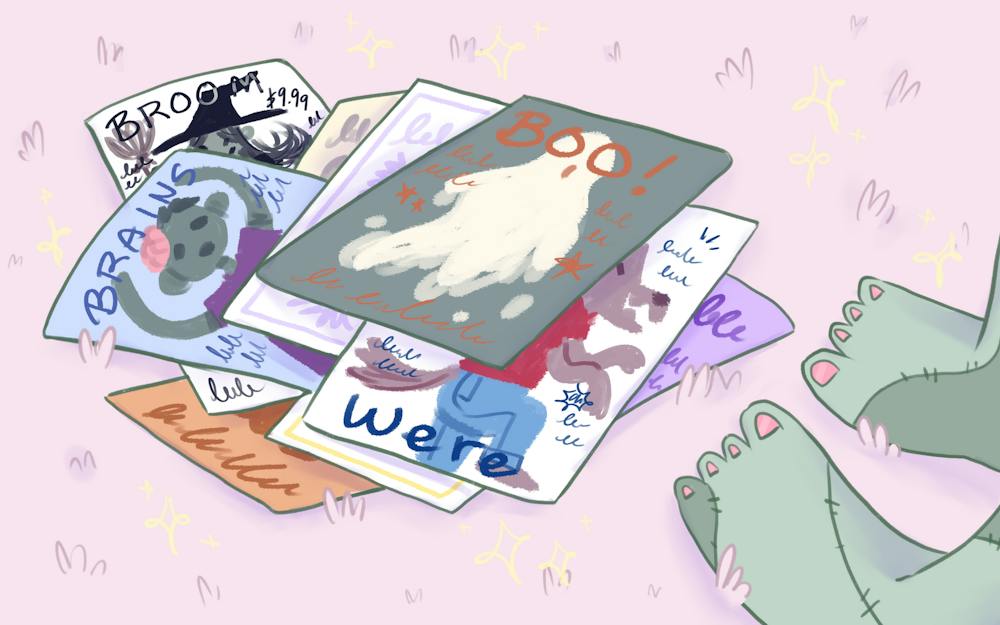
In recent history, the female presence in horror has become more literal, with teenage girls often assuming the physical role of monsters in various media. Mattel’s “Monster High” franchise takes the likes of Dracula, the werewolf and Frankenstein’s creature and imagines them as teen girls navigating a high school chock-full of ghoulish students.
This clever premise makes for great marketing, but the concept itself isn’t too far behind that of the literature predating it. Hear me out, OK?
While “Frankenstein” is often discussed in the context of technological hubris, the thematic influence from Shelley’s experience with pregnancy and childbirth is lesser known. She grew up with only her father after her mother died from complications with Shelley’s birth Shelley began the novel at just 18, after she prematurely gave birth to a daughter who died a few days later. The baby’s father, Percy Shelley, neglected to console the grieving Mary as she finished the book’s first edition.
The experience is evident in Shelley’s characterization of both Victor Frankenstein and his creation — characters equally considered monsters in their own rights. Shelley found herself horrified to have given birth to an underdeveloped child, akin to Frankenstein’s regret of having bestowed life upon the creature. Like the creature himself, dismayed by his own existence, Shelley carried the knowledge that her own birth resulted in her mother’s death.
Though most modern teenagers may not share her tragic experience, the girl-turned-monster motif in our media calls back to the teenage Shelley’s depiction of herself. With girlhood and puberty comes the same awkwardness of Frankenstein’s monster clumsily reaching out to his creator for the first time, only to be met with rejection. Increasing pressure to conform to social standards and newfound physical changes certainly make one feel, well, monstrous.
While decidedly a story of its own in many respects, Stephen King’s “Carrie,” I believe, can be read as a contemporary answer to “Frankenstein.” By placing the creature into an American high school as the lonely, sheltered and telekinetic Carrie White, the story tackles issues like female puberty and beauty standards head-on.
Carrie, like Frankenstein’s monster, is a product of her creator and environment. Raised by a zealously religious mother who deplores any minor exploration of femininity or sexuality, Carrie becomes an outcast among other teens. She frequently endures the trials of being a young girl, as the story begins with her getting her first period, and she navigates high school described in the novel as a “frog among swans,” bullied by other students for her appearance.
Like the creature, in a critical moment of social rejection, she violently lashes out against her peers. Both characters ultimately destroy their creators — Carrie kills her mother, as the creature drives Victor Frankenstein to madness.
This is far from the only example of girlhood in horror. The years since brought us a cheerleader turned man-eating demon in “Jennifer’s Body.” A popular highschooler made a generational vampire hunter in “Buffy the Vampire Slayer.” And we mustn't forget the haunted halls of “Monster High.”
The study of a specific demographic in the gothic genre is nothing new, given its historical tendency to embody an ostracized group into a singular being, making monsters of deeper societal fears.
For example, Bram Stoker’s “Dracula” denoted Victorian fears of reverse colonialism amid a rise of Eastern European immigration, making a Slavic vampire the villain. Preceding that was Joseph Sheridan Le Fanu’s “Carmilla,” which addressed fears of homosexuality by portraying the sapphic relationship between Carmilla and novella’s protagonist, Laura, as literally vampiric. Rejected by conventional society, literature often portrayed minority groups as monsters. These characters aren’t mere antagonists, but a reflection of those among us most vulnerable.
And being a teen girl is certainly emblematic of that. If you’re seeking a bit of a scare this Halloween season, look no further than your own high school memories.
At the strange, isolating crossroads between child and adult, young girls are suddenly thrust into a society that demands more physical beauty and social amiability than anyone could possibly attain. The harsh backdrop of a school lunchroom mimics a larger world that rejects women unable to meet those demands. And like Frankenstein’s monster, teens often find themselves in a body that is developing quicker than a still-maturing mind.
Who wouldn’t feel a bit monstrous?
Stitch all these factors together, and you’ve got an electric charge for disaster. While some teen girls might go on a killing spree at the senior prom, outside of a film script they might slam bedroom doors or sneak out to parties. And others might take up a quill to revolutionize science fiction.
I suspect Mary Shelley had some such experience, at least regarding the latter idea, though she might not be able to tell us so directly. She also can’t really give an opinion on “Monster High,” either, so I’ve taken it upon myself to fill in the blanks. For whatever it’s worth, I think she would have appreciated it.
Emma Howard (she/her) is a junior studying journalism.