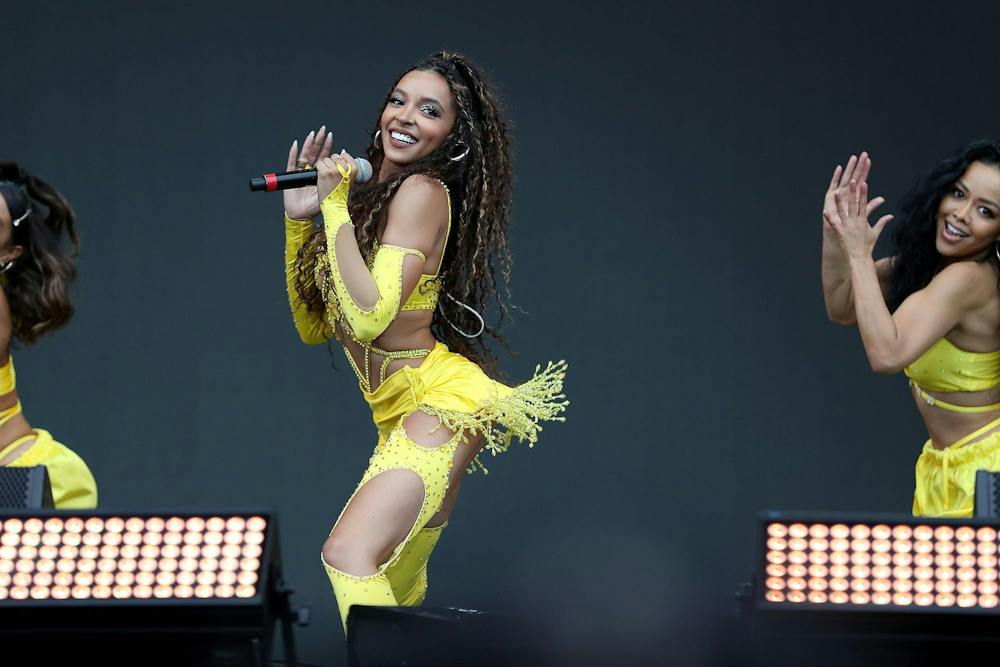
Before listening to Tinashe's newest album, “Popstar,” released last Friday, I never thought mixing electronic music with R&B and pop would work. Tinashe proved me wrong. This album combines her soft voice and bold style to create something that’s cohesive and fresh.
As someone who wasn't previously a fan of Tinashe, I became interested in this album because of its second single, "Crash Out," for standing out stylistically in the rudimentary pop world. Many contemporary songs do not blend the trap genre with R&B to much success, but “Crash Out” manages to make it work.
The catchy track shows Tinashe is tired of the expectations put on her as a celebrity, simply stating "I don't even care no more." While not a celebrity myself, I can relate to this sentiment of experiencing too much in stressful situations and feeling the need to completely shut off.
My favorite track from the album was “Empty Stadium,” which describes Tinashe's struggles navigating through the major label system after leaving RCA Records. After this split, the lyrics make it clear she still feels overlooked in the public eye, making the track hit so much harder emotionally when considering her past industry struggles.
The chorus, "When I realize I'm alone, I've been singing so long and nobody hears it / And I'm standing on the stage just waiting for applause that'll never exist," shows how she feels about her popularity and the effort she puts into everything. However, as she sings, “Then the lights too bright and it hurts my eyes, but it feels like bliss,” she realizes that she gains a sense of bliss from the ordeal, showing that there is some beauty to this emptiness.
Her soft, yet snappy voice in the chorus reflects these simultaneous feelings of tranquility and loneliness. She creates a space that feels liminal yet somehow full of passion. A beating track is present throughout with occasional instrumental piano breaks to amplify the singer's sorrow.
The album's title track, "Popstar," shines a light on the often-glamorized world of fame. In the second verse, Tinashe sings, "They romanticize it all 'cause the weather's always nice / If you wanna sell your soul, then you gotta pay the price like." The track encapsulates the album's theme of how living as a pop star can be both exciting and stressful.
I found her mention of the often satirized rumor of celebrities having to sell their soul for fame, discussed rather seriously in this track. As the price they must pay offers listeners a double meaning to this rumor and that of the toll she discusses fame took upon her. And her connection of romanticizing fame and the West Coast's idealistic weather is something very few songwriters point out.
Tinashe's reverbed voice is all you can hear during the first lines, with camera flashing sound effects later added in. Her reverbed voice accentuates the chorus while also showing the mechanistic and false nature of fame, while the cameras frame her as the focus of fame and attention.
The singer acknowledges that stardom is alluring, choosing an album cover to match. Photographed by Hugo Comte, the cover showcases the singer in an extreme close-up looking out with stars in her irises, meant to represent how she has been metaphorically captured by her artistry.
Tracks like "Too Easy" are juxtaposed against "Popstar," instead displaying Tinashe's confidence and bold personality. This song was the album’s first single, released June 5 after getting teased during Tinashe’s Coachella DJ set in April, alongside its accompanying music video.
In the music video, her film set goes wrong after a malfunction causes equipment to fall onto Tinashe, leading to her fictitious on-screen death. Then, after various girls, all of whom seem to be in replacement of Tinashe, get interviewed with little success, Tinashe is sent back to life using a scanner as a star lights up her eye. This artificial creation makes the singer seem like a robot skilled at performing.
Both the song and its visuals paint Tinashe as someone made — literally — for the spotlight. And as the video finished with an amazingly choreographed dance, it became hard for me to not believe her.
"Too Easy" blends electropop with dance-pop and R&B, with a pulsating and catchy percussion that immediately got stuck in my head. The singer uses a fun and flirty voice in the chorus, singing, " I got a question, is you really down to pop or what?”
As Tinashe questions if the listener is ready for the party and the groovy instrumentation continues to bounce back and forth, the song develops an enthusiastic, fast pace. Tinashe's focus on confidence, self-assurance and independence is complemented by the song's equally confident beat.
"Popstar" is a perfect listen for anyone interested in genre-blending music, innovative R&B or electropop influence. Despite each song's vibrancy, Tinashe also effectively gets across her personal struggles. And with the emphasis on fame and what it means to be famous throughout, "Popstar" questions industry ideals and the aspiration of becoming famous.