Editor's note: All opinions, columns and letters reflect the views of the individual writer and not necessarily those of the IDS or its staffers.
In Indiana, possessing marijuana is a Class B misdemeanor punishable by up to 180 days in jail and a $1,000 fine. The primary psychoactive molecule in cannabis, THC, is classified as a Schedule I controlled substance.
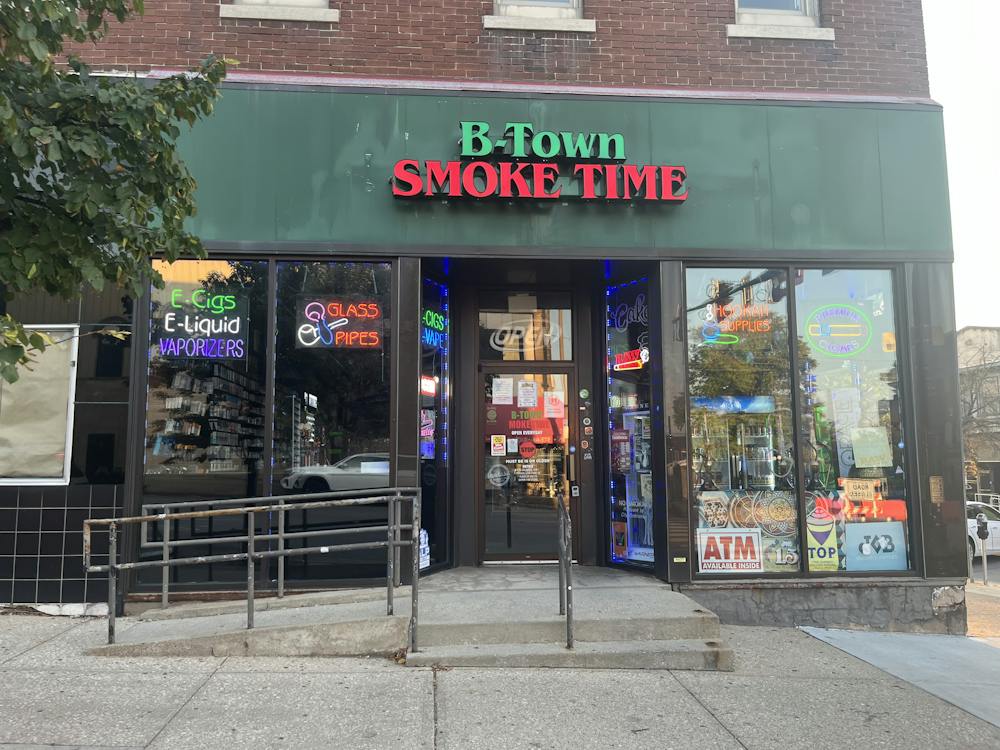
But walk into nearly any liquor store, smoke shop or gas station in Indiana, and you’re likely to find an assortment of THC-infused products. Intoxicating gummies, beverages and even e-cigarettes are available, advertised and legal for Hoosiers to purchase and consume. A 19-year-old college freshman can walk into a gas station and pay for a shot of cannabis extract before they can pay for a beer.
The difference between walking out of that gas station in handcuffs or with a handful of products is whether what you purchase is derived from illegal cannabis or innocuous hemp. The only problem? They’re the exact same species, Cannabis sativa L.
The current legal definition of hemp was established in the U.S. Congress’ now-infamous 2018 Farm Bill. Since then, any cannabis sativa plant containing more than 0.3% delta-9 THC by dry weight is marijuana — anything containing less is hemp.
The cutoff was arbitrary and hyper-specific. THC may be the primary intoxicating molecule in cannabis, but it’s hardly the only one. By exploiting the so-called Farm Bill loophole, companies across the country began to distribute products containing other intoxicating cannabinoids like Delta-8 THC and hexahydrocannabinol.
Other states recognized the loophole problem years ago. Michigan’s state legislature passed laws in 2021 bringing cannabinoids like delta-8 into its regulated marijuana market. Colorado passed similar legislation targeting THC isomers in 2022. But in Indiana, next to nothing has been done to prevent a legal gray area from turning into a mainstay of convenience stores.
The cannabinoid-derived hemp industry has been allowed to bloom in the Hoosier state for almost a decade; it might make more sense to keep the market for Indiana’s cannabis — er, hemp — legal.
In less than a decade, Indiana’s hemp-derived cannabinoid industry has put down serious roots. When the Farm Bill passed in 2018, the Office of the Indiana State Chemist reported just 15 acres of hemp was grown in Indiana, all for research purposes. The next year, that number ballooned to over 2,000. A 2023 analysis by cannabis and hemp-consulting firm Whitney Economics estimated Indiana’s hemp-derived cannabinoid industry employed around 11,000 Hoosiers and generated around $1.78 billion in economic activity.
Unlike Michigan and Colorado, Indiana has repeatedly failed to enact any comprehensive legislation to limit its intoxicating hemp industry. As recently as this year, Senate Bill 250, which would have finally regulated a product's entire cannabinoid content and imposed a 21-plus age restriction on hemp derivates, died in the Indiana House of Representatives.
Now, the federal government is closing the Farm Bill loophole — leaving a substantial portion of Indiana’s hemp industry without a legal leg to stand on. The new federal definition of hemp goes into effect Nov. 12, 2026, and excludes products containing more than 0.4 milligrams of THC and similar cannabinoids per container — a potential death blow to any hemp business relying on the legal landscape of the past eight years.
The loophole should have been closed long before then. Regardless of whether it’s classified as marijuana or hemp, the intoxicating molecules present in all cannabis need to be regulated to protect consumers and local communities alike.
But time and again, Indiana failed to do so. For many Hoosiers, obtaining an intoxicating hemp product has been as easy as walking across the street to the convenience store.
There’s clearly a market for cannabis, or at least cannabinoids, in Indiana — and Indiana’s hemp-derived cannabinoid industry has expanded to fill that market. Rather than let it die, Indiana should consider transforming it into a legal, regulated cannabis market.
As far as regulation goes, legalizing marijuana would be doing Indiana a favor. Namely, it would give the state government the ability to decide where, how and to whom cannabis products could be sold.
It would also allow Indiana to tax cannabis beyond the state’s standard 7% sales tax. A 2026 RAND Corporation analysis predicted Indiana could generate around $180 million annually in tax revenue within five years of legalizing marijuana.
Hoosiers are in the market for cannabis products. Hoosier businesses have been producing them for years. Whether a molecule of delta-9 THC comes from legally defined hemp or marijuana, its effect is the same. Despite that, Indiana has kept marijuana criminalized while allowing nearly indistinguishable compounds to populate store shelves across the state.
The Farm Bill loophole accidentally created something like a legal cannabis market in Indiana. Instead of re-criminalizing eight years of industrial growth, now might be a good time to create one intentionally.
Spencer Schaberg (he/him) is a junior studying microbiology.