Editor's note: All opinions, columns and letters reflect the views of the individual writer and not necessarily those of the IDS or its staffers.
From the classic “reformed bad boy” to the mischievous “fake dating,” tropes are everywhere. Whether you have a taste for Shakespeare or the knack for a late night visit to Wattpad, you’ve experienced these clichés and others.
But what do some of these formulas suggest about our view of relationships between men and women? What is it about a playboy romancing the picture of piety that resonates so well? Maybe our idea of what a relationship should look like is rooted in the double standards we face every day. I believe no show has displayed this quite like Netflix’s “Bridgerton,” which finished its fourth season Feb. 26.
The Netflix original series, “Bridgerton,” which debuted in 2020, is based on the popular Regency-era romance series by author Julia Quinn. Beginning with the eldest daughter Daphne, each season tracks the love story of a different Bridgerton sibling. This latest season’s star was Benedict, the second-born Bridgerton son. Noted for its glamorous visuals and diverse casting, “Bridgerton” has solidified its reputation as a historical fantasy, offering audiences a sense of escapism in an idealized version of Regency England.
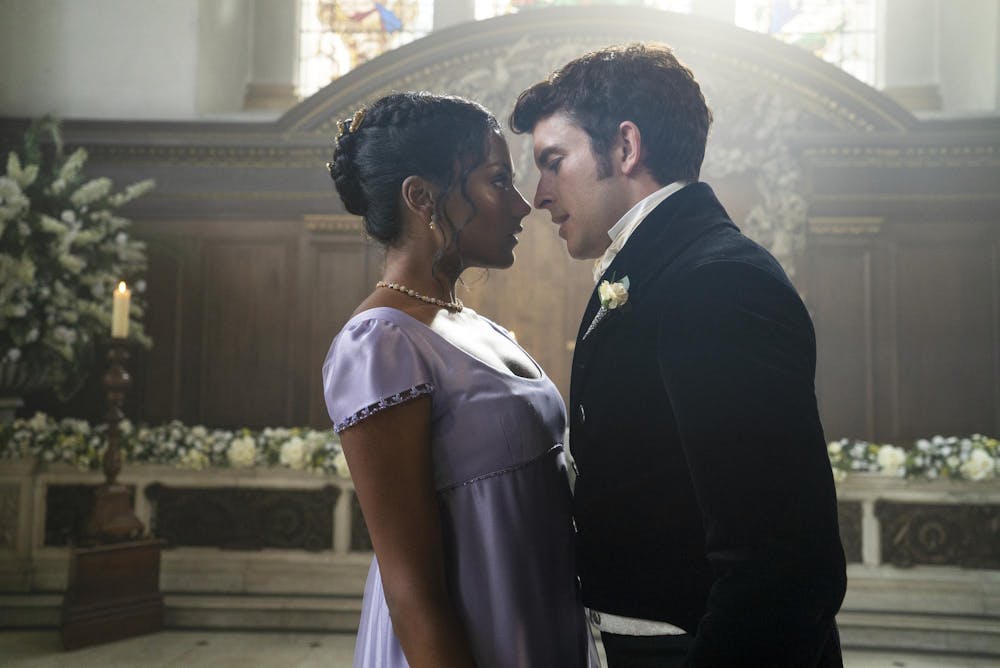
To say this show is engaging would be an understatement — it’s addicting. The scandal, yearning and “Gossip Girl”-esque mystery of Lady Whistledown have hooked me since season one. The show stuns visually, both in terms of mise-en-scène and cinematography. This season was no exception, wowing audiences with an elaborate masquerade ball of intricately-costumed guests. I adored this season’s dedication to the Cinderella story. However, I couldn’t help but notice an unfortunate pattern that proudly stood its ground this season: every male lead is a “rake.”
Starting with the brooding Duke of Hastings and now the “free-spirited” Benedict Bridgerton, every leading male love interest in the show’s four-season history has frequented London’s brothels. Meanwhile, their wives-to-be are all virtue and chastity, not knowing so much as the very basics of sexual education. And so it goes each season: The reformed rake settles down with the leading lady who has changed him for the better.
But before reaching domestic bliss, the male lead typically views marriage as a business deal, and his beau is forced to sign on or die an old maid. In this world, matchmaking is as essential as the sun, just as it was in the real Regency era. But if “Bridgerton” is the fantasy version with glittery gowns and non-traditional casting, why did it keep the misogyny?
The truth is “Bridgerton,” like many historical dramas, needs those misogynistic structures to build its storylines. Without the looming threat of spinsterhood, desperate matchmaking and scandals over who lost her honor to whom, “Bridgerton” has no plot. Eliminate sexism and the show’s stakes are gone because those rigid social standards are the driving force of each character, whether it is to comply with or defy them. Because “Bridgerton” and other historical dramas need these structures, they use them to their advantage.
You can write a great “reformed bad boy” story in a period when visiting brothels was so common. “Fake dating” works pretty well if you need to up your prospects on the marriage market. “Bridgerton” takes these tropes and places them in a Regency setting to make a fantasy of historical women’s lived experiences. When audiences swoon over a player falling for a lady or a couple forced to wed out of convenience, they are unintentionally receiving pleasure from an oppressive system.
Despite reflecting the harsh realities of how many women had to live, these fantasy worlds have provided a sense of escapism for many female audiences. Why do we find the concept of a forced marriage or a rakish man attractive, especially when sexual double-standards for men and women are still prevalent today? Has our own oppression become attractive to us? Even in our fantasies, it seems women are still held to higher principles than men.
Granted, "Bridgerton” creates a more utopic version of the Regency era where people of color and people with disabilities are accepted in polite society. But this utopia cannot hold up with the ye olde values around women, marriage and sex that are at the show’s core. I wonder if the show could exist without its narrative benefitting from the strict social standards that add an alluring sense of scandal.
Without a doubt, the show still has many feminist successes. This season, for example, Violet, the Bridgerton matriarch, has been a glowing example of rekindling romance later in life. Characters like Queen Charlotte, Lady Danbury and Penelope Featherington all exceed in using a restrictive system to their benefit. However, I cannot ignore the tropes used by the show that ultimately feed into sexist ideals of what a relationship should look like. If “Bridgerton” strives to create escapism, why do its male characters treat women with the same disregard we often see in real life?
If “Be my mistress?” was the ideal, I wouldn’t be watching Netflix. I’d just go outside.
Emma Howard (she/her) is a sophomore studying cinematic arts.