
Editor's note: All opinions, columns and letters reflect the views of the individual writer and not necessarily those of the IDS or its staffers.
Of women aged 15 to 49 who have been in a relationship, 27% have reported experiencing physical or sexual violence, or both, from an intimate partner, according to the World Health Organization. With the rise of “BookTok” and the “dark romance,” genre, young consumers are becoming more vulnerable to toxic relationships romanticized as love stories.
Authors like Colleen Hoover — whose catalog is characterized by unhealthy power dynamics, manipulative male leads and even physical abuse — are playing a key role in the promotion of this idea. The film adaptation of Hoover’s hit novel, “It Ends With Us,” was widely marketed on social media as a light romantic comedy, with lead actress Blake Lively facing criticism for telling audiences to “grab your friends, wear your florals” to a film largely centered around domestic violence.
The latest dark-romancified adaptation targets none other than Emily Brontë's classic, “Wuthering Heights.” “Saltburn” writer and director Emerald Fennell is taking a swing at the novel in a new film, releasing next week, starring Margot Robbie as Catherine Earnshaw and Jacob Elordi as Catherine’s adopted brother, Heathcliff.
“Wuthering Heights,” published in 1847, follows the lives of Catherine, her biological brother Hindley and the orphaned Heathcliff, who all live on the family estate, Wuthering Heights. Heathcliff — whose race is unspecified but confirmed to be non-white — is socially and financially ostracized by Hindley following the death of their father, Mr. Earnshaw. Meanwhile, he and Catherine develop a deep romantic connection, but she is socially pressured into marrying her wealthy neighbor, Edgar Linton, instead.
Vowing revenge, Heathcliff runs away, earns a fortune and returns to marry Linton’s younger sister. After Catherine dies in childbirth, Heathcliff eventually attempts to force a marriage between her daughter and his son to control both Linton’s estate and Wuthering Heights.
In the film’s first trailer, released Nov. 13, the tale was called “the greatest love story of all time.” On the same day, Charli XCX released her single, “Chains of Love,” off an album written for the film. Since then, billboards for the film have popped up from London to New York City, featuring sexual stills from the film overlayed by texts like “Drive me mad” and “Come undone.” More recently, a stagecoach bearing those same quotations drawn onto steamed windows appeared at Canada’s Bridal Show, attracting even more attention to the film’s provocative aspects — and deterring it from the themes of trauma and abuse so prevalent within the original story.
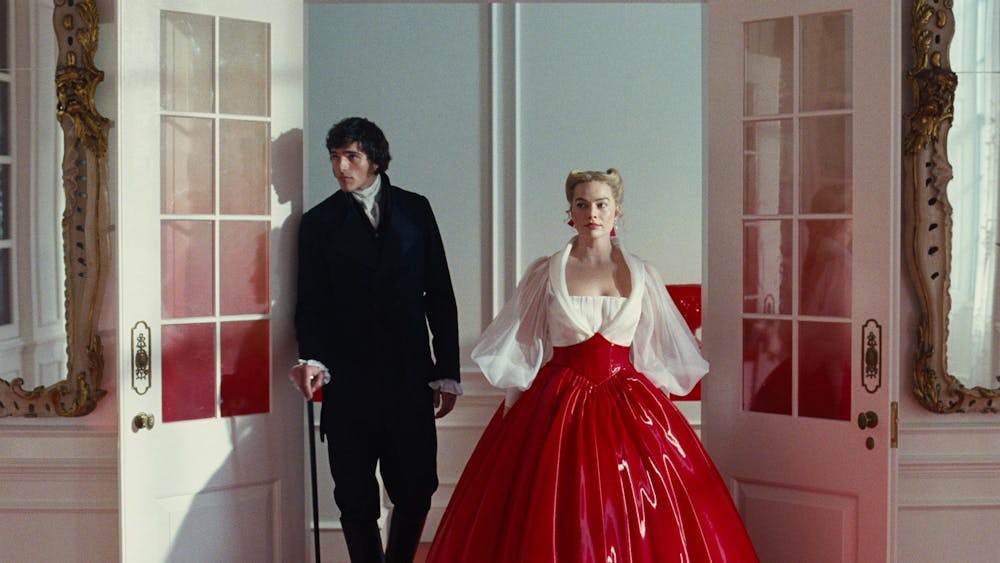
In addition, the film’s costume designer, Jacqueline Durran, has received criticism for the costumes worn by Robbie in various stills, trailers and other promotional material, largely due to their historical inaccuracy and general weirdness. Most notable is a hoop skirt made of bright red latex. However, Durran and Fennell have defended their work, citing glamorous 1950s historical melodramas as their inspiration rather than strict period accuracy. That influence is also quite evident in the film’s official poster, which brags of a Valentine’s Day release date.
While rigid accuracy is not always key to creating a great adaptation — take Greta Gerwig’s “Little Women,” for example — it is still important that major plot points and themes remain intact to ensure the author’s intentions are respected. Nothing about the ostentatious marketing of Fennell’s “Wuthering Heights” suggests that Brontë's intentions are present.
Brontë's gothic tale commented on Victorian conventions, contemporary gender and racial inequality and the isolating nature of life in the English moors. Despite my belief that filmmakers can and should take artistic liberties with their adaptations, it is dangerous to present a story of toxic relationships and generational abuse as an exhilarating romance audiences should aspire to obtain.
Focusing on the film’s stylistic and sexual aspects, the marketing of Fennell’s “Wuthering Heights” fails to recognize the themes which made Brontë’s novel so groundbreaking. The trailers show Fennell has erased essential details from a deeply layered and emotionally complex novel in pursuit of making a campy, sexy movie to wow her audiences.
By casting Elordi, a white man, as Heathcliff, Fennell threw away one of the novel’s most important details and, with it, any themes of race Brontë wanted to bring to light. And while Fennell has stated the novel is, in her view, impossible to truly capture on film, it certainly can’t be difficult to at least cast a person of color for the role. Maybe the issue is that she simply doesn’t want to, especially if she’s attempting to cater to romance audiences in a culture that favors leads who meet Eurocentric beauty standards.
But why is this such a big deal?
In the current political climate, major news networks like CBS are intimidated into pulling major stories from the air. Just last week, TikTok users noticed an uptick in censored content after the app switched to U.S. ownership. Even our own Indiana University was ranked among the lowest universities in the country for freedom of speech. And erasing details from a novel like “Wuthering Heights,” especially regarding racism and sexism, is itself also a form of censorship, whether intended or not.
Adapting a novel about unhealthy obsession and marketing it as a romance not only completely disregards the author’s intentions but further encourages audiences to romanticize toxic behaviors. This is neither the message we should send to audiences, nor one I believe Brontë would approve of.
Emma Howard (she/her) is a sophomore studying cinematic arts.



