
Editor’s note: This story includes mention of sexual violence or assault. Resources are available here.
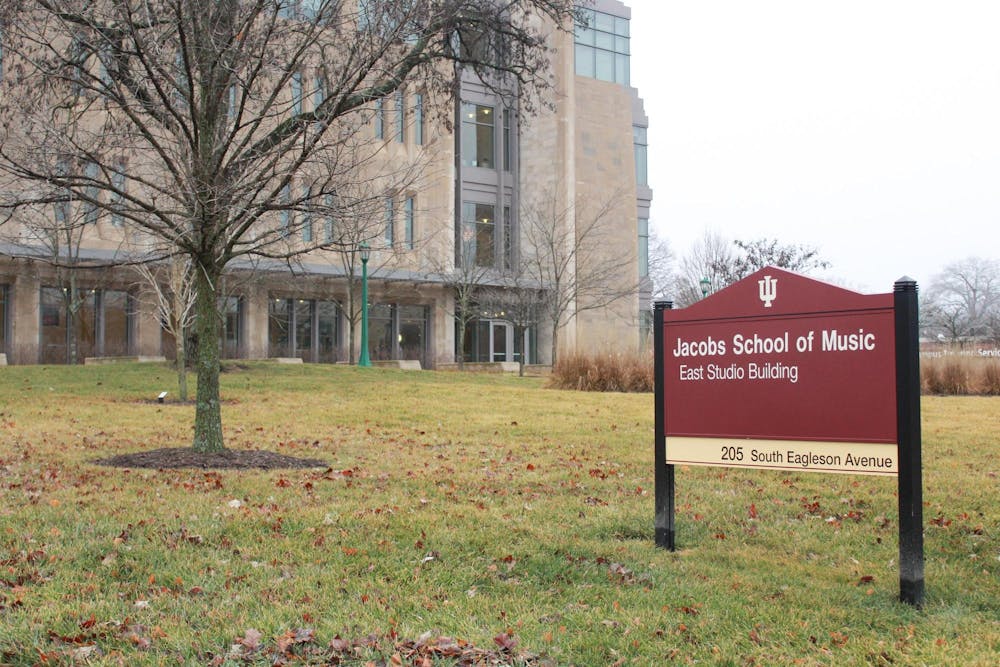
After several years of reports on sexual misconduct and discrimination at the Jacobs School of Music, the school released a summary of its perception and safety study Jan. 13.
The study, sent to Jacobs students by dean Abra K. Bush, found a disparity in the attitudes toward safety between students in minority groups and those who are not.
When asked about the school’s plans to implement changes, a Jacobs spokesperson referred to Bush’s email to Jacobs students.
"We are carefully reviewing the results in full and considering their implications,” Bush said in the email. “Let me be clear: the work reflected in this study does not end with its release. We remain deeply committed to ongoing attention, accountability, and action to ensure that Jacobs is a place where all members of our community can learn, create, and thrive in a safe and respectful environment."
The Jacobs School of Music declined to make any further comment.
Out of 3,713 faculty, staff, administrators, alumni and undergraduate and graduate students who were sent the survey, 590 responded. Undergraduate students made up the majority of total responses at 32.2%.
The study comes after the Indiana Daily Student reported on high profile sexual misconduct in 2022, 2024 and 2025 by the IDS.
In 2022, the IDS reported that Jacobs drummer Chris Parker was accused of sexually assaulting another student in 2015. After a six-month investigation, IU suspended Parker and forbade him from trespassing on campus. When Parker violated these rules and returned to campus, IU suspended him again, but allowed him in 2020 to return to complete his undergraduate degree.
The issue continued. In 2024, when the IDS reported on several students’ experiences with sexual misconduct within the Jacobs community, particularly in the jazz studies department. Several women described the issue of sexual abuse at the school as “neverending,” despite several moves toward change by Jacobs such as the organization of a sexual misconduct task force.
In 2025, Jacobs alumna Vanessa Fralick alleged that Jacobs professor Peter Ellefson had touched her inappropriately after a trombone seminar in 2007.
While the report concluded that most participants did not find Jacobs to be a discriminatory environment, those in sexual and racial minority groups were more likely to say Jacobs to be more isolating, sexist, racist, ageist and hostile.
The top three groups reported by respondents to have engaged in discrimination were tenure-track faculty, undergraduate students and graduate students.
The report also found that while a majority of participants had no experience with or very rarely experienced discrimination at Jacobs, over 25% said that they had experienced at least occasional discrimination and 8.78% reported facing discrimination frequently and very frequently. The report noted that this was an area in need of attention from Jacobs, with discrimination against women being the most frequently identified form.
Regarding sexual misconduct at Jacobs, the report found that in the last year, 25 participants had reported inappropriate sexual comments made, 10 reported improper touch, five reported inappropriate sexual contact, three reported instances of stalking and two reported distribution of private pictures.
Of the respondents asked if they were satisfied with Jacobs after reporting discrimination, 34% out of 56 respondents said they were satisfied while 32% said they were not satisfied. The other 34% said they were neither satisfied nor dissatisfied.
When reporting sexual misconduct in Jacobs, 38% of the 16 participants who reported sexual comments made towards them and 83% of six respondents who reported unwanted contact said that they were satisfied with Jacobs’ response. However, 19% of those who reported sexual comments and 17% of those who reported unwanted contact responded that they felt dissatisfied with the school’s response.
Participants who did not make a report commonly noted they were worried the misconduct they experienced was not serious enough to report or that they were afraid of retaliation.
Additionally, most respondents agreed that providing additional mental health resources to students was where they would like to see the most improvement, with 92.43% also saying that educating faculty on policies regarding touching students is important or very important and 91.83% said providing unconscious bias training is important or very important.
IU spokesperson Mark Bode referred back to Bush’s email and declined to make any additional comments.
You can view the full report here.


