If you have ever had to cite scholarly work for a paper, you likely understand the frustration of finding the perfect article, only to discover that precious information is trapped behind a paywall.
What’s even more frustrating is that you are already paying for it.
This past fiscal year, $193.39 billion in federal taxpayer dollars was spent on scientific research and development. Nearly $60 billion of that, rightly, goes to universities conducting groundbreaking scientific research.
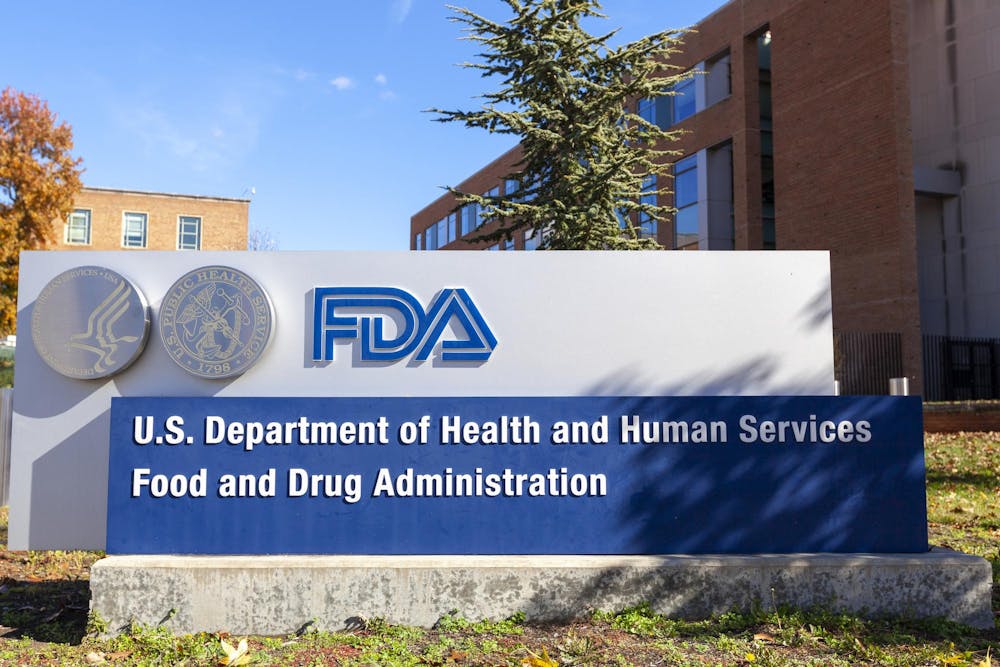
It’s groundbreaking research that our current presidential administration then treats like it's worth less than dust. It instead opts for non-peer reviewed studies, such as the one cited in a memo released late this November by Dr. Vinay Prasad, director of the FDA’s Center for Biologics Evaluation and Research. The purported internal review Prasad cites found that at least 10 children died “after and because of receiving” the COVID-19 vaccine.
The memo, obtained by NBC News, hardly includes any information about these alleged deaths. None of the details that would allow journalists, clinicians or independent researchers to evaluate the claim are present. No age. No medical history. No chronology. No case files. No documentation. Not even the name of the vaccine manufacturer. Furthermore, The FDA’s findings have not been published in a peer-reviewed journal.
This is problematic for several reasons. In a digital environment already flooded with politically-motivated claims and viral distortions of scientific evidence, unclear or incomplete government statements actively fuel distrust. When an administration feels so confident as to cite a sketchy review to justify a political agenda, the public needs reliable, unrestricted access to real research in order to evaluate those claims for themselves.
This is precisely why open access to scholarly research is the antidote to challenge misinformation: it empowers citizens to fact-check, contextualize and challenge misleading or unsubstantiated assertions.
Open access doesn’t just benefit academics. It empowers teachers, journalists, clinicians, policymakers and ordinary community members to see how evidence is generated and to evaluate claims on their own terms.
But there’s a catch — in order for scientists to actually publish this research, they must submit it to a journal. In the age of the printing press, this was a very expensive process, but today, the internet makes it much easier, and hypothetically, it should be cheaper to distribute scholarly work.
However, this is not the case. With the current model, Journals are charging an outrageous amount of money, sometimes thousands of dollars, for access to scholarly work. Research from Brown University shows that journal prices have outpaced inflation by more than 250% over the last 30 years.
But it’s not just vaccines that are being targeted by this administration. In May of this year, President Donald Trump released his final proposed budget for the 2026 fiscal year, which includes a cut of almost $2.7 billion for the National Cancer Institute. That’s a cut of approximately 37.2% compared to the current fiscal year. According to a statement from the NCI, these cuts could “cost the United States its global competitive edge in biomedical research, turning back the clock on years of progress.”
The fight for open access is, at its core, a fight for public empowerment. In a political climate where public trust in science is being intentionally eroded, scientific institutions are under attack and even lifesaving research is vulnerable to budget cuts, our democracy cannot survive unaffordable science. Open access strengthens our ability to distinguish between evidence and opinion. It gives the public the tools they need to hold institutions accountable.
If we want a society capable of resisting misinformation, supporting research and rebuilding public trust in scientific experts, open access isn’t optional; it’s imperative.
Ainsley Foster is a senior studying Elementary Education and Children’s Mental Health.