
Prior to watching the World War II film, “Nuremberg,” after its debut on Nov. 7, I had expected either a boring, accurate and historical recounting or a sickeningly over dramatized retelling of the famous Nuremberg trials.
Instead, the film’s dark premise and incredible actors retold a fairly accurate story of the trials, where 24 individuals and six organizations associated with the Nazi regime were indicted. After the trials, 22 individuals were initially brought in front of an International Military Tribunal to be judged on counts of war crimes, crimes against humanity, conspiracy and crimes against peace.
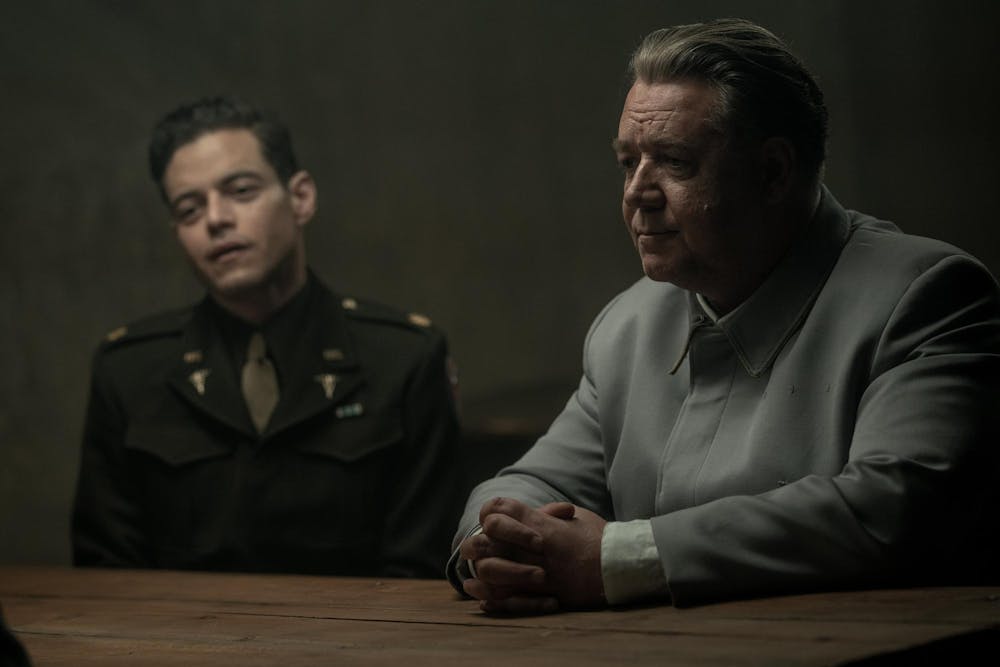
With muted colors, barren landscapes and dramatic music, the world leaders, prosecutors and civilians' tension and fear were palpable. Director and writer James Vanderbilt drew from award-winning author Jack El-Hai's book about the relationship between the Reichsmarschall and a psychiatrist.
While some aspects of their relationship and pivotal events were embellished for the film, the story described the pair’s lesser-known story about their interactions.
Amid the war-torn land, this twisted pairing toyed at the comparison between good and evil, loyalty and friendship and revenge and decency. It questioned whether WWII could be followed by a third world war, and it posited that other nations and individuals are capable of heinous acts.
Though Vanderbilt first began drafting “Nuremberg” 13 years ago, the film’s messages and the characters’ ethical dilemmas still coincide with those experienced today.
"Nuremberg” opened with exposition and the surrender of Reichsmarschall Hermann Göring (Russell Crowe), followed by the introduction of Dr. Douglas M. Kelley (Rami Malek), the main character and psychiatrist assigned to evaluate the Nuremberg defendants.
Supreme Court Justice and prosecutor Robert H. Jackson (Michael Shannon), German to English translator Howie Triest (Leo Woodall) and several Nazi leaders were quickly introduced. As individuals were woven into the story, the Allied Forces’ hope for conviction and the defendants’ pompous attitudes toward acquittal created questions about the future of the Nazi Party’s ideology and its potential to receive a positive reception on the world stage.
Throughout the film, Kelley’s obsession to make a name for himself and write a book about his patients clashed with his apparent connection to Hermann Göring — a loving father, dedicated husband and Nazi leader.
As the trial drew near, and Kelley and Göring’s relationship teetered between professional and personal, Kelley’s determination to understand the psychological differences between Nazis and average people began to falter.
Like the humanity found in characters in Erich Maria Remarque’s book, “All Quiet on the Western Front,” the psychiatrist started to realize that Göring shared similarities with ordinary people and their better qualities. Perhaps those normal individuals also shared some of his evil tendencies.
The audience could experience Kelley’s realizations too. After agreeing to deliver Göring’s letters to his child and wife, the psychiatrist hears the daughter play the piano and realizes that she loves her father and entertains her with magic tricks. Though her father committed unspeakable acts, she and her mother remain faithful to him and his image and enjoy receiving his letters.
His family’s response to his imprisonment makes him seem more human and less like a foreign monster.
As Göring’s character was fleshed out, I wondered how he could waver between being a “family man” and a war criminal. He and other characters alternated between committing empathetic and self-serving acts, making me question the innate nature of humanity.
Yet, as the tension built up, and the connection between doctor and patient intensified, sizzled and blackened, Vanderbilt added a symbol of caution that more clearly emphasized the film’s purpose. He warned the general public to remain vigilant and reminded people of the dangerous behaviors that have been rationalized in the past.
With the trials on the horizon, Triest implies that the war has not ended. He later reveals to Kelley that he will not enjoy a cigarette until after the war ends; the audience is left pondering the possible foreshadowing behind his ominous statement.
After the tribunal’s verdict, Triest withdraws one of his cigarettes. Yet, he never brings it to his lips and breathes in.
During those moments, his refusal seemed to symbolize that the evils seen during WWII were not isolated instances, and humanity still holds an affinity toward self-serving behavior.
Vanderbilt’s ability to portray a sense of looming doom and healthy fear separates the film as an applicable lesson in history, rather than simply a historical piece.
The film showed death and suffering, involved many well-developed characters, emphasized past misdeeds and blackmail and solidified the history of the Nuremberg trials.
Throughout it all, Vanderbilt's powerful message to humanity became clear: humans are multifaceted and capable of horrendous acts, and without intervention, history often repeats.


