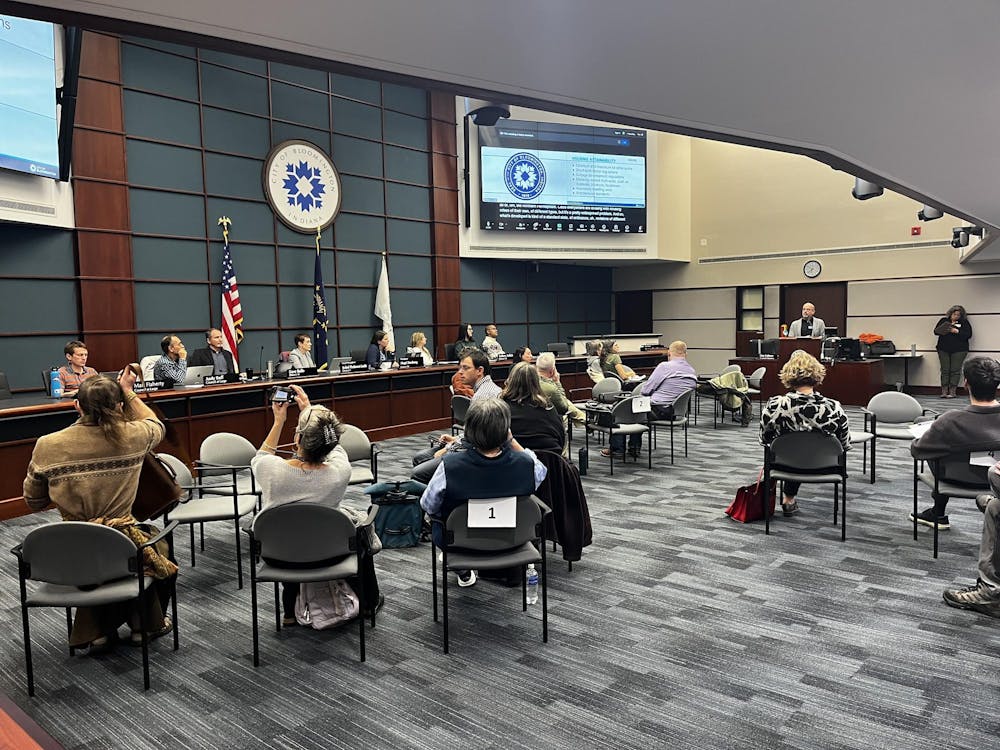
Housing needs and experiences were the main topics of discussion at the Bloomington City Council’s uniquely formatted meeting Wednesday evening.
The meeting's agenda called for breakout sessions between residents and city councilmembers to deliberate on “larger questions of culture and perspective on housing and community.”
The breakout groups were a follow-up to a community conversation hosted by city council Sept. 10, during which attendees and city councilmembers also discussed housing. Director of Planning and Transportation David Hittle explained potential zoning and policy changes to improve housing attainability in Bloomington during his presentation.
He suggested amending rules like permit process improvements, pre-approved housing plans, lender and developer training and building codes, citing the City of Bloomington’s 2018 Comprehensive Plan and Unified Development Ordinance.
“Those two things are inextricably linked, and they’re very much in the air tonight,” Hittle said.
Hittle said the longer the delay between permit application and approval, the more cost there is for developers — a cost then passed on to renters or homebuyers.
The average rent for all bedrooms and property types in Bloomington is $1,950, according to Zillow rental data. Rent increased by $150 since last year. For a one-bedroom apartment or condo, the average rent is $1,121. For a two-bedroom, the average rent climbs to $1,610.
For homeowners, the median sales price for a single-family home is $375,000, indicating a 37.6% price increase since last year.
Hittle said the Planning and Transportation department has been reaching out to various stakeholders in the city such as Indiana University, neighborhood organizations, Monroe County Community School Corporation, advocacy groups and “peer cities” — cities that are home to other Big Ten schools.
“… Just striving towards equity and access for all, you want to look at the ability to increase housing diversity,” Hittle said.
In the first breakout session, eight groups discussed two statements related to neighborhood or city development. Half of the groups discussed the statement, “No neighborhood should experience radical change, but all neighborhoods should expect some change.” The other half discussed, “When you stop growing, you start dying.”
Groups were co-facilitated by city council members and city staff from both Planning and Housing and Neighborhood Development departments.
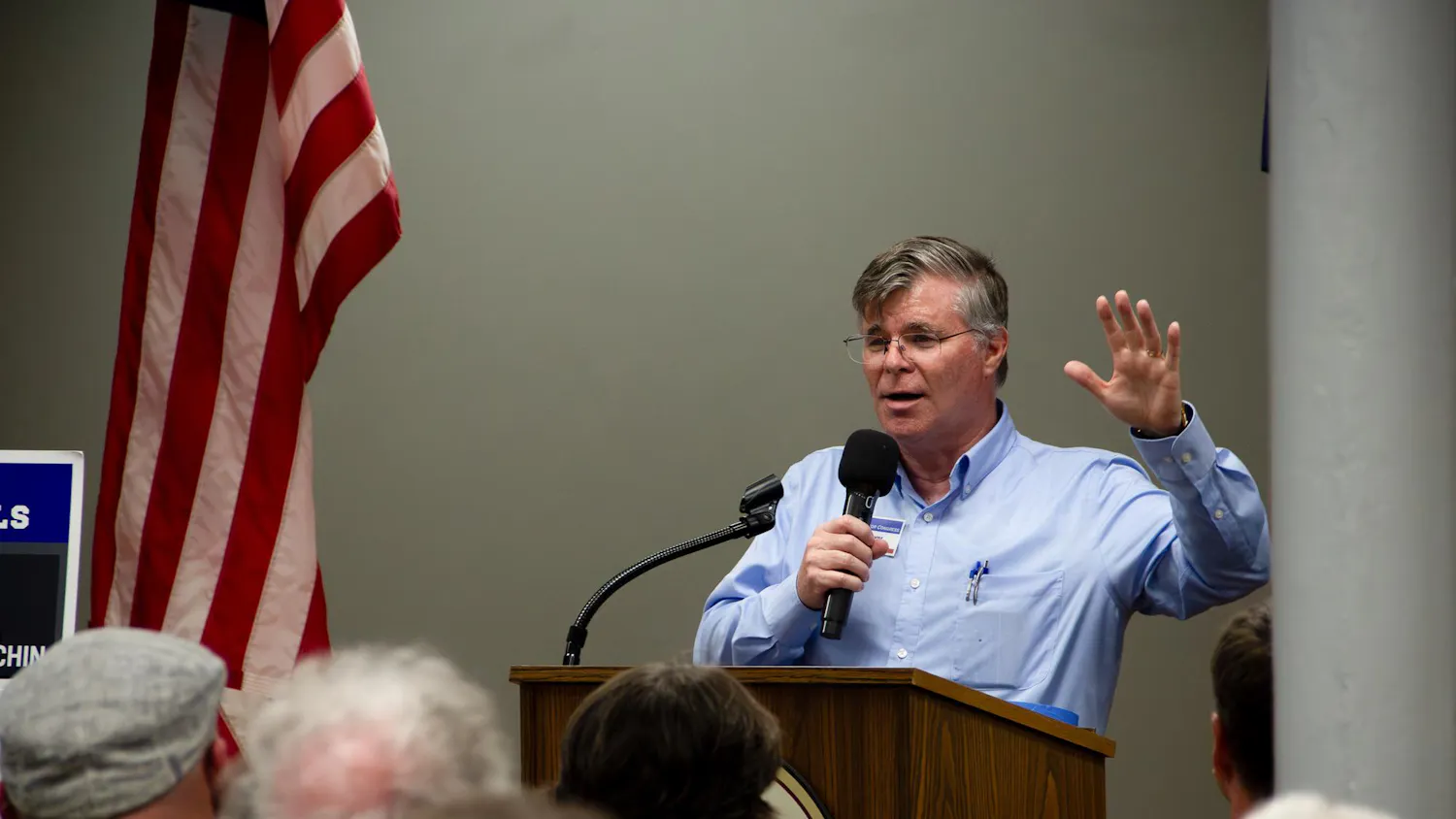
Community member Seaforth Breeze said a lack of what Hittle called the “missing middle,” or types of housing that fall between single-family homes and large apartment buildings, is an issue for many.
In 2024, the Bloomington metro area — comprised of Monroe and Owen counties — had 301 single-family permitted units and 663 five or more family units. Only 24 developments fell into the two-family or three- to four-family unit range.
“You got this real sense that there were lots of folks that are coming to the same problem from different angles,” Breeze said. “They might be retirees who are trying to downsize their house but they’re in this golden handcuff now, ‘If I leave my house that I got at a very affordable price but is way too large for me now, then there’s nothing to replace it.’
Senior Zoning Planner Jamie Kreindler focused on housing attainability practices in the second presentation. She said potential zoning reforms, like allowing more duplexes and triplexes, encouraging cottage courts, expanding accessory dwelling units and modernizing architectural standards, could allow for additional housing types in the city.
Kreindler also pointed to South Bend’s pre-approved housing plans as a model for reducing barriers to construction in Bloomington and the Hopewell redevelopment of Indiana University Health Bloomington Hospital site along West Second Street.
“One of the goals is to develop a pre-approved homes catalog similar to South Bend that could be applied citywide to make housing infill easier in the city of Bloomington,” Kreindler said.
Attendees also considered questions about balancing student and non-student housing needs, preserving neighborhood character while accommodating growth, supporting local developers over outside investors and improving overall housing attainability.
Maple Heights resident Sarah Alexander said she was pleasantly surprised by the range of voices and perspectives present, noting that housing development is often a “contentious” issue.
“This is about people who need somewhere to live, who need somewhere to work. It’s about their lives,” Alexander said.
City Council President Hopi Stosberg said the next step is to make policy changes to the UDO to improve the housing situation in Bloomington. She said the expectation is for official policy change proposals to begin early next year.
“There will probably be several smaller pieces of legislation that will come through and those will start at the plan commission level,” Stosberg said.