
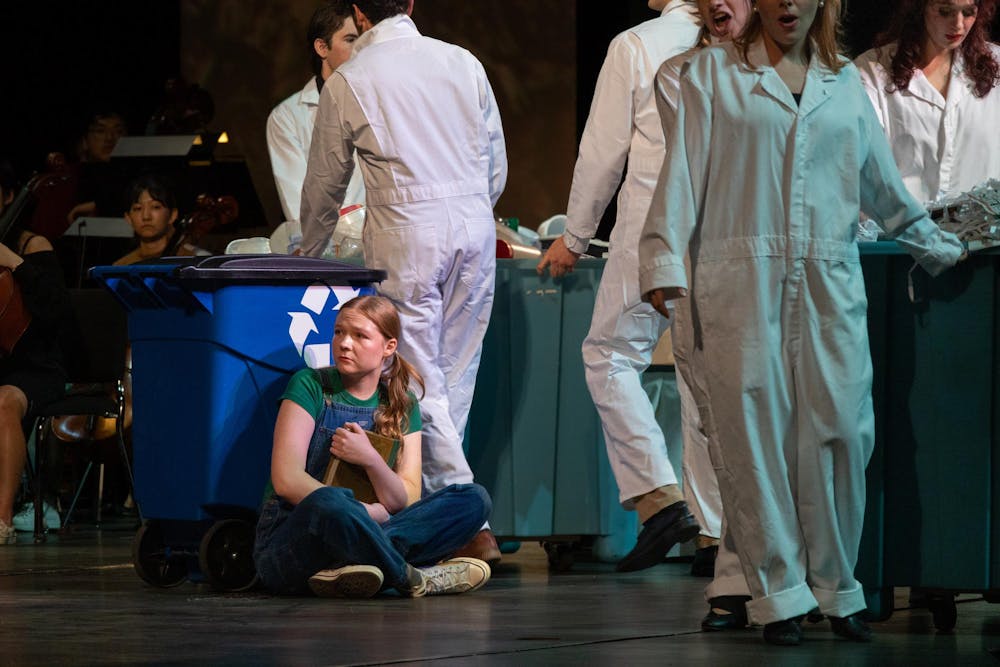
The Jacobs Opera and Ballet Theater will perform “L’Enfant et les Sortilèges,” a French opera with music written by impressionist composer Maurice Ravel, starting this weekend. The show opens at the Musical Arts Center at 7:30 p.m. Friday.
There will be two separate performances of the show on Friday and Saturday, with a different cast performing each night.
Written in only eight days by French writer and artist Sidonie-Gabrielle Colette in the early 20th century, “L’Enfant et les Sortilèges” tells the whimsical story of a young child, or L’Enfant, whose tantrum prompts the inanimate objects and creatures around them to come to life. Throughout the show, these now sentient beings seek to teach the child to atone for their misbehavior and wrongdoings, emphasizing the importance of compassion and sympathy.
“L’Enfant” isn’t the first show whose story revolves around objects coming to life – “Beauty and the Beast” is a well-known example of a tale that follows this trope. Director Omer Ben Seadia believes this aspect of the plot continues to appeal to audiences.
“There are so many stories in which our surroundings can finally talk back to us and confront us in meaningful ways,” she said. “I think that core idea is really fascinating for audiences of all ages.”
Rather than playing in the pit as most operas require, the orchestra plays on stage behind the actors. Before the actors enter the stage, the orchestra will open the show with a performance of “Bolero,” one of Ravel’s most well-known pieces.
Ravel drew inspiration from several different musical genres when writing the score for “L’Enfant et les Sortilèges.” Fawzi Haimor, the show’s conductor, believes these different musical interests come through in the opera’s composition.
“When you listen to the opera, you can hear all different styles of music,” he said. “He wanted this opera to be very lighthearted and playful, so you can hear jazz and blues and ragtime and all these different types of music in the opera, and each is related to every single character in the story. That’s how he was able to bring the characters to life through music.”
Seadia feels the character of Ravel’s music compliments the story’s playful, imaginative nature, reflecting the childlike perspective from which the story is told.
“As a composer, he both knew how to write comedy and how to write character really well, but he also knew how to access your heart and your imagination,” she said.
Though it premiered in 1925, the Jacobs adaptation portrays the story in a contemporary setting. The cast will be clothed in modern attire, and the show features current technology such as an iPad and headphones among its props.
Being about 100 years old, some of the original portrayals of characters originally had racist undertones. One particularly egregious scene originally featured a character in blackface. In this adaptation, this scene and other aspects of the show have been rewritten to be culturally respectful.
Senior performance major Leah Nykaza, who plays L’Enfant in the Oct. 18 cast, emphasized this reframing does not alter its core story.
“We’ve talked about, as a cast, acknowledging those things, but putting a more forward twist on them and kind of saying ‘Okay, this is where we came from, but we don’t want to keep going in that direction,’” she said. “I like the way that we have twisted it to make it tasteful and appropriate for the way we’re setting it in today’s context.”
After enduring the torment of all the characters who have come to life, L’Enfant finally realizes the importance of compassion toward the end of the show. This realization comes when L’Enfant comes to the aid of a wounded squirrel, resulting in the characters forgiving him for his previous misbehaviors.
Nykaza said she views this as a defining moment for the entire show.
“It’s this message that if we keep fighting violence with violence and hate with hate, it doesn’t really get us anywhere,” she said. “It’s a really beautiful moment of forgiveness, and though it’s a silly opera where silly things happen, it has a beautiful wrap-up with this lesson of taking a moment and forgiving and breathing.”
With the addition of “Bolero,” the entire show is just about an hour long. The opera is performed in French, but the English subtitles will be displayed above the stage for audiences to follow along with the story.
An Opera Insights Lecture will be held at 6:30 p.m. before each showing. Tickets to the opera can be purchased here.
CORRECTION: This story has been updated to correct the spelling of Leah Nykaza’s name


