The 2026 proposed city budget would eliminate $300,000 previously allocated for diversity, equity, inclusion and belonging training due to state and federal directives. But at a Bloomington City Council meeting Monday, officials explained this money was not used in the first place.
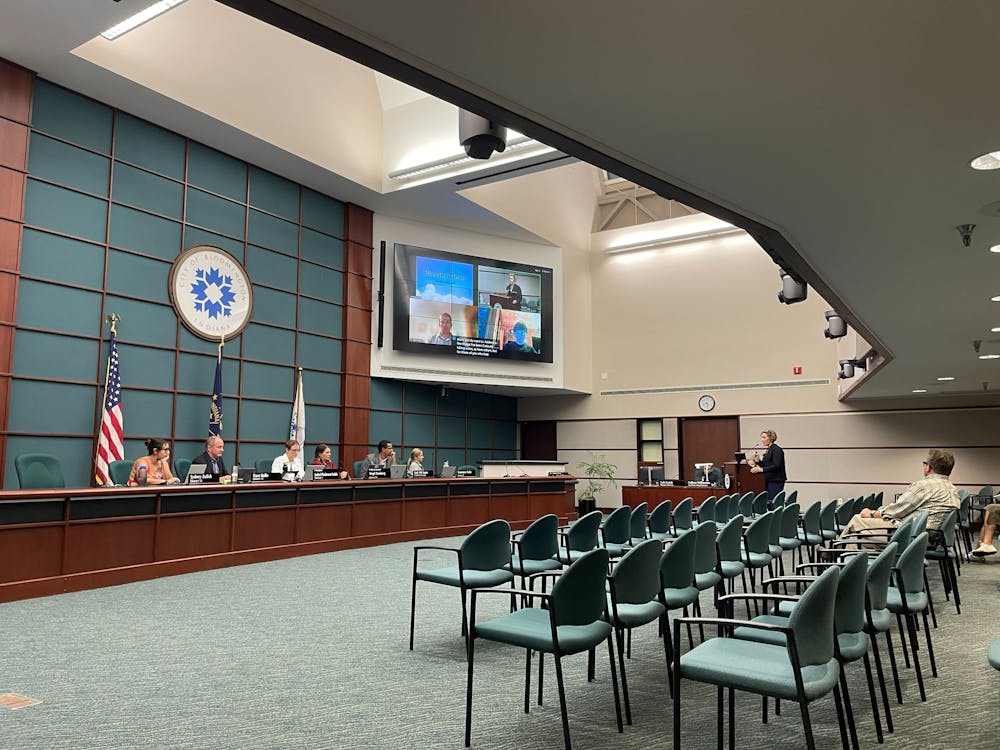
Around 30 people filled the council chambers Monday evening to review the community health and vitality section of the city’s annual budget.
The city’s overall proposed budget includes $54,017,896 in revenue and $65,206,66 in expenditures, for a total general fund deficit of $11,188,770.
Bloomington Mayor Kerry Thomson said the decision to eliminate the DEIB funding was based on the fiscal climate.
Thomson explained Bloomington has less money to work with under Indiana’s Senate Enrolled Act 1. SEA 1 lowers property and local income taxes, decreasing revenue for local governments.
“It has long been the city’s philosophy to universally support those who live here in Bloomington no matter who they are,” Thomson said. “We are not wavering one bit on our values.”
Last year’s budget allocated $300,000 in DEIB training to Bloomington’s Community and Family Resources Department. However the department’s director, Shatoyia Moss, stated during the meeting that the money was never used and the employee onboarding process did not include an element of DEIB training.
Councilmember Courtney Daily asked why the funding wasn’t spent.
City Controller Jessica McClellan told the council Bloomington’s Human Resources Department and CFRD both received funding for employee training from the American Rescue Plan Act — that funding was separate from the DEIB funding. CFRD spent most of its ARPA allocation, so the extra DEIB training funding went unused. McClellan said it was like two departments were trying to accomplish the same function, and the CFRD did not have the capacity to use both.
McClellan said that the $300,000 sitting in the general fund will carry over into the next year and can be used for other non-DEIB services.
Via Zoom, Corporate Counsel Margie Rice explained that directives from both the state and federal government prevent the city from using this money to carry out DEIB training. In January, Indiana Governor Mike Braun signed an executive order dismantling DEI in state agencies. In the same month, President Donald Trump issued an executive order aiming to “end illegal discrimination” by seeking to end DEI programs in the federal government.
“We have taken a conservative approach to follow the federal and state guidelines even though it may not be consistent with our own local policies,” Rice said. “We do not want to risk losing all the federal funding that the City of Bloomington gets and uses to support important programs and citizens.”
Rice said that the city has to certify that it is compliant with federal policy to receive funding. She said she would not advise anybody to sign something and then turn around and do the opposite of what it says, including the city.
“If anyone wants to take issue with the fact that we’re taking a conservative approach, I think that complaint should come directly to the legal department,” Rice said. “We are definitely continuing to work to serve all of those people in need, and we believe that we can best do that by receiving federal funding.”
During the public comment section, former City Councilmember Jim Sims noted that the city does not have a formal definition of DEI. He encouraged the council to create one.
“I’d like to have something more definitive to make sure that we’re able to meet some of those residents that are in need and keep those values that we hold in high priority,” Sims said.
City Clerk Nicole Bolden also stepped up to the microphone, prefacing that she was speaking as a resident of Bloomington rather than in her professional capacity. She said she felt disappointed to hear most DEI-related questions directed toward Moss and the CFRD.
“It’s the mayor’s decision, and ultimately a lot of department heads don’t get a lot of say in what they can and can’t have cut,” Bolden said.
At the end of the public comment section for the CFRD portion of the meeting, Councilmember Hopi Stosberg said she appreciated the community feedback.
“Coming into this position, there’s going to be moments where you have to choose between one bad decision and another bad decision,” Stosberg said. “I appreciate that so many people can come out and comment on this and are just kind of paying attention to how much this matters.”
The next 2026 proposed budget hearing will take place 5:30 p.m. Wednesday at Bloomington City Hall, and the council will be reviewing the transportation budget.
CORRECTION: This story was updated to properly identify City Controller Jessica McClellan