
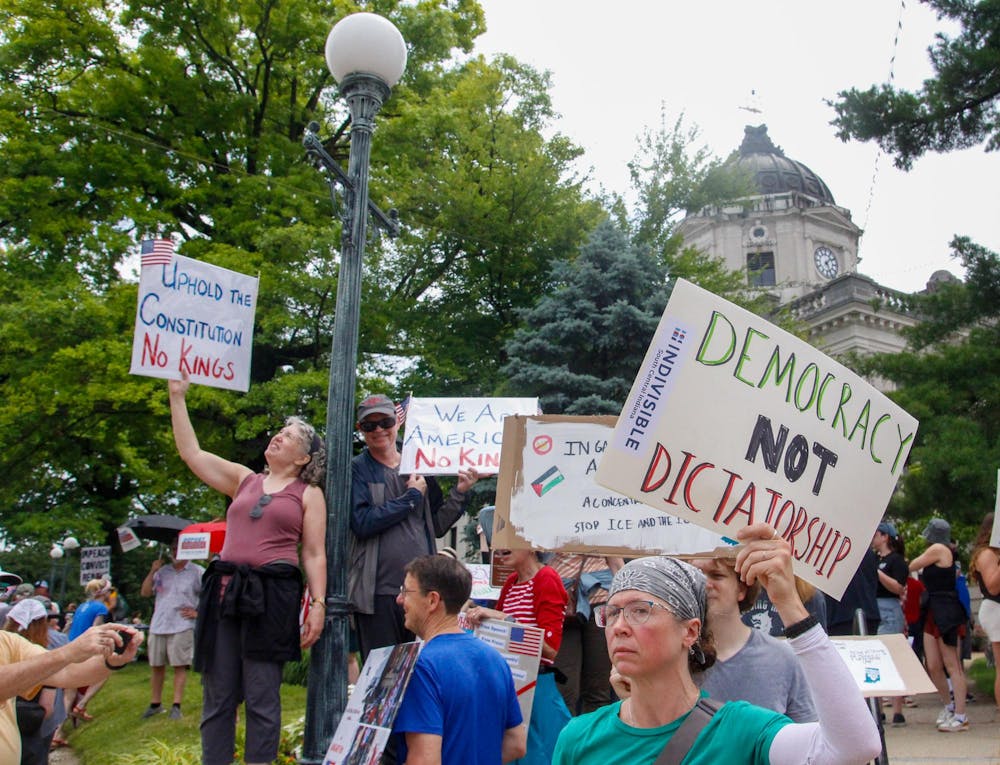
Hundreds of people gathered outside the Monroe County Courthouse from 12-3 p.m. June 14, joining more than 1,500 US cities taking part in “No Kings” demonstrations. 50501, the nonprofit group who organized the nationwide protests, said on their website they intended to “reject authoritarianism — and show the world what democracy really looks like.”
At the Bloomington demonstration and demonstrations across the country, people protested the Trump administration's federal funding cuts, deportation of immigrants without due process, and plans to revoke some immigrants' legal status in the US.
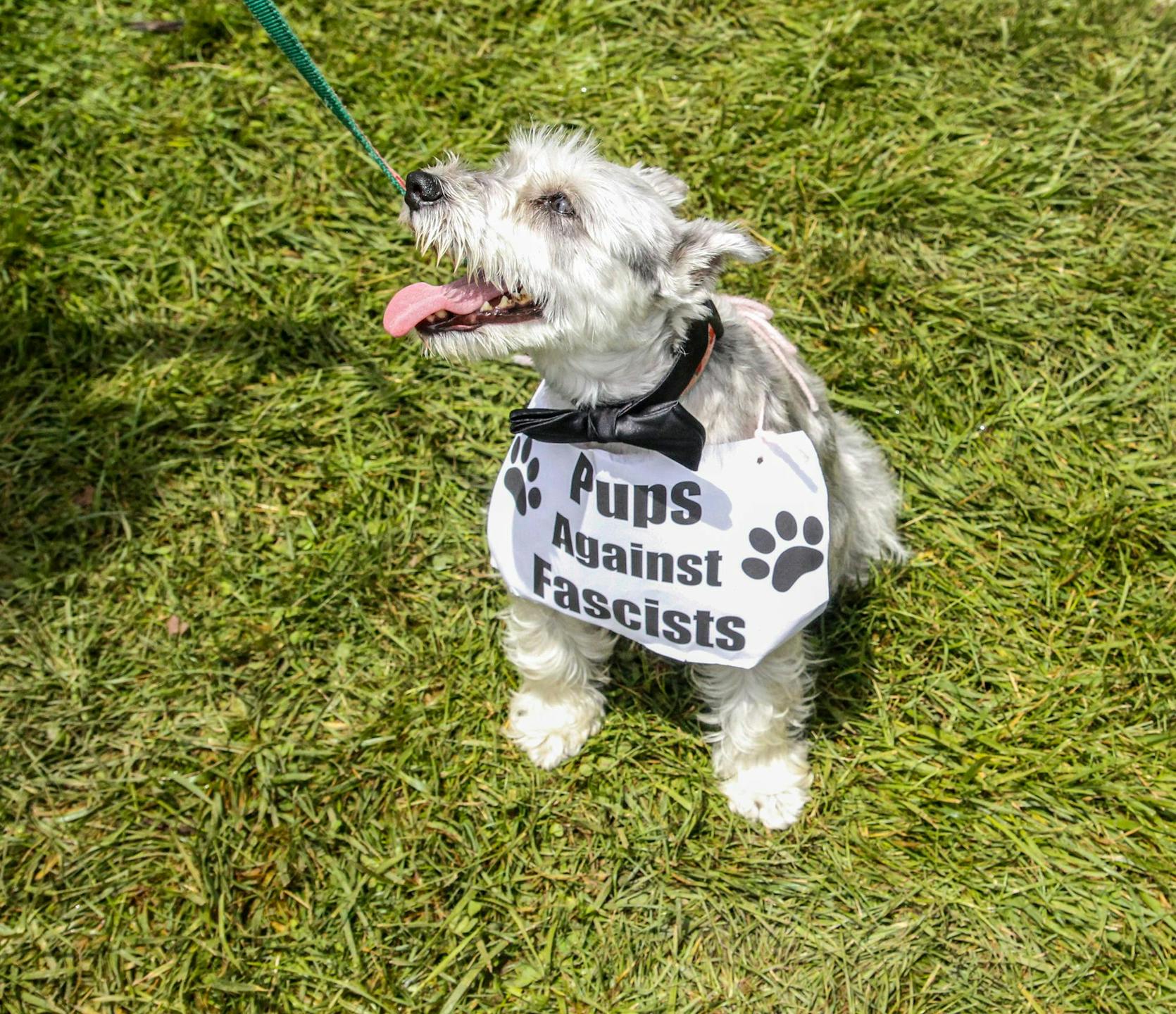
Protesters demonstrated with colorful signs, chants and songs, including performances from local musicians. There was constant honking from drivers passing by in support, often rolling their windows down to show their own signs. Some community members even brought their pets adorned with protest gear.
The protests were organized in response to the $45 million US Army 250th Anniversary Parade in Washington D.C. coinciding with U.S. president Donald Trump’s 79th birthday. Millions of people from urban cities, metropolitan areas, and rural communities united for the largest single-day mobilization since Trump returned to office.
A survey by Data for Progress and Common Defense, conducted in April, found that 70% of veterans said they are opposed to the Trump administration “ordering active-duty U.S. military troops to perform a parade in honor of President Trump’s birthday.”
“I am absolutely certain that our forefathers would not allow this to happen,” 78-year-old Bloomington resident and navy veteran Frank Swinarski said. “The one thing they were very clear about is no one person will make the laws or interpret the laws or enforce the laws.”
Swiniarski said the president should have focused the funding dedicated to the military parade on Medicaid for disabled veterans.
“There are a lot of men and women out there who have contributed greatly and suffered tremendously, and still do,” he said.
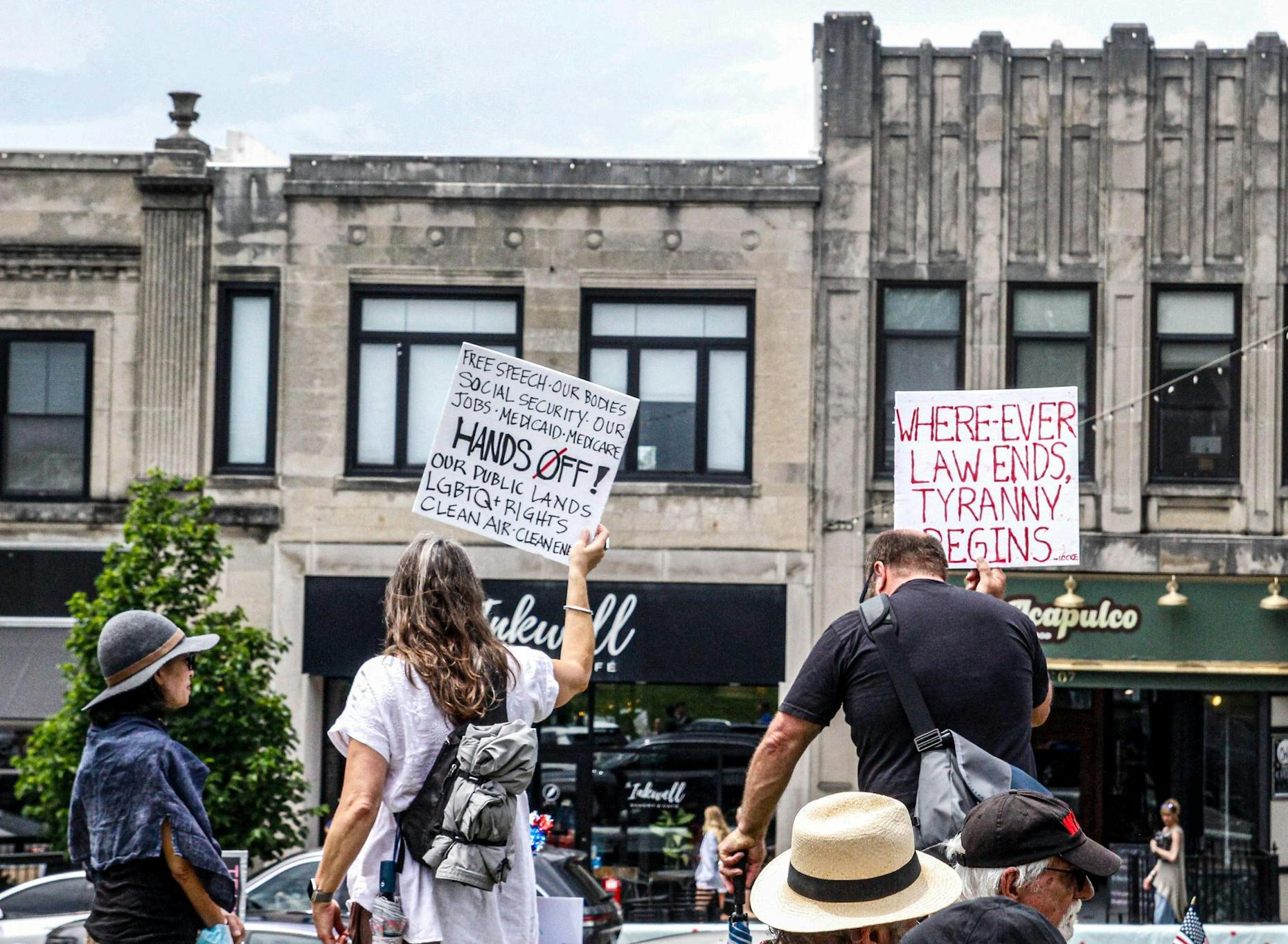
Protesters hold signs on the lawn of the Monroe County Courthouse. "Wherever law ends, tyranny begins," one reads.
Trump’s “Big Beautiful Bill” proposes to cut financial aid services that many veterans and their families rely on, such as Medicaid and the Supplemental Nutrition Assistance Program. Many Bloomington protesters held signs and chanted phrases opposing this bill.
“My mother needed medicaid, I know so many children that need medicaid. We need to support everyone to have health care,” protester Sofia Fatouros said. “We would have a whole other society if people weren’t desperate. I know so many people who have either gotten sick or died because they did not have health insurance.”
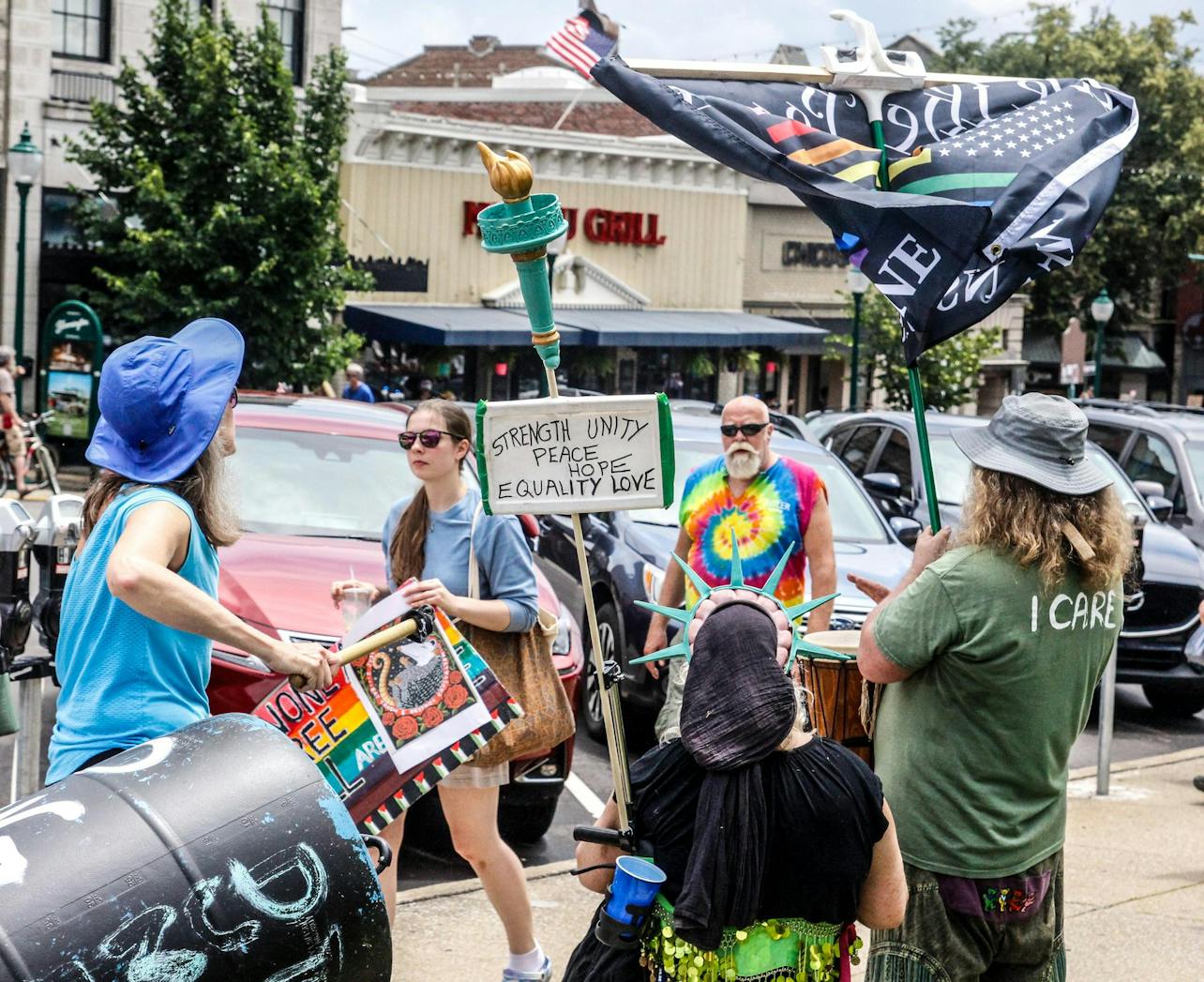
Protesters wield a variety of signs and props along the sidewalk of the Monroe County Courthouse. Protesters gathered at the courthouse at noon June 14 to oppose President Donald Trump's military parade in Washington D.C.
Author and former Bloomington City Council President Charlotte Zietlow gave a speech about her upbringing in Czechoslovakia, and how the signs of authoritarianism she noticed then are now showing up in America.
“I worry when I talk to people. So many of us are just thinking that what’s going on now is not serious, it can’t hurt us. But it is serious. It is serious, and it doesn’t have to happen all at once,” Zietlow said.
Military Veteran Anthony Willimas, 60, said this was the first time he’d protested in his life.
“This is not America. It’s not what the constitution says. It’s not why we’re here. We have to stand up, nobody is going to come to save us — this is on us”, Williams said. “It’s not left versus right, it’s right versus wrong. We need to do the humane thing — that’s what America’s all about.”
The protest was largely peaceful, but the Herald-Times reported one man was taken into custody by the Bloomington Police Department after making threatening gestures to protesters. The IDS was unable to independently verify this report.
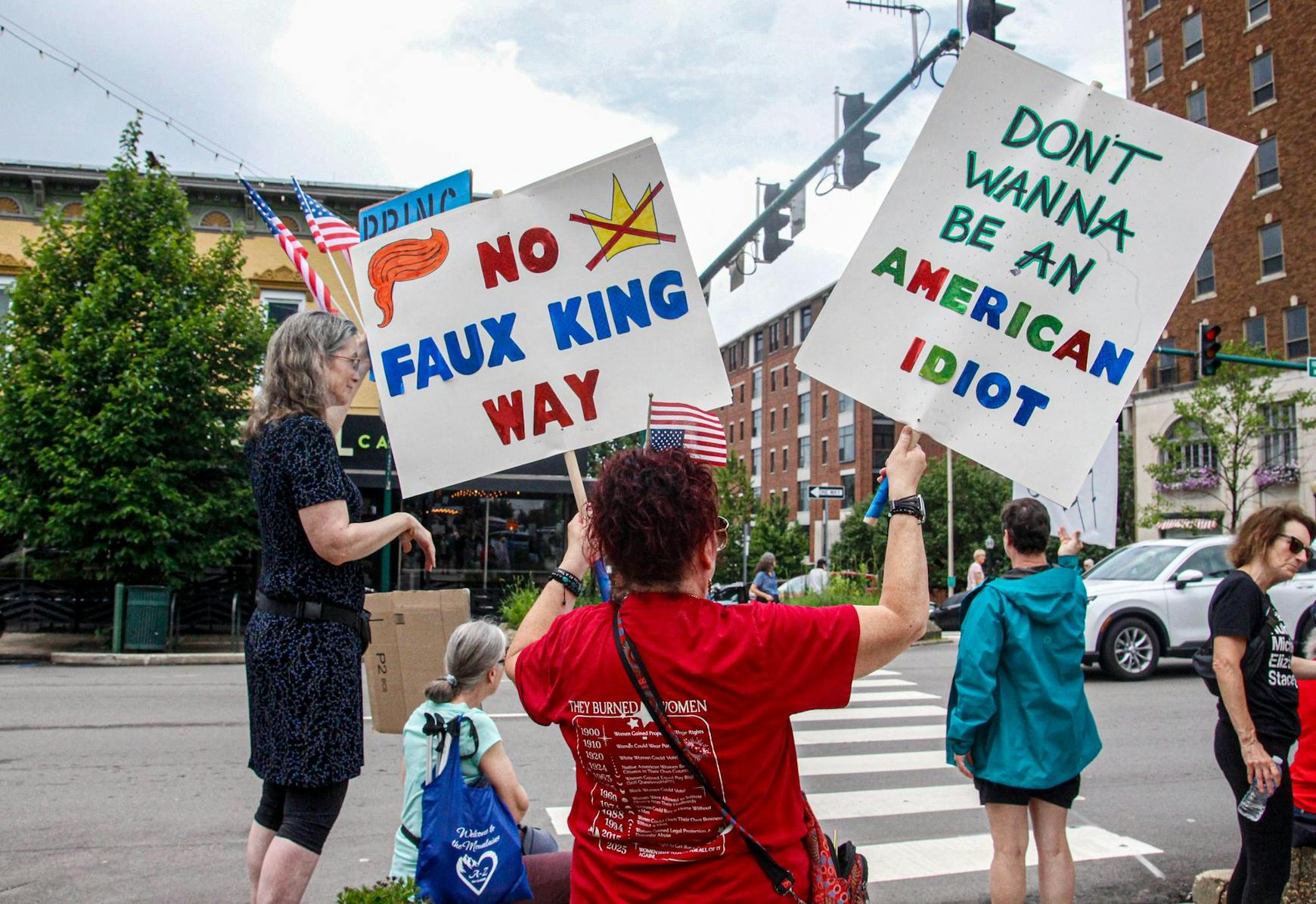
A protester holds two signs outside the Monroe County Courthouse. "No faux king way," one reads.
The protest was scheduled to end at 3 p.m., but about half the people on the Courthouse lawn stayed to interact with each other and passersby.
“The protests during the Vietnam War actually prevented Nixon from dropping an atomic bomb on vietnam. We had no idea at the time that it was having that effect. So today, we don’t know,” Fatouros said. “In the United States there are so many people in small towns and in big towns coming out to protest that we may not know now, or that we may never know.”


