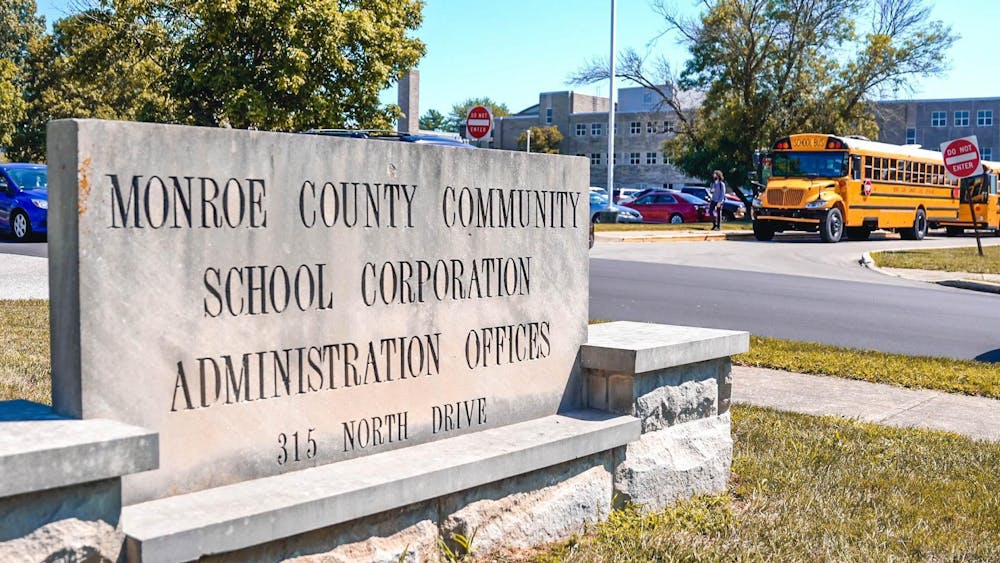
Lucky Charms, Pop-Tarts and Cheez-Its could all disappear from the Monroe County Community School Corporation’s menus under a new bill that would ban certain ingredients from being sold or served on school property.
House Bill 1137 was authored by State Rep. Julie McGuire, a Republican representing part of Marion County, and passed the House of Representatives on Jan. 22.
It bans public and charter schools that participate in federally funded or assisted meal programs from serving or selling foods that contain 13 ingredients except for at least 30 minutes after the end of the school day in fundraisers.
The list contains dyes like Red Dye No. 3 and No. 40, certain preservatives and oxidizing agents like titanium dioxide and butylated hydroxytoluene, or BHT.
Dyes are commonly found in colorful cereals, candy and drinks, while preservatives are often in processed meat, frozen meals, prepared snacks and gum.
In a press release Jan. 23, McGuire said ultra-processed foods are linked to chronic diseases and cited a study published in the British Medical Journal in January of 2024 that showed direct associations between ultra-processed foods and Type 2 diabetes and obesity.
“Because school meals play such a large role in our children's daily nutrition, improving their quality is one of the most effective and cost-efficient ways we can protect their long-term health," McGuire said in the release.
David Lohrmann, a professor emeritus who has taught about school food programs at Indiana University’s School of Public Health, said that studies have shown previous legislation about food in schools has led to better diets, especially for low-income students.
He specifically cited the federal Healthy, Hunger-Free Kids Act, which became law in 2010. It aimed to reduce childhood obesity by updating meal patterns and nutrition standards for school lunch and breakfast programs.
“It does make a difference,” Lohrmann said. “The big difference was improved nutrition, which is, you know, whether you have reduced BMI or not, that’s huge, because it affects learning, it affects overall health.”
Amanda Worrick is the public policy and legislative chair of the Indiana School Nutrition Association, a group made up of school nutrition professionals aiming to improve child nutrition in Indiana. She said the organization met with industry partners to see if switching out the ingredients was feasible.
She said she had concerns that since the ingredient ban is at the state rather than federal level, food manufacturers would have different lists of ingredients that are allowed for each state. However, Worrick said, the school food industry should be able to reformulate by the beginning of the 2027-28 school year, when the bill would go into effect.
“There are a few products that contain those items, but most of the companies were already working towards getting those out,” Worrick said. “They’re already reformulating their products.”
Some of the ingredients, like whitening agent titanium dioxide, have already been banned in other countries over health concerns.
Worrick said a few of the products currently offered at schools contain the banned dyes or BHT for coloring. Cereals, Pop-Tarts, frozen pizzas and pork products may also contain some of the ingredients on the list.
She said industry partners did have concerns about if ingredients needed for reformulation, like natural dyes, will be available in sufficient quantities by that time.
Another part of the bill would require schools to post their breakfast and lunch menus with the ingredient lists for each item. MCCSC already posts its menus online, though the ingredient list is not included.
Worrick said that many schools don’t have the staffing necessary to post and update their ingredients online. She said it might be harder to encourage preparing meals from scratch rather than relying on pre-packaged or frozen foods, if publishing ingredient lists is mandatory.
“It’s going to be easier for them to put something in a package that already has a label with all the ingredients and just serve that,” Worrick said. “Versus coming up with their own recipe, listing out every ingredient from the foods in that recipe, and then uploading that onto their school website.”
Tamara Hannon, a professor of pediatrics at IU’s School of Medicine who researches childhood obesity and diabetes, expressed concerns about the feasibility of the bill.
School meal programs in Indiana are working on a constrained budget, Hannon said, and removing ultra-processed foods could prove a financial challenge.
“In the best-case scenario, we should feed children real food, scratch-cooked meals without dyes and preservatives,” Hannon said. “And I don’t see a plan to actually make that work.”
The most important thing state lawmakers can do, Hannon said, is to make sure to expand free and reduced lunch and school meals for all children.
Worrick said schools get reimbursed 53 cents by the federal government for children who are paying for their meals, but $4.69 for students on free and reduced meal plans.
“To me, the only answer is healthy school meals for all,” she said.
The bill was sent to the Senate’s Committee on Education and Career Development on Tuesday after its first reading in that chamber.