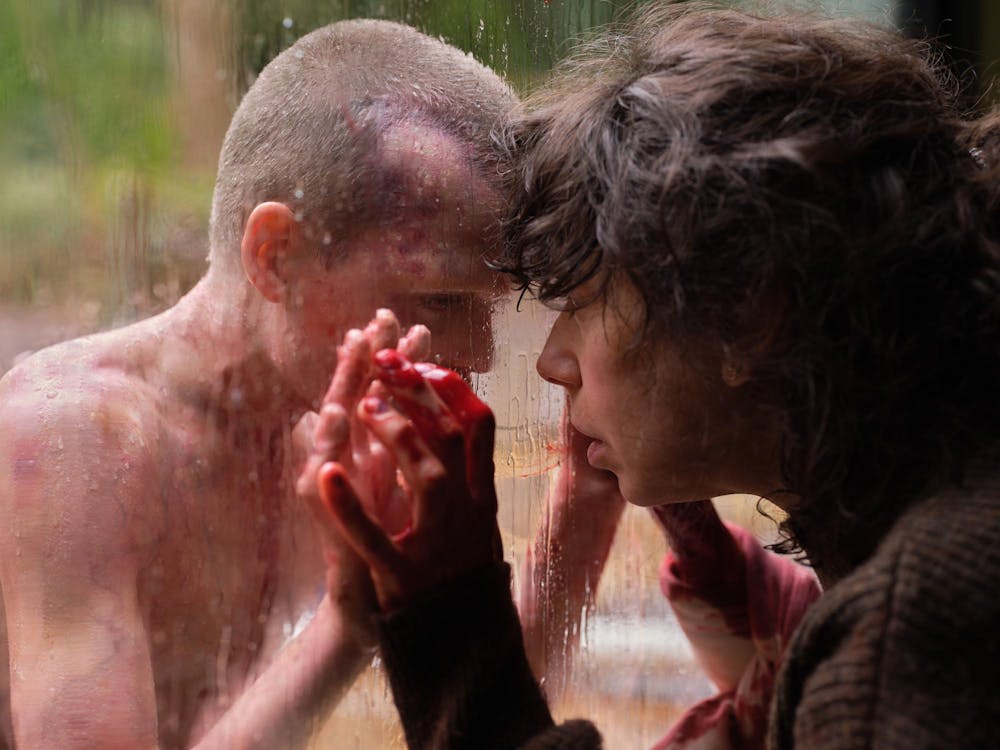
One of the far-too-oft-forgotten instruments in a horror film’s toolbox is a sense of despair. Yes, we associate scary movies with, well, scares, but often some of the most effective works in the genre operate almost entirely by inundating the audience with a continually building sense of despair.
I think immediately of Ari Aster’s 2018 tour de force, “Hereditary,” a legitimately scary picture that was really about the apocalyptic effects of grief on the family unit. Aster’s film was distributed by A24, the indie darling production company which has established a reputation of handling what we might call “prestige horror” over the past decade. With “Bring Her Back,” the newest project from Danny and Michael Philippou, the entertainment outfit continues that legacy.
The Philippou brothers, who got their start producing horror comedy videos on YouTube under the username RackaRacka, made their feature directorial debut in October 2022 with “Talk to Me.” I was never the biggest fan of that film, despite it receiving critical acclaim — I could appreciate the brothers’ ability to induce actual disgust in the viewer with a unique premise, but I ultimately thought it shallow and nothing more than “OK.”
That being said, “Bring Her Back” succeeds where I felt “Talk to Me” failed: it’s anything but shallow, clearly expressing its themes and representing them in a way that is genuinely disturbing and will almost certainly stick with me for some time.
The plot follows Andy and Piper (Billy Barrett and Sora Wong, respectively), two step-siblings who, after finding their father dead, are sent to live with a foster mother named Laura (Sally Hawkins). It turns out, however, that Laura is also grieving, having lost her 12-year-old daughter Cathy. Her desperate attempts to cope — or, more accurately, not cope — with this grief is the crux of the narrative.
She has another foster son, Oliver (Jonah Wren Philips), who is “selectively mute” and spends most of his time in his room. He’s the obligatory “creepy kid” of the story and, however cliché a trope it is, Philips’ performance helps justify the character’s necessity. In fact, all the performances here are exceptional, though it’s almost certain — and for good reason — Hawkins’ is going to receive the most attention.
Her portrayal of a mother in mourning is quietly intense — to again compare the film to “Hereditary,” you won’t see her outwardly display her sorrow with harrowing screams and moans like Toni Collette did as Annie Graham. But there’s a frightening undercurrent to her performance, an almost uncanny feeling that something is off before the movie even reveals as much to you.
Her grief is the essence of her character’s every action. Without getting too deep into the weeds, Laura is attempting to revive her departed daughter, utilizing strange occult rituals that the film never quite explains. But it’s precisely because the film never quite explains it to you that it works so well. We don’t need, for example, any backstory as to how Laura got ahold of the satanic VHS tape she watches over and over; we don’t need to even really know what’s going on in the video, just that it has some terrible purpose beyond our comprehension and a material effect on these characters’ lives.
“Bring Her Back” wouldn’t be as effective as a horror film though if it were just a distressing slow-burn and nothing else. Thankfully, there are scenes of actual terror here — like “Talk to Me,” the film is gut-wrenchingly abject and utilizes disgusting gore effects to create an experience that is at times genuinely difficult to watch. I’m not usually one to feel an actual sense of revulsion watching a film, but there were a few times here I had to cover my eyes.
“Bring Her Back” might be even more demanding for some viewers, and with understandable reason: being about a group of foster children, one of the persistent themes in the film is child abuse in almost all of its forms. It’s true that most of the violence depicted here is inflicted by or toward children, making it particularly nauseating. And for a horror film whose supernatural elements hardly come into play until well into the runtime, this is all the truer.
If you have the stomach for the film’s gorier excesses and its often depressing themes, “Bring Her Back” is more than worth the price of admission. It’s not perfect — it sometimes leans into clichés and some of the writing decisions are a bit too convenient — but, nevertheless, the Philippou brothers, despite their unorthodox internet background, have cemented themselves as two of the foremost horror auteurs. They’re still early in their career, and their willingness to experiment and tread boundaries is only improving: if “Bring Her Back” is anything, I hope it’s a signifier for their filmography to come.