News gathering for IU students today is almost an entirely digital process, and while almost all of students’ news comes from mobile apps and websites, students seem to be wary of information shared on social media.

IU freshman Tom Sweeney said while he gets most of his news from news apps, he does not believe most stories he comes across on social networking sites.
He said he very rarely shares stories on Facebook or Twitter.
“I don’t so much believe in picking and choosing the news that I like and distributing it that way,” Sweeney said. “I think that people should go to the original news sources more.”
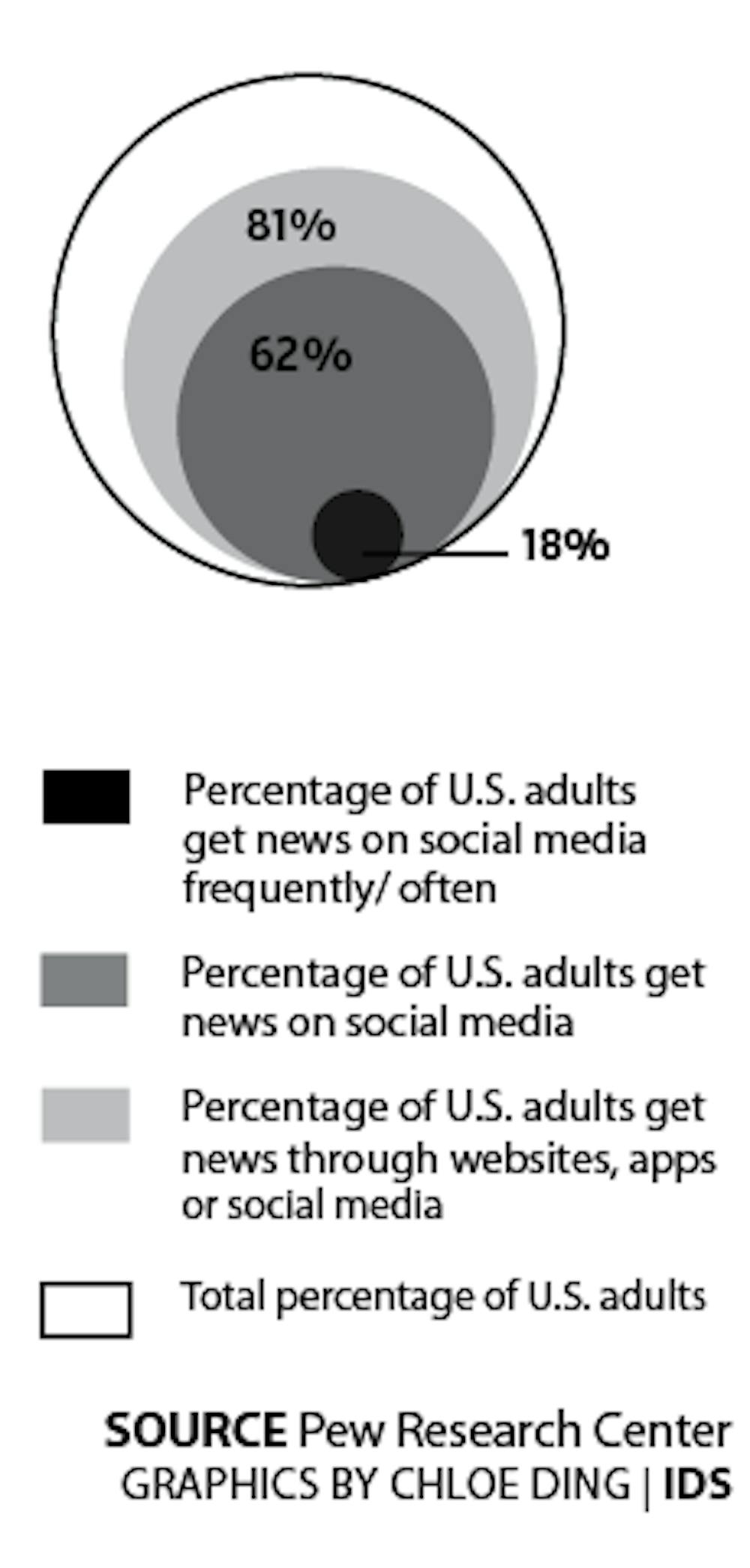
News stories are becoming more abundant on social media sites like Facebook and Twitter. According to another study done by the Pew Research Center, 62 percent of United States adults get their news on social media, and 18 percent do so frequently. Among IU students, this is less true.
Sophomore Lucy Battersby, a poltical science and creative writing major, said when she seeks out news, she doesn’t ever rely on social media apps.
“I get most of my instant news updates from the POLITICO app, which sends me push notifications several times a day,” Battersby said. “POLITICO is my primary source for instant news, but I stumble across a lot of news accidentally when I’m browsing Facebook or Twitter.”
For Battersby, her lack of reliance on Facebook or Twitter posts is due to awareness. She said she knows how easy it is to fall into the trap of false information because of a shiny headline.
Battersby said she knows her perceptions of issues can be shaped by a shared article that has a clickbait title, so she tries to stay up-to-date to avoid the worst of it. She prefers to go to sources before hearing other peoples’ opinions on an issue, she said.
Sweeney, a mathematics major, shares Battersby’s sentiments. Sweeney was a debater in high school, and as such he had to develop good news-gathering and fact-checking habits in order to make sure the information he was presenting was correct. Because of this, he is wary of Facebook articles or retweets on Twitter that don’t come directly from verified organizations.
“My favorite ways to get the news are from news apps rather than just from Twitter or just from Facebook or anything like that,” Sweeney said. “I prefer to get my news from like AP mobile app, or from a CNN app. Recently I’ve been reading a lot of news from the Apple News app.”
Sweeney is also aware his favorite sites can also be biased and not give him an unprejudiced outlook. He makes it his prerogative to make sure he is getting all sides of the story in order to form his own opinion, even if as a liberal he doesn’t agree with that particular site’s viewpoint.
Sweeney said he still makes a point of reading Fox News. He said he thinks it’s essential.
Some students do rely on social media sites to get most of their news, however. Freshman Grace Ringer, a social work major, said she often gets most of her news from either her father or social networking sites. Her reason for doing so is they are easily accessible throughout her day and they serve many purposes besides just news gathering, which makes them convenient, Ringer said.
Ringer said she does make sure to be critical when reading articles on social media. For the most part, she relies on her family and friends to be her fact-checkers. She typically relies on news organizations such as the New York Times, NBC, CNN and Fox News because she said she views them as most reliable.
“I try to fact check news I find if it looks unreliable or seems to be biased, but I don’t usually share a ton of news-related things because I don’t want to have to deal with people arguing in my comments,” Ringer said.”
Battersby said being in political science classes has made her a better all-around critical thinker.
“Being a student at IU, particularly a political science student, has definitely made me much more conscious of how I consume news,” Battersby said. “I’m much more cautious of just reading the headline and taking it at face value than I was a few years ago.”
As for fake news, many students take claims of it with a grain of salt. Sweeney said he thinks reports of fake news have been blown out of proportion, especially with this past year’s election.
Sweeney said there are a lot more people who want to do a good job than those who are seeking to sabotage the system. He said there’s probably only a handful who are sitting on their couches writing fake news algorithms to mess with everyone. Most people are good journalists, he said.
Ringer, however, said she thinks the epidemic is damaging to the credibility of the free press. She said those who write or share fake news just want to stir things up, and credible news sources do not condone or partake in these activities.
“I think the fake news epidemic is getting out of control because it’s starting to make people trust news sources less,” Ringer said. “If we can’t trust news sources, then we won’t have anyone.”