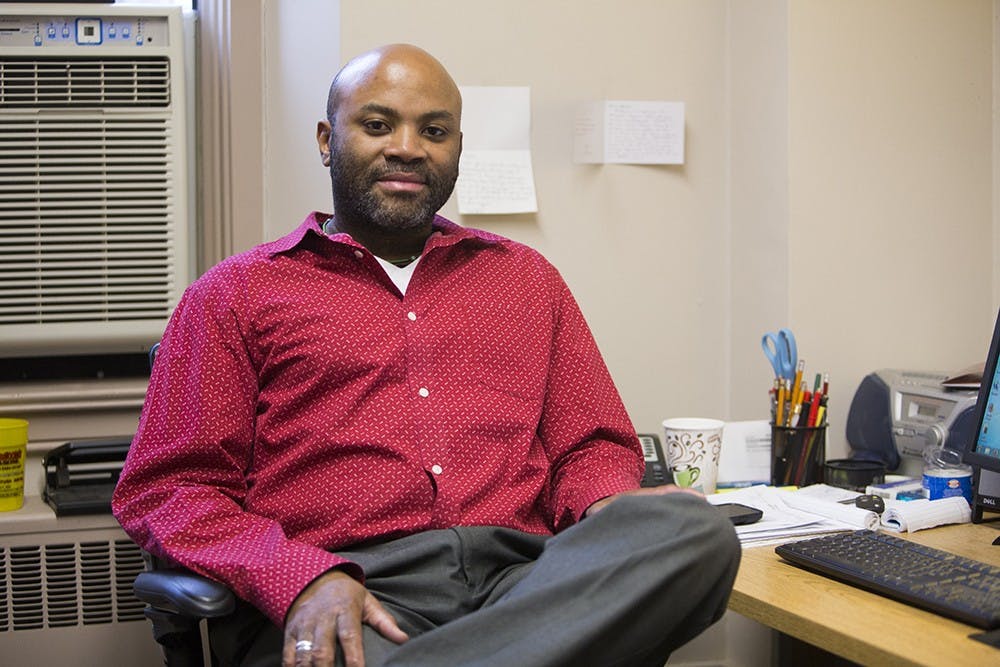
The award is given to the best book in lesbian, gay, bisexual, transgender and queer studies in literature and culture.
Bailey’s book is the first book to ever cover ball house culture, Bailey said. Ball house culture, also known as ballroom culture, is centered around an underground LGBT community comprised of mostly black and Latino people who perform in drag or other performances that express gender and sexual identity.
Bailey said he first became interested in this culture when he watched the film “Paris is Burning.”
“It introduced me to houses and a kinship performance system, and I was just fascinated by it,” Bailey said. “I knew after that I wanted to write about this community. I just didn’t know how.”
Ballroom culture began in Harlem, New York, and the cultures are called houses because of the way they form a second home or family, Bailey said. The communities put an emphasis on the labor of family as opposed to biological ties.
“Many of the members have been ostracized and marginalized from their families and communities of origin,” Bailey said. “These communities have to do the labor and create family because their families of origin have been unable or unwilling to give them that ability.”
He said members of these communities have not only been pushed out of their families but also out of broader society.
“Many of these community members are not only poor and working class, but they have been disposed from their black and Latino/Latina communities,” Bailey said. “They’ve been estranged from larger society that is both racist and homophobic because of their non-normative gender and sexual experiences.”
One thing Bailey said he hopes his book can accomplish is to help influence how people perceive LGBT ?communities.
“When we think about LGBT, we generally think about white LGBT people, but black LGBT are invisible,” Bailey said. “When we talk about blackness, we don’t often talk about black LGBT, but we equate blackness with straightness.”
He said the book will bring more visibility to the group and what it has to offer those outside the ?community.
“It brings visibility and exposure to the existence and ingenuity of the work of this community,” Bailey said.
In his book, Bailey outlines three things ballroom communities do well that could benefit others: prevention houses, prevention parenting and HIV prevention.
Prevention houses provide an alternate family and a place to obtain information on risk-reducing sexual practices and how to better accept one’s sexuality and gender.
Prevention parenting gives people the chance to learn from someone of shared experiences even if they aren’t biologically related. For example, a trans woman in a prevention-parenting house would have an older trans woman — a ?mentor — to ask questions about issues relevant to their community such as ?hormone and transition.
Finally, HIV prevention in ballroom culture includes balls organized to distribute HIV information through performance in a way that destigmatizes the subject, Bailey said.
“People and public health officials can draw from these practices and use them beyond ballroom culture,” ?Bailey said.
Bailey’s book was a finalist for Lambda Literary’s book award in LGBT studies out of about 750 submissions.
Bailey plans to write additional books, and his next book will focus on black gay men’s sexual development and the role of sex for black gay men in the age of AIDS. He said he also hopes to write a book about pageantry and how it differs from ?ballroom culture.
“The award really signifies for me the appreciation for what this book can do in the academy,” Bailey said. “With students, both graduate and undergraduate, reading it and professors teaching it around the country, there will be broader understanding of this community that’s not usually afforded to them.”



![Women in Tech official logo dec4-02 (1)[49].png](https://snworksceo.imgix.net/ids/ac26d5cb-7a87-4882-a32b-2d5fc2d77415.sized-1000x1000.png?ar=1%3A1&w=1000&dpr=2&fit=crop&crop=faces)