Sweat dripped off my face. I was cold and wet from the ice that was caked to my hip and leg, but I was still sweating through my T-shirt.
“Again,” my coach would say in his thick, Canadian accent.
I had to land the axel, the only jump where you take off forward and land backward. I had to do it right. Keep your left shoulder forward, head to the right, don’t force it. Breathe.
I soared through the air again, feeling the rotation only long enough to recognize that I was spinning. I became conscious that I was gliding backward. I was on my feet.
My gaze shot to my coach as a smile spread across my face.
“Do it again,” he said, smirking.
When I was four years old, I started figure skating and instantly fell in love with the sport. It felt like flying. I soared across the ice and, eventually, through the air.
Whenever I was asked: “What do you want to be when you grow up?” I would always reply: “A famous ice skater.”
In fifth grade, I auditioned in Colorado Springs at the World Training Facility, home of the Olympic Village. I got a two-year offer to stay and train in Colorado. Just my mother and I went, leaving my older brother and dad in Floyds Knobs, Ind. But after a little more than 12 weeks, we decided it was too hard to have our family so far apart.
So, I went to Cedar Rapids, Iowa, a halfway point between Colorado and Indiana. I knew a coach there who could help me master the axel jump. As I left Colorado, my coach made me promise I would never quit ice skating.
“This girl is one in a million, a diamond in the rough. She naturally has what can’t be taught,” she would tell my mom.
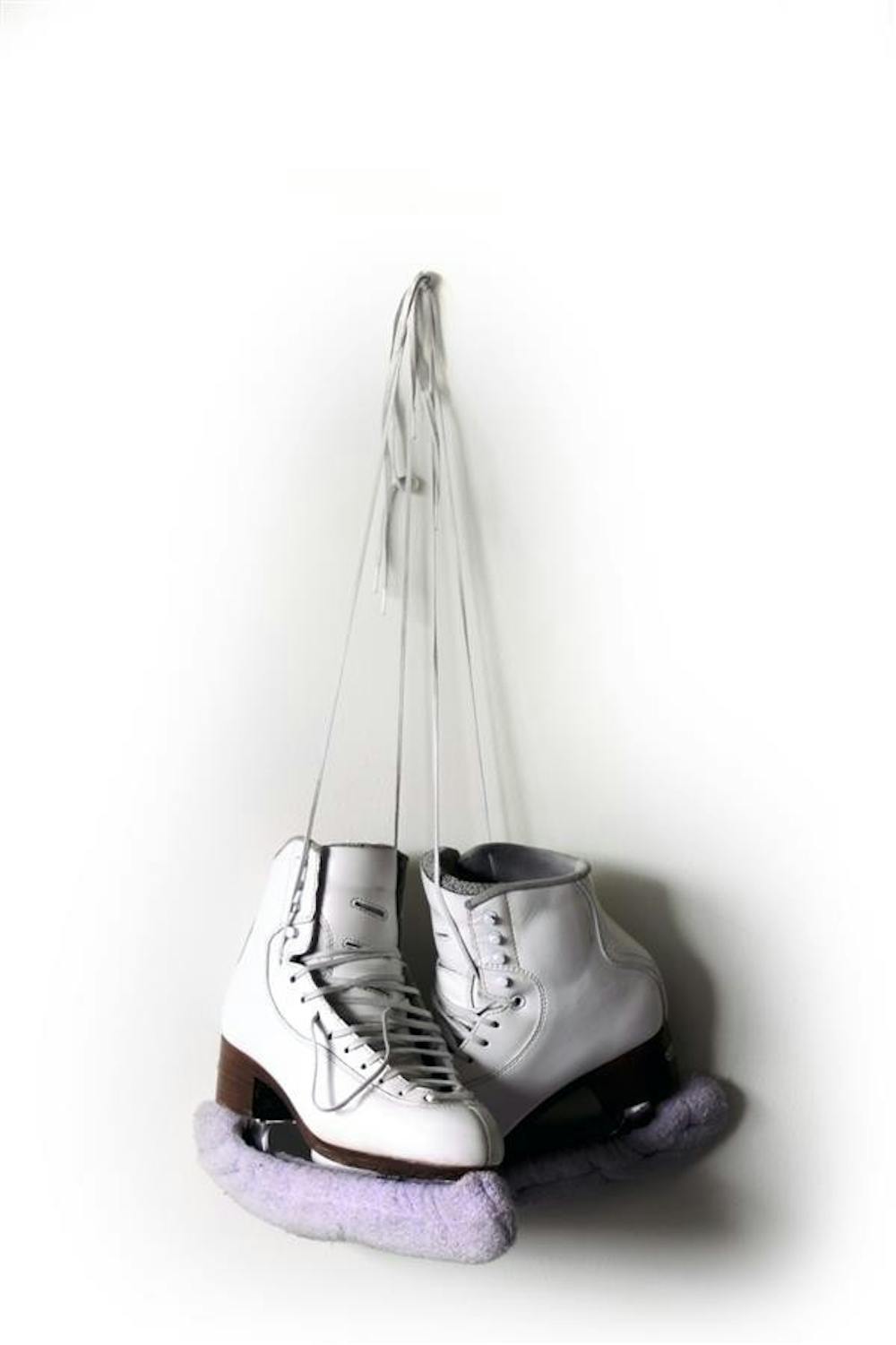
Every morning before the stoplights in town even came on, my mom and I would get up and head to the rink for four hours of on-ice training. I would skate laps as fast as I could for 20 minutes, my face flushed red-purple. My mom would complain about how I smelled, and we would stuff newspapers into my skates at night to absorb the moisture.
Friends were hard to come by because the other skaters my age were also my competitors. Boys were an unnecessary distraction and absolutely not allowed. My mom quickly became parent, teacher, coach, bodyguard, chauffeur, and best friend.
I trained in Iowa for almost two years. I did yoga and dance, lifted weights, practiced my jumps on the floor, and did pushups in the handstand position: I worked out for a living. By 13, they said I had the muscle capacity comparable to a college athlete. I was about 5 feet 5 inches tall, 120 pounds, and had to eat 4,000 calories every day just to maintain weight. Every morning after my early practices, I would go to Burger King and get two or three egg and cheese croissants and wash them down with a pack of mini cinnamon rolls. I enjoyed every bite, never thinking once about my weight — I didn’t have to. I was supposed to stay at 11 percent body fat to be a healthy female, but I was usually around 7 percent. My body was ripped, but I never saw myself as rocking-gorgeous. It was simply how far I had to push my body in order to see myself on the podium at the Olympics. And I did everything in my power to make sure I made it.
But I didn’t make it. I seriously hurt myself the week before regionals. It was gradual, and I was taught to ignore pain, so no one really knew the extent of the injury. My coaches were adamant that I push through the pain and skate in the competition. I could take cortisone shots and take a couple months off afterwards. But I knew I was hurt and so did my mom. I told her to take me home to Indiana.
I went to a doctor in Louisville, Ky. He grabbed my ankles, the area of pain, and squeezed.
“Does that hurt?” he asked as I flinched.
Of course it hurt — he squeezed where I said I had pain. After an x-ray, he told me that I had severe lacerations to my Achilles tendons and tendonitis. He said I was lucky that I stopped when I did, or the tendons would have probably torn, and I would’ve had to have surgery. It would take at least a year to fully heal. He would not let me go back to the ice or do anything other than routine walking until I stopped feeling pain where he squeezed.
A year passed, and I tried to return to the ice. It became obvious that I was behind. My coaches had tried to time my performance so I would peak for the Olympics, but I fell short.
Every athlete’s worst nightmare is that they could get hurt. But I never thought about it until it happened. I am who I am because I tried to figure skate in the Olympics when so many people told me I would never make it. I don’t regret one bit of my experience — if I had to do it again, I would, endless workouts, early mornings at the rink, and all.
Sweaty skates and cinnamon rolls
How one Inside staffer grew up training to be the next Michelle Kwan
Get stories like this in your inbox
Subscribe