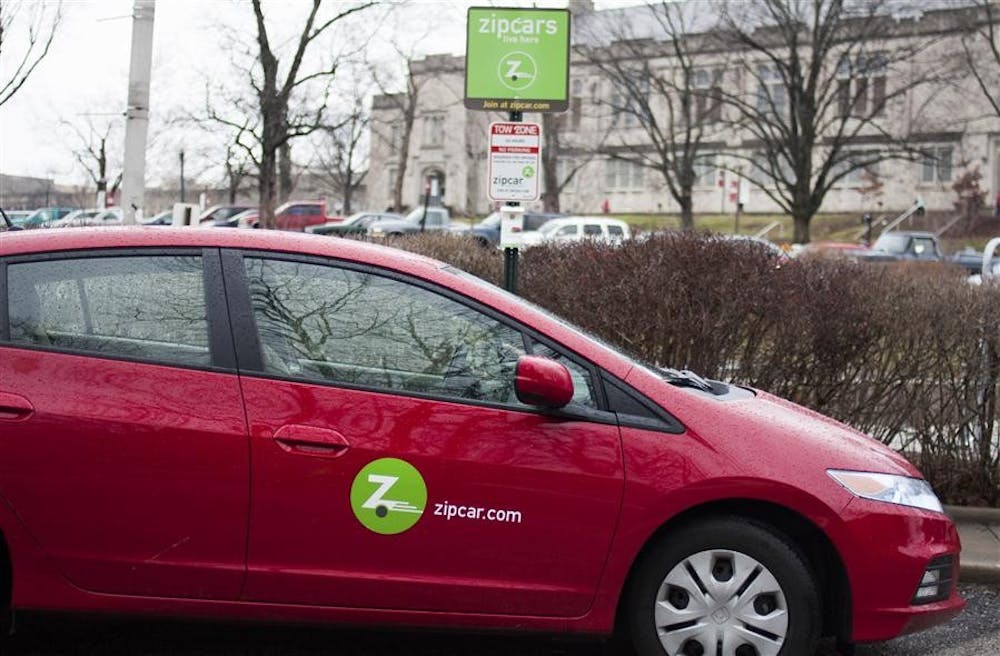
In an effort to satisfy demand for transportation options on campus, IU chose to partner with the world’s largest car-sharing service, ZipCar, in February 2010. The program allows its members to enjoy their services in four steps: join, reserve, unlock and drive.
“In addition to the convenience it provides for members, the Zipcar program on campus helps manage demand for parking and relieve congestion, as well as help the school reduce its carbon footprint,” Michael Serafino, general manager of ZipCar University, said in an email.
Bill Brown, director of the IU Office of Sustainability, said it is a more financially sound alternative to bringing a car to campus, and it also makes more land available for other use when there aren’t as many parking spots needed.
“One ZipCar can take the place of five to 15 normal vehicles,” Brown said of Zipcar’s environmental impact.
After applying online, the new member will obtain their ZipCar in the mail, which is how members access a ZipCar. Rates for ZipCars vary by location and type of car. In Bloomington, ZipCars are available for rent on weekdays for $8.50 per hour, $69 per day or on weekends for $9.50 per hour, $77 per day.
After the ZipCard is activated, members can reserve a ZipCar through their website, from a mobile phone app or by calling 1-866-4ZIPCAR.
“It is really simple to sign up and get the card to use it,” sophomore Kimberly Fishman said. “It’s easy to get around, pretty flexible where you can use them and there is usually always one available. It is just much more convenient than taking the bus.”
After reserving a ZipCar, the car will scan the ZipCard of the member who made the reservation and then unlock, already filled with gas and ready to go.
“It is so much easier to go to the grocery and do things than taking the bus or a taxi which I did a few times and didn’t like,” Fishman said.
Brown said he believes the number of campuses who are partnering with ZipCar is certainly growing. It provides a sustainable and financially friendly service, but it also promotes the use of bikes, walking and other greener modes of transportation.
“Even some faculty have realized that if ZipCars are available, they will use bikes, buses, etc. and just use the cars when necessary,” Brown said. “It is much less expensive than keeping your own car.”
ZipCar offers more campus transportation
Get stories like this in your inbox
Subscribe