
Editor's note: All opinions, columns and letters reflect the views of the individual writer and not necessarily those of the IDS or its staffers.
For the longest time, I couldn’t form an opinion on BookTok. Taking off in 2020, #BookTok became a TikTok-based hub for all things reading. It created a space for users to share book recommendations through short-form content, and has even been credited with resurrecting major retailers like Barnes & Noble and Waterstones.
Of course, any cause for the birth of new bookworms is a cause for celebration. It’s certainly more productive than the brainrot clouding my “For You” page. And in regard to the content of the books themselves, I’ll leave matters of taste to readers’ discretion.
However, beneath the massive “book hauls,” pastel highlighters and a bottomless pit of Rory Gilmore audios, BookTok emphasizes the aesthetic qualities of being a reader over the action of reading itself.
As countless creators flaunt flashy new editions, it becomes clear that BookTok's ideal of a literary connoisseur includes more than merely engaging with the work. Akin to any other subset of influencer culture, BookTok promotes a lifestyle that must be bought first. While hunky hockey player book recs might grace your TikTok feed in 2026, hidden beneath the antics of an internet bibliophile is a motive reminiscent of many PR campaigns past.
It all began with selling cigarettes to suffragettes.
In 1929, Edward Bernays, nephew of Sigmund Freud and known by many as the “father of public relations,” was hired by the American Tobacco Company. For years prior, he applied the use of his uncle’s work in psychology to develop ad campaigns. In his 1928 book “Propaganda,” Bernays argued that consumers are not motivated by the utility of a product, but rather the underlying social implications associated with possessing it.
When tasked with introducing tobacco products to a female audience, Bernays got his grubby mitts on the women’s suffrage movement. At the time, it was socially taboo for women to smoke in public due to the phallic nature of cigarettes. So instead of boasting the chemical rewards of a nicotine hit, Bernays tapped into a more subconscious desire for gender equality. In doing so, he launched the “Torches of Freedom” campaign, in which he hired women to smoke cigarettes as they walked the New York Easter Sunday Parade.
Essentially, he wasn’t just selling smokes; he was selling a product disguised as feminism.
While he may have been something of a supervillain, Bernay’s’ theories laid the groundwork for all of advertising today. If you’ve ever wondered why the women in tampon commercials are doing cartwheels, he’s your guy.
The marketing tactic that exploits our desire to be perceived in a certain light, as opposed to showcasing the quality of the product, is something we see every day. From the skincare influencer pushing the “clean girl aesthetic” to the latest protein powder targeting your local gym bro, social validation in the form of merchandise is sold to us all the time.
But what makes BookTok different?
Like many other influencer trends, BookTok promotes a set of products aimed at achieving a certain persona. In this case, if you buy novels with sprayed edges and a book boyfriend candle, Dostoyevsky is going to have some reading competition. And how could you become one of the greatest minds of our generation without some bookshelf wealth?
The problem is, your entire “To Be Read” list resting in an Amazon shopping cart is quite the wallet-wearing endeavor. When we commodify the idea of being a reader, we gatekeep knowledge for those who can afford it. That sounds like a slippery slope toward academic elitism. Or at least academic elitism with a cuter aesthetic.
In the United States, there is a significant correlation between socioeconomic status and educational attainment. According to a 2013 study cited by the American Psychological Association, children from lower-income households tend to have less access to educational resources, entering high school with literacy skills roughly five years behind their higher-income peers on average.
In a 2023 study, researchers examined various socioeconomic factors in relation to college attendance. Students on free or reduced-price school lunch plans were negatively correlated with attending highly selective colleges, while the opposite was true of private school students.
Although BookTok may not have the credentials of a prestigious Ivy League university, the appeal for those with thicker checkbooks aligns in a similar way. Despite its accessibility to all users via social media — unlike many paywalled papers circulated among academics — BookTok creates an elite culture of its own. By pressuring users to enhance their own personal libraries, in 2024 around $59 million in print sales was attributed to the platform.
While BookTok continues to grow and thrive, public educational resources are dwindling. We are, after all, facing a literacy crisis. In Indiana, under House Enrolled Act 1406, which passed in March, public libraries must either submit to strict budget reviews or face automatic funding cuts.
And restrictions on academic resources aren’t just affecting bookworms in Hoosierland.
In March 2025, President Trump issued Executive Order 14238, dismantling the Institute of Museum and Library Services. Had it not been blocked by federal courts in December 2025, libraries across the country would have faced losing millions of dollars in federal grants as well as major staff cuts. Luckily, courts reinstated all funding and staff that had been eliminated. Nevertheless, Trump’s attack on public programming continues.
The administration is now proposing major changes to the Head Start program, slashing hundreds of its federal requirements. Introduced in 1965 by President Lyndon Johnson, Head Start aims to provide educational and developmental resources for low-income families and is currently serving around 700,000 American children.
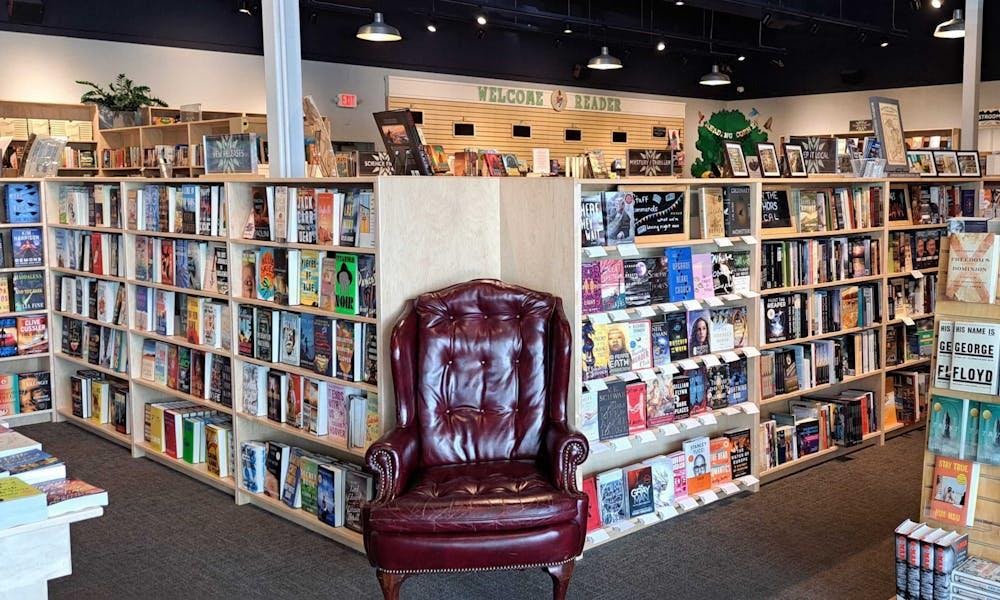
All of this comes as BookTok continues to drive shoppers into the nearest Barnes & Noble. When books are commercialized so heavily, we create luxury goods out of what should be shared cultural resources.
To expand its scope to all readers, BookTok could benefit from sharing more affordable options, such as borrowing from a library or buying secondhand. I believe the trend has great potential to encourage young audiences to expand their minds. However, that potential must be extended to all, not just those who can pay for a hardcover. Reading is for everyone.
Emma Howard (she/her) is a junior studying journalism.



