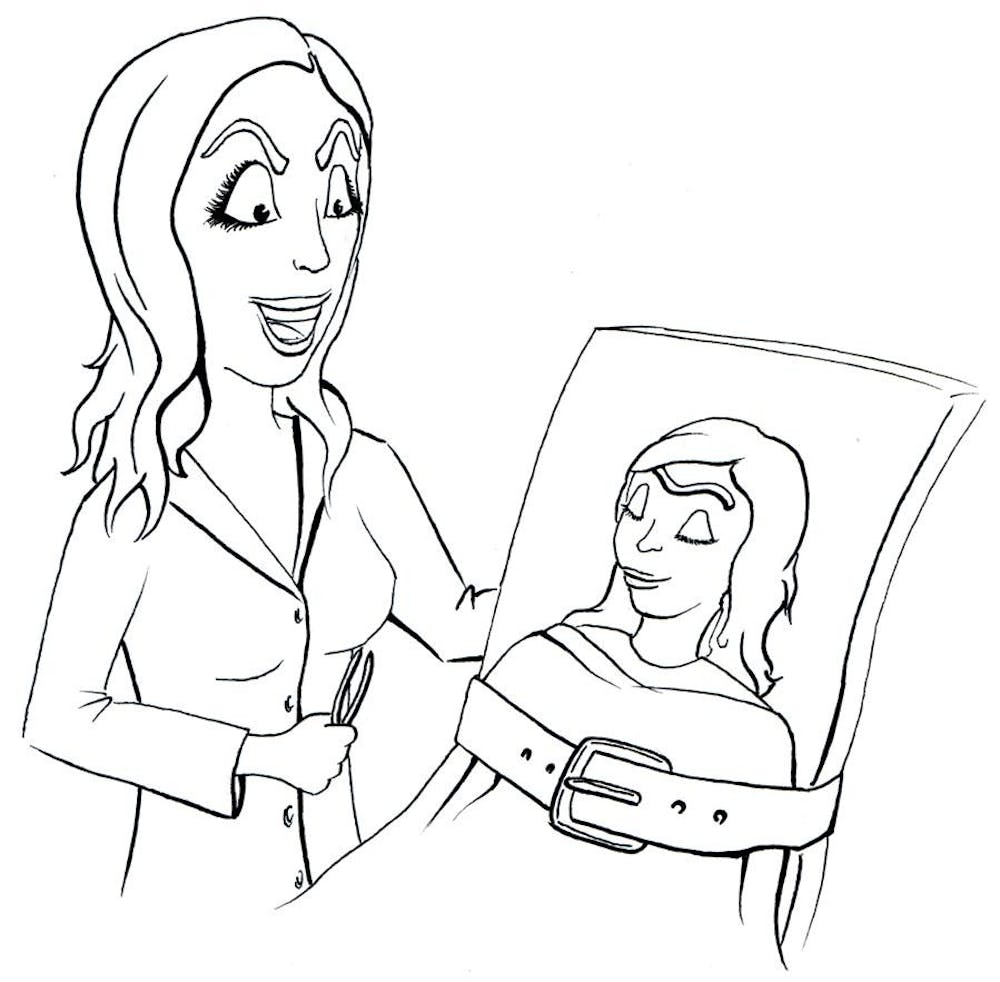
Farrah Abraham of “Teen Mom” infamy recently turned her daughter’s one eyebrow into two through the use of wax, tears and the explanation that she and her daughter were doing a science project.
According to her blog, Abraham, who is 20 years old and had her daughter when she was 16, noticed Sophia’s unibrow months ago. She called that revelation a “standout historical moment in motherhood.”
Once she was convinced the brow line wasn’t going to part on its own, her mind was made up.
Abraham sat her daughter down, attempted to explain to her 3-year-old the finer points of facial cosmetology and dripped wax onto her eyebrow.
Obviously it was a fiasco. Abraham ended up completing the job with a pair of tweezers while her daughter slept.
Typically I would ignore the antics of D-list celebrities as a rule, but this concerns me. It’s not news that someone who had her daughter at age 16 isn’t a prize-winning mother.
While the fact that children are being forced to perceive themselves, at least in part, as an aesthetic expression of their gender at younger and younger ages may not be breaking news, it’s something we need to consider.
Remember the story of Nadia Ilse, the 14-year-old girl from Georgia who, after being bullied over her facial features, received plastic surgery to modify them.
The Little Baby Face Foundation paid for Ilse to receive a nose job, chin implant and to have her ears pinned back, spending more than $40,000.
In a video on the ABCNews page dedicated to Ilse’s story, the 14-year-old is seen applying makeup and telling her mother she hopes to pursue a career
in modeling.
Ilse was subjected to the symptoms of an epidemic in this country. A 2012 study conducted by the Curry School of Education at the University of Virginia found that about 40 to 47 percent of students in third through fifth grade who were bullied were primarily teased about their looks.
I have no doubt that Abraham hoped to avoid the same fate for her
daughter. It’s obvious this was true for Ilse.
In the visual culture that has developed during the last century, it is no longer sufficient to be a good person. We now expect fully enfranchised members of our race to be aesthetically admirable.
Children exist in a world of absolutes. When a child adopts something as true, like aesthetic beauty as a measure of value, that truth permeates all aspects of life.
So we may not approve, or even perceive it as such, but bullying has clearly become our most effective mechanism for enforcing our aesthetic standards. When we place images of beautiful people on pedestals in clear view of our children, we should not be surprised this is the result we get.
But when we avoid conflict with these standards by resolving those things about ourselves that don’t conform to them, haven’t we just admitted that the standards are valid?
When we allow our young ones to fix their noses or force them to wax their unibrows, we haven’t beaten the bullies. We’ve joined them.
— drlreed@indiana.edu
Children are not prima donnas
Get stories like this in your inbox
Subscribe