In Indiana’s gubernatorial race, the lines between social and economic issues have blurred.
Both candidates proposed policies addressing economic improvement through the lens of family and social issues.
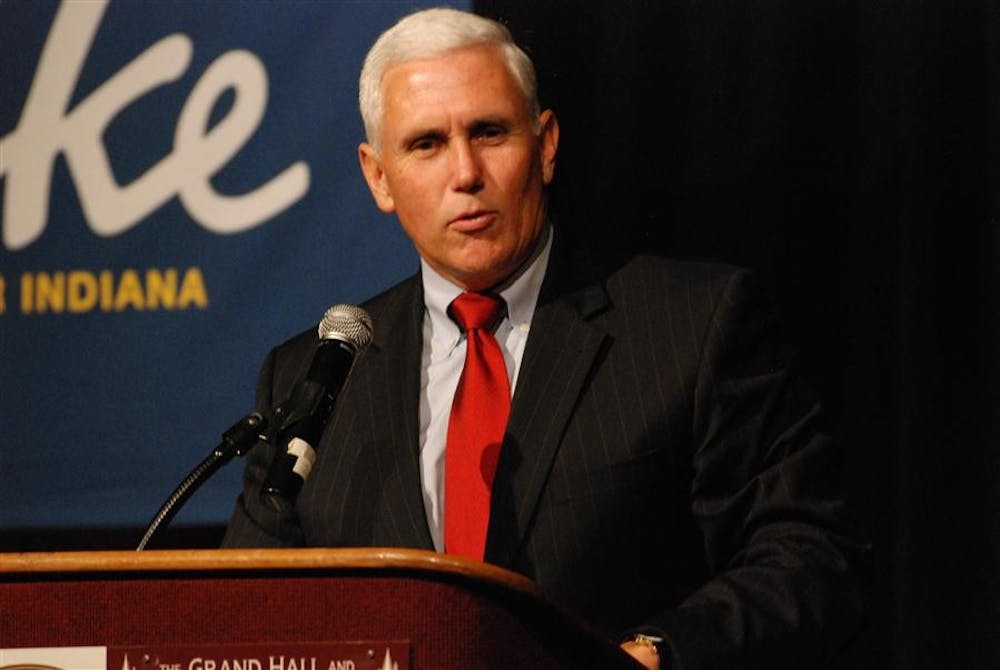
Gubernatorial candidate Rep. Mike Pence, R-6th District, proposed a sixth “Roadmap for Indiana” step including “Improving the Health, Safety and Well-Being of Hoosier Families, Especially Children.”
Pence’s platform includes six goals: improving law enforcement, resisting implementation of the federal healthcare law, addressing child protection and adoption, veterans benefits, clean air standards and access to natural resources.
Democrat candidate John Gregg’s focus on children and women — the word family isn’t used in the policy titles — is contained in two proposal sections: “Women’s Issues” and “The Next Generation.”
Gregg’s policy goals focus on reforming the Department of Child Services, increasing early childhood education opportunities and increasing access to affordable health care and equal pay for women.
One difference between the campaign platforms is their approach to families.
Lieutenant Gubernatorial candidate State Sen. Vi Simpson, D-Ellettsville, explained the campaign’s lack of “family-centered” language. Simpson improving life for Hoosiers depends on increasing jobs opportunities.
“I don’t think it’s the place of the state or federal government to meddle in anybody’s private lives,” Simpson said.
Simpson referred to Pence’s Roadmap goal to “promote marriage” by requiring a family impact statement before adopting new rules or regulations. According to a policy explanation paper available on his website, questions would include whether the proposed regulations “increase or decrease family income, support or inhibit family formation or inhibit the right of parents to raise their children.”
“Family formation means that children are living with their two parents in a family environment,” Mike Pence for Indiana Communications Director Christy Denault said.
“We believe the review and implementation of Family Impact Statements will help us to consider the impact of future state regulations on family formation.”
The paper goes on to explain that “the success equation — graduate from high school, work full time or go to college, and wait until you’re married before having a child” — is the basis of much of this section of their policy.
The paper points out that the approach is not meant to “diminish support” for single parents or as a “judgment” of divorced parents. Instead, that section of the platform focuses on decreasing the number of births to unwed mothers.
“By educating young Hoosiers on the best way to avoid poverty, coupled with Mike’s proposals to ensure that our students are college- or career-ready upon graduation from high school, and that college is more affordable and accessible, Mike believes Indiana will be well on its way to being a model state in the Midwest and home to one of the fastest-growing economies in America,” Denault said.
Bruce McCallister, a professor in the IU School of Social Work, said the success equation is ideal but not always achievable.
“It’s a very hard thing to nail down,” McCallister said. “And who doesn’t want every child to grow up in a two-parent household?”
But McCallister said Indiana’s unemployment rates, not family structures, were responsible for poverty.
There are also notable differences in the candidates’ approaches to adoption and child services, which are inherently tied to questions of family. The Pence campaign’s platform would remove income restrictions for school scholarships for adoptive parents.
It also proposes increasing coordination between state agencies and the Department of Child Services.
Gregg’s platform proposes launching a public awareness campaign and investing in financial assistance programs for potential adoptive families. It proposes reforming DCS and creating an “Office of the Child Advocate.”
McCallister said these issues are tough as well. He said the Department of Child Services has seen improvements in streamlining services but suggested both campaigns look into speeding up the adoption process and preventing children from entering the system in the first place, something he said doesn’t necessarily translate into a campaign success story.
“I don’t think there’s any question that a well-planned program would increase the number of families who would adopt,” McCallister said.
It's all in the family
Gubernatorial candidates propose social, economic family-focused policies
Get stories like this in your inbox
Subscribe