If there’s something strange in your ground beef, who you gonna call? Social media!
It’s an aspect of our food system that has been brought to light for most Americans in the past month, mostly through vicious retweeting of “#pinkslime” and the rapid circulation of a surprisingly successful petition.
No, this stuff isn’t the same psychoactive pink slime the Ghostbusters messed with, though if we could control it with our argumentative voices, I’m sure I wouldn’t be alive to write this column.
Originally referred to as “Lean Finely Textured Beef,” this meat industry product is used by some grocers and meat packers as a filler to expand our ground-beef
supply.
After a butcher has removed all cuts from a beef carcass, companies such as Beef Products, Inc. buy up the remains and toss them in a centrifuge to remove fat. The residual scraps are more susceptible to bacterial contamination than the cuts we typically cook and eat, so they’re treated with ammonium hydroxide gas.
Ammonium hydroxide was deemed generally recognized as safe by the United States Department of Agriculture and does not require labeling because it is claimed to be a processing agent and not an ingredient.
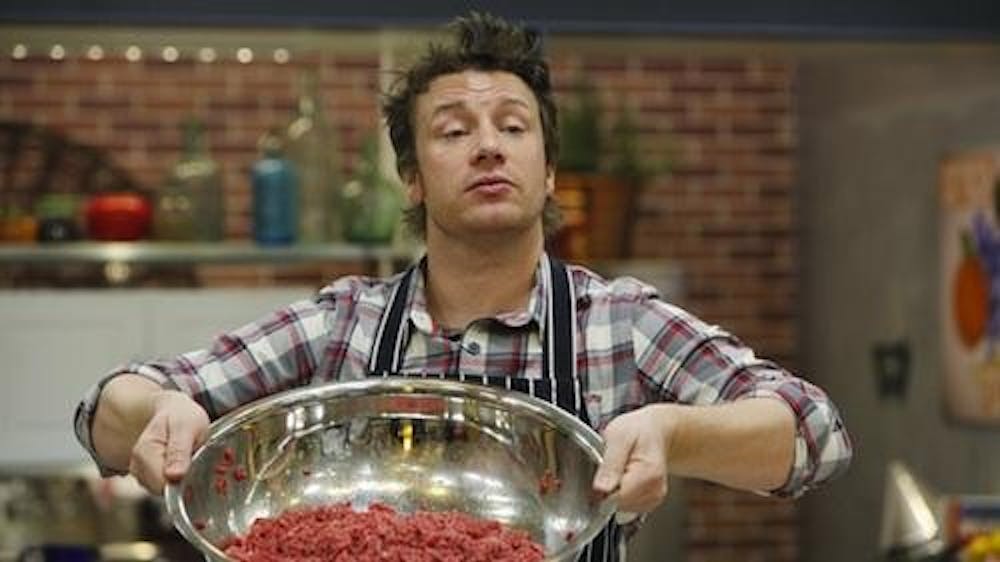
In April 2011, English chef Jamie Oliver opened season two of ABC’s “Food Revolution” with a pointed demonstration to an audience of American parents and their children. He threw some pieces of cow carcass in a washing machine, poured household ammonia cleaner on the remains and ran it all through a meat grinder.
The audience reacted beautifully — all shaking heads and gasping with surprise.
Oliver’s campaign was a catalyst in forcing McDonald’s to stop buying and using LFTB, and other fast food companies followed suit. But that was last year.
Why are we just now witnessing a social media upheaval? In March of 2012, ABC ran a series of reports quoting former USDA scientist Gerald Zirnstein’s claim that at least 70 percent of the ground beef we buy in supermarkets contains up to 15 percent of this “pink slime.” This awakened the cause-mongering American beast.
We rushed to our keyboards with the limited knowledge that (a) ammonia is a scary cleaning product you keep away from your children, (b) 70 percent and 15 percent add up to a big number and (c) the meat we love to eat looks very different before it comes to us in chargrilled patty perfection.
The Lunch Tray blogger Bettina Elias Siegel started a Change.org petition against LFTB after news broke that school lunch programs did not have the ability to opt out of using the filler.
According to the Wall Street Journal, mentions of “pink slime” on Twitter jumped to almost 100,000 by the end of March. Siegel’s petition received upward of 250,000 signatures and inspired the USDA to offer voluntary LFTB labeling to beef-product makers.
Some might rejoice at that news. But what’s the alternative when we opt out of purchasing products containing LFTB?
The beef industry tells us LFTB saves us from slaughtering an extra 1.5 million cattle each year. This cuts down on feed and fuel costs and slashes the prices we see on our end.
I can’t even begin to think about the amount of methane gas 1.5 million more cows would emit.
As for the “unappetizing” name, I can’t say I buy into the hype. The slurry used to make lunchmeats and hot dogs isn’t too far removed, and the processed foods we buy contain chemical ingredients we fail to research.
And yes, more transparency on the part of our food industry would be helpful, but I kind of empathize with the companies. They’re so hesitant to give us information without context in fear of the instantaneous, uninformed backlash. This is no longer about food or health or safety. It’s about how we educate ourselves and choose to effect change, whether helpful or harmful.
I’m not yet sure which side of the fence I’d like to stand on, but I wish more people would consider all the evidence and options before jamming down the protest button and sending us further into unsustainable, chaotic oblivion.
Will Eat for Work
Get stories like this in your inbox
Subscribe