In the early 2000s, the reality TV genre captured the attention of audiences across the country. Viewers came in by the millions to watch despondent women fight to find their soulmates. They tuned in to see everyday people fight for $1 million on a deserted island in the middle of the Pacific. Millions reveled in new singing and dancing competitions.
The mystique of whole industries, such as the pawn business, was suddenly dismantled as audiences were taken inside these previously
unknown worlds.
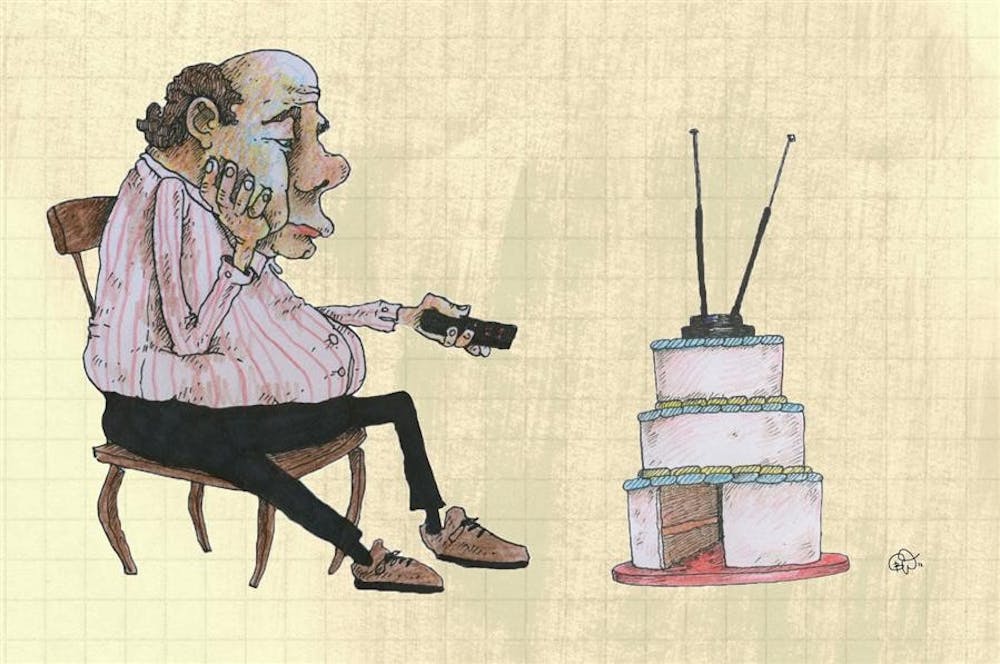
What did viewers know about elite bakers? Not much. Now, though, after years of shows devoted to cakes such as “Cake Boss,” “Ace of Cakes” and “Ultimate Cake-Off,” these bakers have clearly captured audiences’ imaginations. But how did the shows ever garner so many viewers? Who could have predicted bakers could make legitimately interesting television?
Specialty reality shows, such as baking programs, originally found success by riding that popularity wave from reality television, and the principle of success in reality television appears to be the more outlandish, the better.
Audiences won’t tune in to watch something they could do on their own; they want to watch a typical mother save hundreds of dollars by couponing or see someone’s life dismantled by the horror of addiction. They want a seven-tiered cake shaped like a rocket ship. And they want it to fly.
Everyday Americans cannot make cakes that light up or have a waterfall. For our baking endeavors, a two-layer yellow cake with some chocolate buttercream frosting is good enough. Add some sprinkles or fresh fruit if you want to get crazy. It’s the astounding that succeeds — hence, the success of these baking shows.
Just look at the numbers.
TLC’s “Cake Boss,” a show that introduced America to Buddy the Baker and his Hoboken-based shop Carlo’s Bakery in 2009, has found success because of its stellar confections. Buddy and his family have amazed audiences with cakes that defy gravity and imagination. Last summer, TV by the Numbers reported “Cake Boss” received roughly 1.275 million viewers per week.
To put that in perspective, that’s roughly 300,000 more viewers than FX’s comedy hit “Louie” or Showtime’s successful “Homeland.” Buddy’s up against some legitimate contenders, and he and those crazy cakes are holding their own.
“Cake Boss” replicated Food Network’s “Ace of Cakes,” which has followed baker Duff Goldman since 2006. However, a recent announcement brings this cake trend into question.
In fall 2010, Goldman announced the 10th season, which aired earlier this month, would be the show’s last. Perhaps after 10 seasons, “Ace of Cakes” is realizing it’s time to switch up the strategy. Maybe seven tiers complete with a rainbow of fondant aren’t cutting it anymore.
America did grow bored with other reality hits. Remember when everyone watched “Survivor” and “The Apprentice”? Now, only the occasional reality junkies tune into those shows.
Goldman might be trying to stay ahead of the curve of the inevitable boredom American audiences will find with baking shows. Pop culture is comprised of trends, and reality television’s recent decline has proven just that.
Perhaps the timer has rung on these once-beloved baking shows.
Is cake TV expiring?
Get stories like this in your inbox
Subscribe