The sitcom has been a staple on television since the medium’s inception.
Sitcoms
are almost a guaranteed success for networks, so it’s not surprising
they have been, and most likely will be, on the air for years.
Just as shows like “Seinfeld” and “Friends” dominated the 1990s, their
modern counterparts like “How I Met Your Mother” and “Two And A Half
Men” are finding similar success.
In an attempt to diversify
television comedy, the genre has made the move toward single-camera
comedy within the past decade. With shows like “The Office,” “Parks and
Recreation,” and “Modern Family,” this style of comedy has dominated TV
for the past few years.
Audiences have swooned at Jim’s sheepish gaze into the camera on “The
Office.” The interviews in NBC’s “Parks and Recreation” and ABC’s
“Modern Family” function in a similar manner — they create camaraderie
between the viewer and the character.
With this style dominating TV, broadcast networks have recently been looking to stand out by breaking away from the single-camera form.
Shows
like “It’s Always Sunny in Philadelphia,” “Louie,” “Wilfred” and “Tim
and Eric Awesome Show, Great Job!” stand out in their unique take on comedy.
But none of these shows are on broadcast television —
they’re on basic cable. Hence, they have a bit more leeway in both form
and content.
Only one major broadcast network is truly going beyond the formulaic in an attempt to diversify its comedy platform.
NBC’s “Community” stands out even among its own
network’s shows. Known for “The Office,” “30 Rock,” and “Parks and
Recreation,” NBC diversified its comedic styling when it added
“Community” to its lineup in 2009. The show is testing the waters of
broadcast TV to see how audiences will react to a different style of
comedy. And so far, “Community” is finding a lot of success with its viewers.
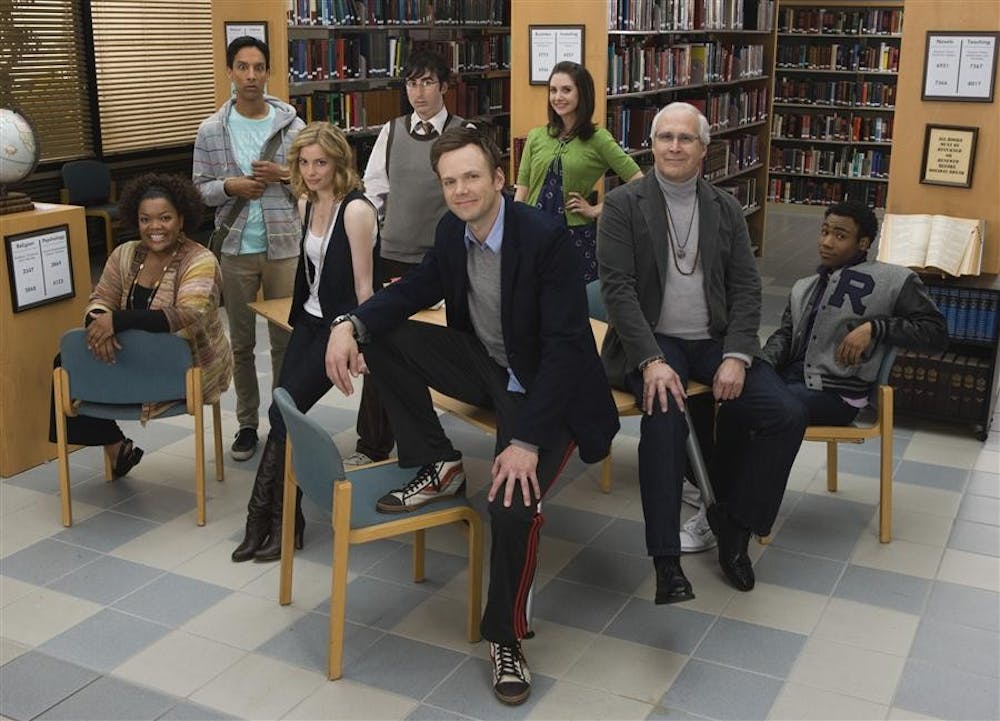
“Community,” for those of you who do not watch, follows an eclectic group of students through Greendale Community College.
Or
does it? The show often delves beneath the surface of the episode theme
into self-referential asides, achieving a sort of meta-comedy. Smart
and fresh, the show indulges in all things pop culture.
Characters like Abed (Danny Pudi) make film references in what seems
like every other sentence. Whole episodes are devoted to one movie
(“Pulp Fiction”) but are really about another movie entirely (“My Dinner
With Andre”).
But don’t think this show is pretentious or exclusive in its style — the
millions of viewers in the past two seasons speak to its universality and popularity.
According to TVbythenumbers.com, “Community”
averages more than four million viewers each week, a number comparable
to that raked in by fellow NBC shows “30 Rock” and “Parks and
Recreation” in the same Thursday night lineup.
Despite its unique, self-referential content, “Community” achieves its universal appeal by maintaining a sitcom-like style.
The show utilizes a traditional form of shooting that is very similar to the popular sitcoms of both past and present.
Will the other major networks make the leap after seeing the success of
shows like “Community”? There’s no suggestion of any groundbreaking
comedy in this fall’s lineup of new or returning shows. Viewers will
just have to be grateful for a new semester at Greendale.
Should major networks join the meta-comedy 'Community'?
Get stories like this in your inbox
Subscribe