
While some students were celebrating their Labor Day weekends with pool-side barbecues, sophomore Peter Oren was headed to Washington, D.C., with hopes of getting arrested.
Although accommodation was provided, Oren said the trip was not cheap. A donation from IU Religious Studies Professor David Haberman helped cover the costs of transportation and bail.
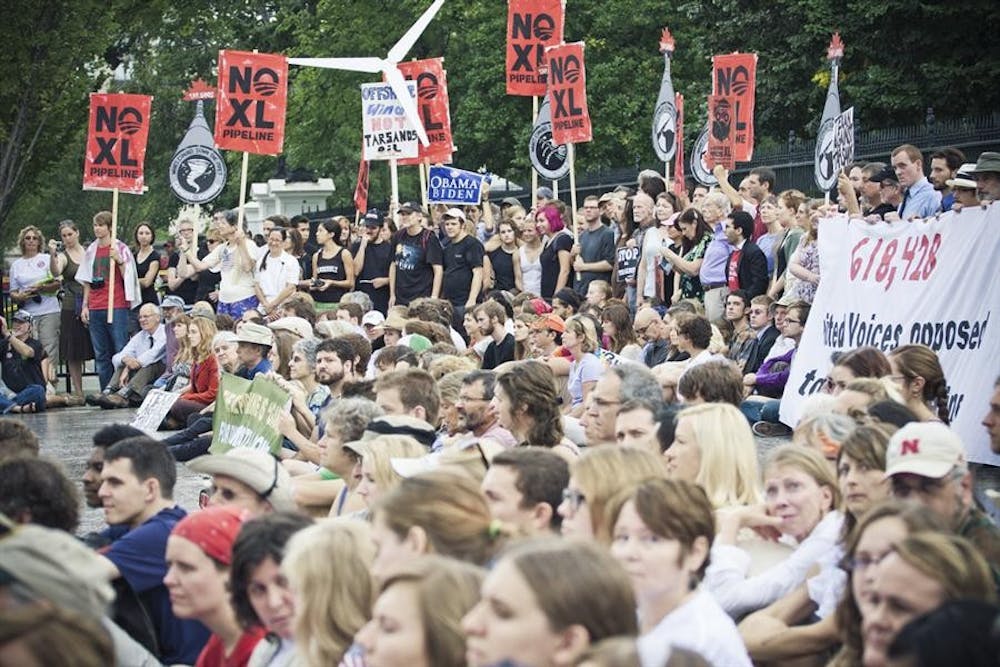
Oren, along with four other IU students, piled into a rental van and made the 11-hour drive to the east coast to participate in the Tar Sands Action: an organized, two-week civil disobedience movement in response to the Keystone XL Pipeline.
The Keystone XL Pipeline was proposed by TransCanada Corporation in 2008 and, if approved, will extend the existing pipeline that transports crude oil from Alberta, Canada, to refineries throughout the Midwest.
Oren said the project is already destroying land in Canada, and if the pipeline is extended, an oil spill is inevitable.
“This is an issue that is completely in Obama’s hands and doesn’t need to go through Congress,” Oren said. “He needs to say no, this is not in the nation’s best interest because we need to move away from fossil fuels. If we go forward, that’s not clear.”
But Terry Cunha, a spokesperson for TransCanada, disagreed. He said the pipeline is actually the safest in North America.
“A report released by the Department of the State said this will be the safest domestic pipeline ever,” Cunha said. “If there is a problem, the pipeline can be shut down in minutes because we monitor activity by satellite.”
Cunha also said the pipeline will benefit the country.
“What they need to understand is that this pipeline will provide crude oil from Canada, a country with a similar political and economic climate to the States, instead of from the Middle East, a region in turmoil,” he said.
Haberman said he thought Cunha was missing the point.
“From a political perspective, sure, let’s get oil from Canada instead of other countries,” Haberman said. “But there is no oil solution in the future, and we need to think outside of this box.”
Oren, along with more than 1,200 activists around the country that participated in the protest in D.C., are still not convinced the pipeline is safe or beneficial — and they were willing to compromise their criminal records to prove it.
On Sept. 3, the last group of activists stood in front of the White House in two organized lines and waited for the police to react.
After the police warned the crowd three times by megaphone, the protesters prepared themselves for arrest.
The women were arrested first, Oren recalled.
Oren was number 159 of 253 to be arrested, and he was escorted to one of the two city buses the police used to transport the demonstrators to the jail.
He said the police treated him with respect and were fair. After paying a $100 fee and filling out paperwork, Oren and the others were free to go.
“I went to foster solidarity between people interested in this movement,” Oren said. “I needed to be part of the beginning of this movement, one of the biggest acts of environmentalism this century.”
IU students arrested at Washington D.C. protest
Get stories like this in your inbox
Subscribe



