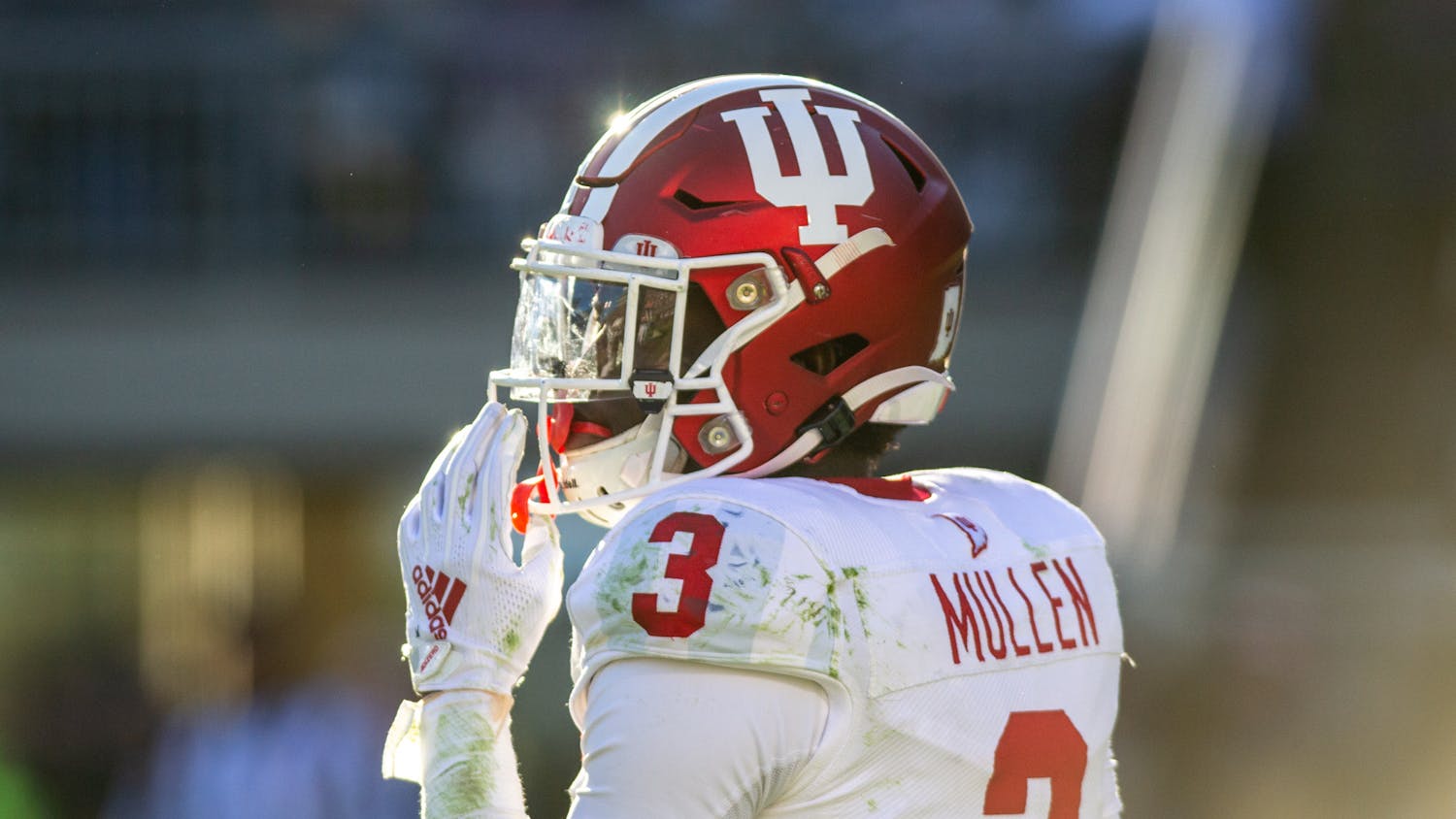
College football players probably thought they were done taking tests when they entered the NFL Draft.
But at the NFL Draft Combine in Indianapolis last weekend, they did a whole lot of test-taking.
The combine tests these athletes on their skills, speed and intelligence.
Although the combine is one of the factors that will determine where a player will get picked, it isn’t the only thing.
One player that shook up the draft by not going to the pros was Stanford’s Andrew Luck, who deferred the NFL Draft to play his final season and stay in college.
It’s the season when ESPN’s Mel Kiper Jr. and Todd McShay will work tirelessly to perfect their mock drafts.
But a lot of things go into the prospect’s overall talents.
Stats, game footage and Pro Day will also be important for NFL scouts analyzing these athletes’ eventual selections.
An athlete’s draft stock can rise or fall based on the performance of each individual star.
Alabama’s Julio Jones (4.39, 40-yard dash) has impressive hands, which certainly raised his potential pick.
But Auburn’s Cam Newton might have lowered his draft stock because he missed his target on several throws.
Indianapolis Star columnist Bob Kravitz said that scoring high at the combine doesn’t always matter.
“Emmitt Smith didn’t have the best combine and people doubted him and now look where he is,” Kravitz said.
Smith is a good example of a player who lost some draft stock because of the combine but was still drafted late in the first round.
The Wonderlic Test is another factor that is important in where a player gets selected.
It’s a 50-question timed test that analyzes intelligence and speed in given situations.
Wonderlic scores don’t always hurt players’ chances of where they get drafted.
Vince Young and Donovan McNabb scored a 15 and 14, respectively.
Alabama’s Greg McElroy scored a 48, which is the highest score since Harvard graduate Ryan Fitzpatrick’s 48.
McElroy was a Rhodes scholarship finalist last fall, which shows his intelligence.
But could intelligence be a disadvantage?
Pro Football Talk’s Mike Florio said in a Yahoo story, “Scoring too high can be as much of a problem as scoring too low ... having a guy in the locker room who may be smarter than every member of the coaching staff can be viewed as a problem.”
I think McElroy will be an asset because of his smarts.
However, intelligence and athletic ability do not always coincide.
Most teams in the draft target certain players in positions where they need help.
For example, Kravitz said the Colts would most likely choose an offensive lineman that could make an immediate impact for a first-round selection.
Don’t forget, there are still nine weeks to help or hurt a player’s draft stock.
Who will be the next Aaron Rodgers (1st round) or Tom Brady (6th round)?
It’s hard to tell, but as we have seen in previous years, draft order doesn’t always guarantee talent.
Talent can show up in any round, and no analyst can predict that.
-amsiegal@indiana.edu
Column: Combine tests up-and-comers
Get stories like this in your inbox
Subscribe